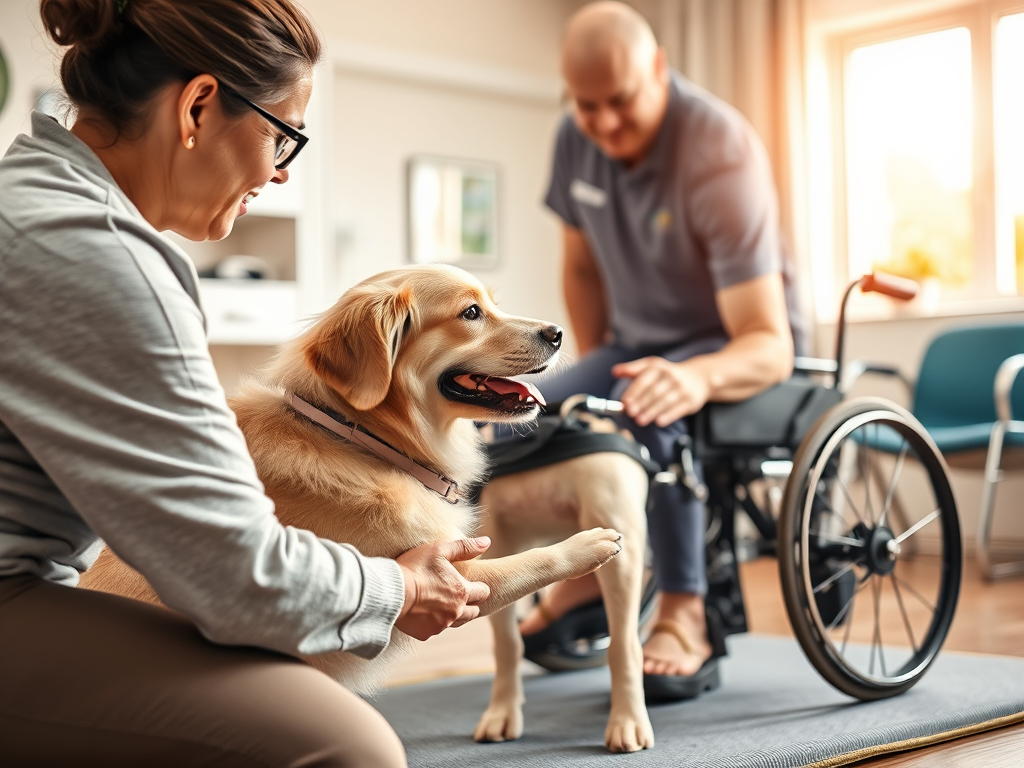
Man’s Best Friend Aids Brain Injury Recovery

Dogs are proving to be powerful partners in brain injury rehabilitation, offering benefits across physical, emotional, and speech therapy alike.

A March 2026 story from the University of Colorado Health (UCHealth) system documented Alan Tay, a 71-year-old stroke survivor who credits his border collie Olay with driving his recovery. Working with a neurological physical therapist, Alan used dog agility training to rebuild endurance, coordination, and memory – ultimately winning a national canine competition just three months after his stroke. Emotionally, dogs combat the depression and isolation that frequently accompany brain injury. The above-mentioned UCHealth story also notes that Olay gave Alan the will to push through. An NIH-funded clinical trial confirmed that service dogs may meaningfully reduce PTSD symptoms in military members and veterans.

Dogs can assist with speech recovery, as well. Research shows that aphasia patients produce more verbal and nonverbal communication around therapy dogs, which respond to tone and gesture rather than specific words. Speech therapy in such a uniquely low-pressure and therapeutic environment is highly beneficial for language practice.

The bipartisan SAVES Act, which reached the Senate calendar in February 2026, would fund service dogs for veterans with TBI and PTSD. Introduced by Rep. Morgan Luttrell (TX) on April 2, 2025, H.R.2605 explicitly lists “Traumatic brain injury” as a covered condition, recognizing that a trained service dog can be “optimal for the veteran to manage the disability, condition, or diagnosis and live independently.” In March 2026, America’s VetDogs launched a national campaign during this Brain Injury Awareness Month that highlights service dogs’ life-changing impact for TBI survivors, particularly as it relates to counter-balance support and deep pressure therapy.

Yoga Stretches Your Legs to Strengthen Your Mind

It is widely known that, as remarked on by the NIH, “Exercise-based therapies can promote recovery of function and are easily implemented in the clinical rehabilitation setting.”  Since at least the turn of this century, the government has been studying the benefits of a certain type of exercise, yoga, within various segments of the population.  In September, federally-sanctioned National Yoga Awareness Month, one should look at the specific benefits of yoga for those who have suffered a brain injury.

Though there are benefits from the practice of yoga for all individuals, the above-quote comes from a current NIH study regarding the energizing effects of exercise for those with brain injuries.  That study is not set to end until 2022, however the researchers have already discovered, “Very early [post-brain injury] exercise seems to exacerbate brain injury, while later exercise seems to be beneficial.”  (The NIH does not state how one is to determine the appropriate time in one’s recovery to restart it.) Further governmental information is limited as, in a 2012 article titled The therapeutic value of yoga in neurological disorder, the NIH stated that the benefits of exercise for those with many neurological disorders is a “largely unexamined treatment”.

In the meantime, there are known benefits of yoga for the general population, including enhancing one’s quality of life and wellbeing, and benefits specifically for the brain injured/disabled population, such benefits as: strengthening muscle, increasing flexibility, increasing endurance, coping with setbacks, calming an active mind.  Former Rep. Gabby Giffords has remarked that her recovery from brain injury has been though, “Speech therapy. Physical therapy.  And YOGA, too.”

As the government states, “The purpose of this month is to promote the health and benefits of yoga and inspire a healthy lifestyle.”  In celebration, many yoga studios and gyms are offering free yoga classes this month.  Yoga can also be accessed through your television, computer and smart phone.

(Though it may be beneficial, do not fret if you do not begin to exercise or do not continue with your exercise/yoga schedule.  Few people, with a TBI or not, adhere entirely to their workout schedules.  Additionally, the NIH found that, “Injury severity, age and pre-injury exercise history predict adherence to a home-based exercise program in adults with traumatic brain injury.”)