
Lawsuit to Take Down Austin Police for Takedown Consequences

On January 6, 2026, Natalie Gialenes reportedly filed a federal lawsuit against the City of Austin and a former Officer following a December 2024 incident that reportedly caused her a traumatic brain injury. Gialenes contends that while handcuffed for public intoxication, she bent down to retrieve her dropped ID when a police officer threw her to the ground. Her head struck the pavement with an audible impact that caused bleeding. Her attorney reports she now experiences cognitive difficulties that will affect her for life, including forcing her to withdraw from paralegal school. The Austin Police Association, however, maintains that Gialenes was highly intoxicated, had admitted using cocaine and alcohol, and pulled away from the officer during escort, requiring the takedown to maintain control.

Since 1989, officers have been subject to the Supreme Court order defined in federal Graham v. Connor, which includes the statement, “the facts and circumstances related to the use of force should drive the analysis, rather than any improper intent or motivation by the officer who used force.” Police takedowns are physical control techniques designed to bring suspects safely to the ground, occurring in approximately 21% of use-of-force incidents nationwide. Research indicates injury rates when force is used are estimated in a wide range, from 17 – 64%, with most injuries being minor bruises or strains. Data from the University of Illinois Chicago’s Law Enforcement Epidemiology Project states that 12.6% of civilians hospitalized from law enforcement encounters suffered traumatic brain injuries.

Texas law, as will law in all 50 states, mandates comprehensive use-of-force training for all officers. This training emphasizes de-escalation and proportional response. As Texas Government Code states, officers must provide “first aid or treatment to the extent of the officer’s skill and training” when encountering injured persons. Austin Police Chief Lisa Davis indefinitely suspended the Officer, calling his actions “reprehensible.”
Long-awaited, Expanded Research Facility Opens in Waco

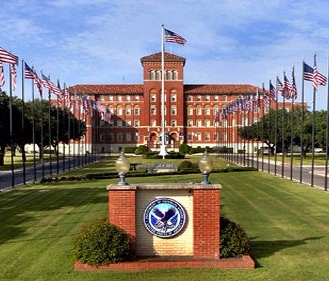
For seven years, there have been high hopes and expectations that Waco, Texas would be host to a world-class VA research facility.  Consolidating the Austin-based Brain Injury Recovery Laboratory and Waco’s Center of Excellence into one facility, it was thought that, 1 “this program consolidation will enable [the] VA to meet its mission of better understanding brain injuries…”  Waco is right next to Fort Hood, so the high hopes seemed in tune with location reality.  Right before it opened, then-Rep. Chet Edwards (D-Waco) lauded it as, “one of the few programs in the country focused on the links between genes and brain anatomy in the development of PTSD and mental illness in our combat soldiers.”  The Center even had many designated areas of the building devoted to the study of TBI and PTSD.  However, after all the excitement of the opening of the facility ended, it seems that much of the research activity in it essentially did too.

Perhaps it was all of these high hopes, coupled with the new, expensive equipment,  that led to the program’s perceived failure.  In 2014, “a 10-month [local newspaper] investigation… found that the VA squandered millions of dollars and six years of research opportunity just as brain injuries were spiking among U.S. service members.”  (Of particular note was the finding that a MRI scanner that was purchased in 2008 for $3.6 million, had since stayed dormant.)  This investigation was noticed by Congress, who started an investigation of their own, launched by Rep. Bill Flores (R-Waco).

Last week, the VA debuted a new, expanded state-of-the-art research facility in Waco, Texas.  (This is very similar to the nomenclature that was used in 2009 for the facility’s original launch and, in fact, this new facility was originally planned to open in 2011.)  Housed in the Doris Miller Department of Veterans Affairs Medical Center, the VISN 17 Center of Excellence for Research on Returning War Veterans, as it’s known, employs 70 people from around the country.  These people must then find residence in Waco.  Waco Mayor Kyle Deaver says that, “attracting these well-paid professionals to Waco will ripple through the local economy,” which is an unexpected benefit of the Center.  Currently, a number of studies have already been planned, including Project Serve, SHE Study, the Moral Injury Project and treatment of traumatic brain injury using EEG neurofeedback.