Clinton Focuses on the “Invisible, Overlooked and Undervalued”

Before the media turned their attention to the presidential debates, Clinton did what fellow presidential nominees have yet to do: namely, on September 21, 2016 in Orlando, FL, Clinton gave a 30 minutes speech that focused on the “invisible, overlooked and undervalued”. Specifically, Clinton spoke about the disabled.

According to the CDC, more than 56 million Americans, or 19% of the population, are living with some form of disability.  “Whether they can participate in our economy and lead rich, full lives that are as healthy and productive as possible is a reflection on us as a country,” Clinton stated.  During her speech in Orlando, Clinton outlined her plan to make an “inclusive economy” for all Americans.  She promised to “focus on improving [disabled Americans] job opportunities.”  (This is an excellent goal, but it does not appear to be enforceable.  I continue to believe that educating the general public, from a young age, is key, thereby providing a better understanding of the capabilities of the disabled.)  She plans to eliminate employers’ ability to pay less than minimum wage to disabled workers and she plans to encourage new partnerships with businesses to improve hiring practices for those who have a disability.

Clinton says she will give the disabled a voice in the White House.   In fact, as Secretary of State, she appointed the first ever Special Advisor for International Disability Rights, Judith E. Heumann.  She has proposed “Autism Works”, a program to increase the job and housing opportunities for adults with autism.   Also, Clinton has released a campaign ad to highlight her commitment to help Americans with disabilities.  This ad, featuring Nyle Dimarco, a 27-year-old model who is deaf, begins, “by explaining that there isn’t any sound and that viewers should feel free to scroll past it because ‘we’re used to being ignored’.

Clinton’s notable speech withstanding, I see the disabled voting bloc as being largely ignored.  Clinton’s speech, for example, was the first speech during her campaign to put disabled Americans at the forefront.  However, Jennifer Mizrahi, the president of RespectAbility, an advocacy organization for people with disabilities, says the election has focused attention on issues affecting disabled voters as never before.

(On his website, Donald Trump makes a point to note that, on September 21, his campaign rally in Toledo, Ohio was attended by more than 2,000, while Clinton’s speech in Orlando, the same day, only had about 300 attendees.  But, in my view, substance is more important than pomp and, ummm, circus.)

Transcription of Hillary’s speech: https://www.hillaryclinton.com/briefing/updates/2016/09/21/in-orlando-clinton-vows-to-protect-the-rights-of-people-with-disabilities/

The Deciding Vote?

I have only posted twice in this month for a simple reason – politicians, including political candidates, largely ignore the disabled vote while speaking and/or campaigning.  A blog entry on the Huffington Post site explains it well, and though this article is from last year, the statements stay true and relevant.  The number of disabled Americans is unfortunately large and continues to increase. Clinton’s lead in the polls is small.  True, “[in the 2012 President election}, the voter turnout rate of people with disabilities was 5.7 percentage points lower than that of people without disabilities.”  However, that means that 15.6% of disabled Americans did vote.  This year, the number of disabled voters will likely vastly increase, just as it will for the generally population.  Ultimately, the disabled vote could make the difference in who becomes the next Commander-in-Chief of the United States.

PTSD = Police Trauma Stress Disorder?

My thoughts are with the Baton Rouge police today, 3 of whom were shot and killed and 3 others injured. With this, and the events in Dallas last week, I understand that many police officers, especially the survivors of these attacks, may be experiencing some form of Post-traumatic Stress Disorder (PTSD).  As President Obama said today, “Attacks on police are an attack on all of us.”  My best goes out to the families of those who lost their lives protecting this country and to all police officers.  I hope all Americans soon realize the good work that police officers, in general, do and that officers are given the respect that they deserve.

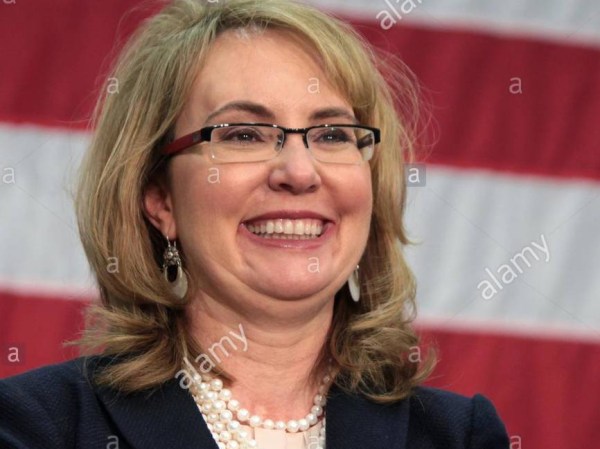
Gabby Giffords: Supports Hillary Clinton’s Stricter Gun Laws, But Still Shoots

Giffords has promoted stricter gun control, continuing with her message even after she resigned from Congress in 2012 to focus on her recovery.  With her husband Mark Kelly, she founded Americans for Responsible Solutions to “encourage elected officials to stand up for solutions to prevent gun violence and protect responsible gun ownership by communicating directly with the constituents that elect them.”  Now, she and her husband have been out showing their support for Hillary Clinton for President and Clinton’s proposed stricter gun laws.

Whether you agree with her or not, the fact is that Hillary Clinton wants to further restrict the rights given to us under the 2nd amendment of the Constitution.  It seems common sense that Giffords, a woman who was shot in the head, would support this and she does.  However, Giffords still appreciates the recreational use of guns, speaking to the press about how she likes shooting at a gun range near her home.  She and her husband are avid gun owners.  Her husband says, “There’s no reason why we can’t have our right to ownership and at the same time, do everything we possibly can to keep guns [away from certain people].”

That’s a tricky issue.  One way to look at this is that Giffords and her husband promote the fact that Clinton wants to further dictate what others can do, but they find no need to follow the rules themselves.  However, another view is that by controlling who can buy a gun, they are trying to save lives.  In 2010, for example, 11,078 deaths were attributed to homicide by gun.  But is the solution to simply take guns away from the people who are most likely to misuse them, like the mentally ill?  Consider the fact that the number of people mortally wounded by guns is equal, for example, to that of motor vehicle accident death.  (The number of deaths by gun fire also includes suicide, which is the largest cause of gun death.  Motor vehicle accidents are much less likely to be suicides, so presumptively taking away guns from those inclined to commit suicide, simply means that those people would have to think of new ways to kill themselves.  It would likely not save lives.)

In further restricting who is allowed to buy a gun, the government would be taking away guns from the many people who do not and would not misuse them.  I see no comparable law or proposed law for motor vehicles.  The opposing valid views on the same issue are specifically why gun control law has been a big issue in government since before I can remember, and it doesn’t look like it’s about to stop being one anytime soon.

Personally, I know that the “gun issue” has gotten a lot of press.  People seem to think that restricting the use of guns will eliminate violence.  Even though I have never shot a gun myself, I have family members who, just like Ms. Giffords and Mark Kelly, are avid hunters.  My family members who do shoot are not, nor could they be, mistaken for terrorists, criminals, or mentally ill.  The obvious issue with the law is that once government does not allow one person to buy a gun, what is to stop them from preventing more people, such as my family members, from buying a gun.

Regardless of my personal views on the “gun issue”, the fact that Giffords, after being shot in the head, still has the cognitive ability to go out and promote this law is remarkable.  I think her recovery is an inspiration for every brain injured person, and really an inspiration to all people.

Critics Likely Magnify Clinton’s Health Issues

In late 2012, Hillary Clinton suffered a concussion because of a reported fainting spell. A few weeks later, a blood clot was found near her brain.  (Her doctors stated that her blood clot has had no neurologically effects.)  These are two things that one hopes to never happen to them; however, concussions do happen to 3.8 million people annually, according to CDC estimates.  A concussion is a mild brain injury.  Her husband, Bill, said that it took Hillary six months to fully recover.  Bill Clinton’s statement is likely true, though no one knows how Bill defines “fully recovered”, as this time table is more akin to the recovery time for a mild stroke.  Mild brain traumas, such as concussion, usually resolve themselves in 2-3 weeks, with full recovery sometimes taking up to 3 months.

Since her campaign began, critics have been doggedly trying to find signs that Hillary Clinton is neurologically unable to handle the job of Commander-in-Chief.  There was much talk about the fact that she stepped off the stage during the commercial break of a Democratic debate and did not return until after the debate had re-started.  My initial thought was that she needed to take a restroom break.  Even though many newscasters had the same conclusion, others followed Donald Trump’s lead by reporting that she had to step away because she was neurologically overwhelmed.  There was talk in the news about her long coughing lapses – in February, during cold weather – being signs of neurological problems.  Donald Trump has stated, “Hillary Clinton does not have the stamina… does not have the strength to be President.  You watch her life… [then] she’ll go away for three, four days…”

A known journalist even wrote, “Hillary still suffers from … blinding headaches, exhaustion, insomnia, and a tremor in her hands.”  This journalist is Ed Klein, who also wrote a book about the Clinton’s that has since largely been discredited.

Please, if one is to say that Mrs. Clinton is not fit to be Commander-in-Chief of this nation, use her political views as the reason, not a manufactured health issue.

‘Little House’ Star Ends Race for a Seat in the Big House

Melissa Gilbert (D), known for her role as Laura Ingalls in the 1974 to 1983 television series ‘Little House on the Prairie’ and former president of the Screen Actors Guild (SAG), has halted her bid for Congress in the 8th Congressional District in Michigan.

Regarding her departure, Ms. Gilbert stated, “As much as it breaks my heart to say this, my doctors have told me I am physically unable to continue my run for Congress.”  (In 2012, she had two head injuries – a horrific fall as a contestant on ‘Dancing with the Stars’ and when a balcony fell on her at her rented house.)  This may be true, I do not know.  However, I am curious about it.  Her polling numbers were low.  I do not doubt that her doctors advised her to leave the campaign, but I do wonder if she would have taken their advice if her poll numbers had been higher.  It is not appropriate for me to make any assumptions and, if her symptoms did get bad enough to be the reason she left the race, I wish her the best.

Currently, the Democrats do not have any candidate to take her place in the election against former State Senate majority leader and first term incumbent Mike Bishop (R).  Regarding her departure, Sen. Bishop, who polls show is likely to will re-election, stated, “I wish her the best and hope her health improves.”

Two (Disabled) Candidates Battle for Illinois Senate Seat

This is unexpected, and long overdue, news in this country: Two disabled candidates are currently in a fight for a Senate seat in Illinois.  Senator Mark Kirk (R), who in 2012 suffered a stroke, and Representative Tammy Duckworth (D), who lost both of her lower limbs when her plane was shot down in Iraq, are currently in a fight for the Illinois Senate seat formerly held by Barack Obama.  However, just like many female politicians are not specifically looking for the “woman vote”, it may not be a negative that both of these candidates have a disability.  A disability is not a call for pity and, because both of them live with their respective disabilities, their constituents can vote on what’s really important – their politics!