Camps for a Cure

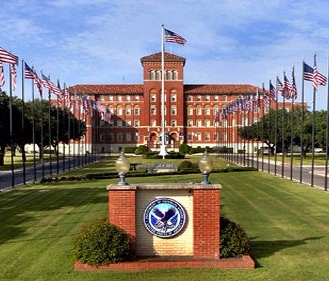
Located in San Diego, CA, Camp Pendleton proclaims to be, “The West Coast’s Premier Expeditionary [Marines] Training Base.”  Last Tuesday, May 9, they broke ground on a $12 million, 25,000 square foot facility that aims to make the Camp a premier brain injury research and treatment center, too.  The funding needed to build the facility was raised through private donations and the funding of Arnold Fisher, a New York-based real estate tycoon.   Fisher says that he sees helping the troops as his duty as an American.

Part of the Department of Defense organization National Intrepid Center of Excellence (NICoE), which is headquartered in Maryland, the Camp Pendleton facility will be the seventh of nine planned NICoE facilities focused on brain injury and the first on the West Coast.  Presently, NICoE has erected facilities in Fort Belvoir, Virginia, Camp Lejeune, North Carolina, Fort Campbell, Kentucky, Fort Hood, Texas, and Fort Bragg, North Carolina.  A center at Joint Base Lewis-McChord, Washington, is still under construction and facilities are still to be built in Fort Carson, Colorado and Fort Blass, Texas.

Beyond Marine training, the Camp defines part of its vision to be, “providing superior service and support.”  Therefore, they also deal with the injuries that may come as a result of a brain injury or come in conjunction with it – specifically, physical and behavioral problems.  In fact, Camp Pendleton has been training and supporting the troops for 75 years.

So far, NICoE facilities have about a 90% rate for patients to return to duty.  Still, as Capt. Lisa Mulligan, commanding officer at the Camp Pendleton hospital, says, “Science as a whole remains in the infancy of its understanding of the potential for recovery after head injury.  This center will combine the resources of clinical, research and educational specialists to broaden our horizons.”

‘There’s Always a Risk’

On March 6, one of the jewels of the Triple Crown, the Kentucky Derby, was run.  To coincide with this, on Friday, May 5, NBC did a story about injury and horse racing.  Specifically, the article begins by mentioning Rajiv Maragh, a jockey with 13 years of professional horse racing experience and 13 years of injury to show from it, including a concussion.  The article then speaks more of horse racing and injury.  True, all sports have injury, but horse racing does not have concussion protocol, as other sports do.  Last year, the Jockeys’ Guild and the University of Kentucky announced a three-year study that seeks to bridge this gap.

“I choose to be a jockey and there’s always a risk of danger,” says Maragh.  However, the Guild can learn how to better protect its athletes, as professional sport leagues have done.

Note: While horse racing and government may not seem to be related, most states do have a racing commission that is “responsible for regulating the safety and integrity of the horse racing industry through the conduct of investigations, prosecutions and via regular monitoring.”  Because horse racing is a revenue earner for states, state commissions also focus on ensuring the welfare of the horse.

Have a TBI?  Find out anytime, anyplace.

Neurological injury is a significant health concern for military service members,.  Last year, for example, 17,672 service members were diagnosed with a brain injury.  While the military may not be able to eliminate neurological injuries entirely, the DoD has granted $11.3 million to Abbott Laboratories for the development of a mobile device that allows one to determine if they have a traumatic brain injury, anytime and anyplace.  Interestingly, this product only relies on such things as the proteins in the blood to find brain injuries.  It will be developed in Princeton, New Jersey, with the assistance of the U.S. Army Medical Research Acquisition Activity in Frederick, Maryland, and has an estimated completion date of October 23, 2019.  (In 2014, the DoD awarded Abbott $19.5 million to develop a portable blood test to determine brain injury.  However, even then, Abbott said that the product being developed was, “the first phase of what… would be a multi-phased contract.”)

Update: Drones Promise Quick, Not Safe Delivery

Flying delivery drone over residential neighborhoodDrones are on their way to becoming the preferred method of retail delivery and much more.  Currently, however, the air technology can only be used in a few limited locations.  Before they become ubiquitous, though, the Federal Aviation Administration (FAA) must assure that this way of delivery, that may weigh 50+ pounds, is safe for humans.  (Not just for airplane safety, the FAA is responsible for the safety of U.S. airspace from the ground up.)  Given their weight and their height of flight, head safety related to drones is of particular concern.
This has already been an issue this year.  On February 24, 2017, for example, a Seattle man was sentenced to a $500 fine and 30-days in jail because his drone hit a woman, causing her to lose consciousness.  However, current news also shows that drones can prove a benefit to those with a head injury.  In St. Louis, Minnesota the sheriff’s office is testing drones so, ultimately, they, “can look for missing persons, or a child, or maybe someone [who] was injured in an accident and sustained a head injury and wandered off.”

Federal-sponsored drone tests are also revealing.  At a government-approved test center at Virginia Tech, a drone is being tested again a crash-test dummy.  In testing, “the 21-pound drone tilted forward, accelerated sharply and slammed into [the drone’s] head, smacking the crash-test dummy’s neck backward and embedding shards of shattered propeller in his plastic face.”  Mark Black, director of the Virginia Tech drone test, asks, “When does the [head injury] threshold cross an unacceptable level?”

Although it is horrible to think of a head injury threshold, the Federal Aviation Administration knows that it can never make drones perfectly safe, just as airplanes will never be one hundred percent safe.  However, does the proposed FAA rule saying that, “Drones would have to fly 20 feet above people’s heads, and have a 10-foot buffer space on all sides,” satisfy the safety rules enough?

Update: Yesterday, an article appeared on the Fortune website regarding the safety of drones.  Specifically, it references and links to a research study conducted by the FAA that was released on Friday, April 28.  Generally, the research shows that, “both steel debris and the wood block caused significantly more damage to the dummy than the

Long-awaited, Expanded Research Facility Opens in Waco

For seven years, there have been high hopes and expectations that Waco, Texas would be host to a world-class VA research facility.  Consolidating the Austin-based Brain Injury Recovery Laboratory and Waco’s Center of Excellence into one facility, it was thought that, 1 “this program consolidation will enable [the] VA to meet its mission of better understanding brain injuries…”  Waco is right next to Fort Hood, so the high hopes seemed in tune with location reality.  Right before it opened, then-Rep. Chet Edwards (D-Waco) lauded it as, “one of the few programs in the country focused on the links between genes and brain anatomy in the development of PTSD and mental illness in our combat soldiers.”  The Center even had many designated areas of the building devoted to the study of TBI and PTSD.  However, after all the excitement of the opening of the facility ended, it seems that much of the research activity in it essentially did too.

Perhaps it was all of these high hopes, coupled with the new, expensive equipment,  that led to the program’s perceived failure.  In 2014, “a 10-month [local newspaper] investigation… found that the VA squandered millions of dollars and six years of research opportunity just as brain injuries were spiking among U.S. service members.”  (Of particular note was the finding that a MRI scanner that was purchased in 2008 for $3.6 million, had since stayed dormant.)  This investigation was noticed by Congress, who started an investigation of their own, launched by Rep. Bill Flores (R-Waco).

Last week, the VA debuted a new, expanded state-of-the-art research facility in Waco, Texas.  (This is very similar to the nomenclature that was used in 2009 for the facility’s original launch and, in fact, this new facility was originally planned to open in 2011.)  Housed in the Doris Miller Department of Veterans Affairs Medical Center, the VISN 17 Center of Excellence for Research on Returning War Veterans, as it’s known, employs 70 people from around the country.  These people must then find residence in Waco.  Waco Mayor Kyle Deaver says that, “attracting these well-paid professionals to Waco will ripple through the local economy,” which is an unexpected benefit of the Center.  Currently, a number of studies have already been planned, including Project Serve, SHE Study, the Moral Injury Project and treatment of traumatic brain injury using EEG neurofeedback.

Trump Acknowledges Brain Injury Awareness Day

“The White House expressed support for brain injury advocates attending the Congressional Brain Injury Task Force’s (CBITF) Brain Injury Awareness Day on Capitol Hill on Wednesday, March 22.”  To accompany the day, President Trump penned a letter to everyone who participated in the event.  An overview of the letter shows that it largely is a list of facts about brain injury that is available to the public already.  (There appears to be no letter from an earlier president to compare it with, though few presidents had the opportunity to show their support, as the Congressional Brain Injury Task Force was only created in 2001.) 

The letter shows that it is comprised of a ten-line paragraph focused on those who suffer a brain injury while serving in the military.  While I am definitely not dismissing those who suffer a brain injury while on the call of duty, the following paragraph that focuses on civilians with brain injury is only five sentences.  As for statistics, the Center of Disease Control estimates that 1.7 million Americans sustain a brain injury each year .  The Department of Defense estimates that about 17,500 soldiers suffered a brain injury last year.  Unfortunately, that means that the percentage of soldiers who are afflicted by a brain injury is much higher; however, the number of civilian Americans who suffer from brain injuries is still a higher number and much more present. Still, the focus on the military makes sense for President Trump, as military is one of the chief priorities of the Trump Presidency.

I am not sure what could have made this acknowledgement letter satisfactory to concerned Americans and the brain injury community and, in fact, there is no singular answer to that.  Even if you disagree with the exact wording of the letter, the fact that the President is recognizing that brain injury is a very important and serious issue in America is a definite positive.

States Stop the Stop on Stipends

Veterans are provided with certain benefits from the country, as recognition for their time in service.  In 2000, the National Family Caregiver Support Program was created to provide, “grants to State and Territories… to fund a range of supports that assist family and informal caregivers to care for their loved ones at home for as long as possible.”  Though this program was initially directed towards, “adult family members of other [adult] informal caregivers… providing care to individual 60 years of age and older; adult family members or other [adult] informal caregivers… providing care to individuals of any age with Alzheimer’s disease and related disorders; grandparents and other relatives (not parents) 55 years of age and older providing care to children under the age of 18; and grandparents and other relatives (not parent) 55 years of age and older providing care to adults… with disabilities,” given how much they have given to this country, in 2010, the Caregivers and Veterans Omnibus Health Services Act , Public Law No. 111-163, was enacted nationally.  Public Law No.111-163 allows those who support veterans to apply for these benefits.  (This bill was sponsored by Sen. Akaka (D-HI) and cosponsored in a non-partisan way.)

Because this program relies on the state to determine who should be granted these benefits and how much this grant should be, based on the cost of living and the cost of medical care in the state, it is the states’ responsibility to keep the program running.  Recently, the Oregon VA decided to stop giving benefits to the caregivers of some veterans; 207 have been removed from the program, while 57 veterans are still participating.  However, on April 10, 2017, The Oregonian reported, “Portland VA to temporarily stop removing vets from caregiver program”.  Six members of Congressmen, all of whom happen to be Democrats, Rep. Kurt Schrader, Sen. Ron Wyden, Sen. Jeff Markley, Rep. Suzanne Bonamici, Rep. Earl Blumenauer and Rep. Peter DeFazio, put a stop to the stop.  (Though he did not participate in the halt of the stop, Republican Rep. Greg Walden of Oregon says he supports it.)

Though not yet enacted, the stop that some Oregon congressmen are trying to make is not unique to the state.  As of February 2016, thousands of veterans in Washington and Idaho had already been removed from the program.  However, as the title of these articles state, “Veterans’ caregivers lose VA stipends, struggle to understand why.”  The government says that the stipends given through this program were never meant to be permanent.  However, I can find no information in the text of the law that either confirms or negates this.  For many veterans with certain disabilities, such as some with TBI or PTSD, employment is simply not a possibility.  In fact, these articles profile specific veterans, with TBI and PTSD, for whom full recovery has not yet, and may never be, a medically-reasonable possibility.

Trump Seeks to Shrink 2017 BRAIN Funding

A few weeks ago, President Trump submitted his proposed budget to Congress.  Related to health issues, President Trump’s budget:

Reduces the National Institutes of Health’s (NIH) spending relative to the 2017 annualized
CR level by $5.8 billion to $25.9 billion. The Budget includes a major reorganization of NIH’s
Institutes and Centers to help focus resources on the highest priority research and training
activities, including: eliminating the Fogarty International Center; consolidating the Agency for
Healthcare Research and Quality within NIH; and other consolidations and structural changes
across NIH organizations and activities. The Budget also reduces administrative costs and
rebalance Federal contributions to research funding.

Read full text here

President Trump’s proposed budget would include a massive reduction of funding to the NIH and, though not specifically mentioned in the written, public-version of the budget, a reduction in funding for Brain Research through Advancing Innovative Neurotechnologies (BRAIN).  In response, a bipartisan group of Representatives, including  U.S. Representatives Bill Pascrell (D-NJ), Tim Murphy (R-PA), Earl Blumenauer (D-OR), and Cathy McMorris Rodgers (R-WA) sent a letter to Rep. Cole and Rep. DeLauro, president and ranking member, respectively, of the Labor Subcommittee of the Appropriations Committee urging a stay of current funding for the National Institute of Health’s BRAIN.  Pascrell is, of course, the founder and co-chair of the Congressional Brain Injury Task Force.

(As reported last year, Presidents Obama’s 2017 budget increased the funding for BRAIN.)

A Weapon that Hurts the Soldier with Every Shot

When thinking of war, civilians may think of the possible consequences to soldiers as they relate to the actions of the opposition.  Rarely does one consider that by defending oneself and the country, American soldiers may be harming themselves, as well.

However, evaluation of methods of warfare defense shows that personal-injury will occur when in battle.  For example, the Carl-Gustaf system, a shoulder-fired weapon weighing approximately 10 pounds, may be called “the best [recoilless] multi-purpose weapon.”  A single shot from this powerful weapon produces a burst of gas from its muzzle and breech towards the shooter.  (“It feels like you get punched in your whole body,” is the way one Army gunner described it.)

When the Carl-Gustaf system was presented to the Congressional Brain Injury Task Force, one member asked what all of us wonder and worry:  “What kind of damage is that doing to soldiers in training and on the battlefields?”  The Army knows of this “brain-injury problem” and started testing the effects of the weapon on American soldiers, as early as 2011.

North Dakota Brain Injury Advisory Council

This month (March 2017), the North Dakota Senate passed , “A bill for an Act to create and enact… a brain injury advisory council.”  Introduced in a bipartisan manner by Rep. D. Anderson (R-06) and Sen. Mathern (D-11), the bill passed the Senate unanimously.

According to the bill, the Council to be created will be comprised of at least one survivor, one family member of a survivor and others, both in government and outside of it.  Beyond the bill’s aforementioned mission, though, the text of the bill says little of what the Council is to do.

However, the North Dakota Brain Injury Advisory Council can take a cue from similar Councils in other states.  For example, in 2007, Washington State enacted House Bill 2055, which created the Washington Traumatic Brain Injury Strategic Partnership Advisory Council, “to bring together expertise from the public and private sector to address the needs and gaps in survivors.”  In 2003, Montana created a council, “to advise and make recommendations to the Governor on ways to improve and develop services [to aid] people with brain injuries and their families.”

It is heartening to see that another state has recognized the importance of its brain injured constituents.  It is just as important to see that it was done in a bipartisan manner, as brain injury doesn’t follow party lines.