Brain Injury Prevention on the Slopes

Katie Watt, captain of the Bates College Nordic ski team, filed suit in December 2025 after a 597-pound unsecured bench shelter struck her during track practice in October 2024, causing a skull fracture and traumatic brain injury. The case, still pending, alleges the college failed to anchor equipment despite 30 mph winds.

Maine’s ski statute 32 M.R.S. §15217 establishes that skiers accept inherent risks, including terrain, weather, and collisions, “as a matter of law,” while preserving claims for negligent operation or maintenance. Similar statutes exist in Colorado, New Hampshire, and Utah, while Vermont statues uniquely void all liability waivers. (I was told by a lawyer that, based on their experience in New Jersey, a ski slope operator is culpable only when gross negligence is proven, such as if they dug a deep hole in the slope terrain.)

Evidence-based TBI prevention emphasizes helmet use which reduces head injury risk by 29-60%. Additionally, avoid terrain parks (31% higher head injury risk), and stop skiing by mid-afternoon when 40% of injuries occur. Groomed intermediate runs, proper lessons, and pre-season conditioning significantly reduce risk.

With proper precautions, skiers can enjoy the slopes safely while understanding their legal responsibilities.

University Pays Millions for Treatment Positioning Outcome

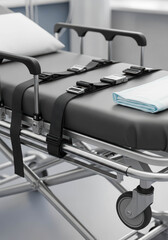
The Iowa State Appeal Board approved a $4.16 million settlement on December 2, 2025, following Conrad Colombo’s catastrophic brain injury during prone (lying flat on stomach) restraint at a University of Iowa Hospital.

Colombo, 38, sought emergency psychiatric help in April 2022 after days without sleep or medication for bipolar and schizoaffective disorder. After striking a security officer during a psychotic episode, 16 University of Iowa Health Care employees restrained him face-down while administering the sedatives droperidol and midazolam. During this time, hospital staff failed to consistently monitor his breathing. When he was finally rolled over, his lips were blue and he had no pulse. Resuscitation took eight minutes and left permanent brain damage.

Such tragedies aren’t isolated. A patient died in Virginia in 2023 during prone restraint at a psychiatric hospital, resulting in an $8.5 million settlement. In Toronto General Hospital, a patient suffered fatal brain injury from restraint asphyxia in 2020.

Instead of prone restraint, experts recommend supine (lying flat on back) positioning, verbal de-escalation, and trauma-informed systems, which can reduce the use of restraints by up to 99%. In 2024, Colorado passed HB 24-1372, which restricts prone restraint.