10 Seconds to Safety

Combat sports like boxing, wrestling and mixed martial arts, by definition, have a high potential of harming the head and brain.  Because of this, in 1985, the New Jersey State Athletic Control Board (NJSACB) was created to, “protect the safety and well-being of all participants and promote the public confidence and trust in the regulatory process and conduct of public boxing and other combative sport.”   This month, the New Jersey State government approved the testing of a new technology that hopes to make combat sports, well, less combative.  Specifically, NJSACB , which sets the athletic parameters in a state that is home to such combat sports locations as Atlantic City and the Prudential Center, approved the testing of EyeGuide Focus.

EyeGuide Focus, “uses a camera [attached to a headset] to record the action of the athlete’s eyes as they track a cursor that makes a sideways figure 8 on a computer screen.”   Because it is able to track the eye 60 times a second, according to the manufacturer, EyeGuide can detect concussions in only 10 seconds.

This past Saturday, February 18, the eye technology was tested at the Cage Fury Fighting Championships at The Borgata in Atlantic City.  As of February 23, the results of these tests are not available for public view.  On May 20, EyeGuide will again be tested at the Top Rank WBC/WBO Junior Welterweight Championship in Newark.*

* Even though the publicity of this device focuses on the use of EyeGuide Focus in combat sports, EyeGuide has larger applications.  According to the manufacturer, the EyeGuide Focus is affordable, so that it can be purchased for use in a wide variety of settings, from MMA matches to high school sports games (the EyeGuide website has the product listed for purchase at $9,999).

SC Bill Seeks to Take Commission from Advisory to Action

During her time in office, South Carolina Governor Nikki Haley said, “[South Carolina] ‘absolutely’ has a responsibility to protect vulnerable adults just as much as it does to protect children.”  In accordance to South Carolina law, in this statement Haley is referring to individuals with intellectual disabilities, autism, traumatic brain injury and head and spinal cord injury.  The comparison of intellectually disabled adults to children may be offensive and ignorant, though common, but during her time in office there was a bipartisan attempt to take responsibility.  For example, during the last legislative year, Senator John Scott (D-Richland) filed a bill that, if it had passed, would have put the South Carolina Department of Disabilities and Special Needs (SCDDSN) in the governor’s cabinet.  This year, just before Haley resigned from her governorship to assume the role of United States Ambassador to the United Nations, state legislators continued their push to support vulnerable adults.  With the bipartisan support of such legislators as Republican Senator Harvey Peeler, the chairman of the Senate Medical Affairs Committee, Scott prefiled a bill similar to that of last year.

The mission of SCDDSN is to, “assist people with disabilities and their families through choice in meeting needs, pursuing possibilities and achieving life goals; and minimize the occurrence and reduce the severity of disabilities through prevention.”  Begun in 1996, the SCDDSN is currently led by seven people, one from each of the state’s seven Congressional districts, who are appointed by the Governor.  The Department has no identified head and some have called it, “the worst-run agency in the state.”  Newspapers also note the allegations of abuse and neglect of the exact people it intends to service.

To some, Scott’s bill seems to be the best available option.  As SCDDSN Commissioner Vicki Thompson says, “Right now, the commission acts like more of an advisory board to the agency, and [I don’t] see a willingness to change on the part of agency officials.”  A director, appointed by the governor, on the other hand, would oversee the department, serving as essentially the CEO and controlling the agency staff.  The commission would then officially become an advisory board.  According to SCDDSN Chairman Bill Danielson, “There are benefits to both the cabinet model and the commission model.”  The question is now which model do those in the state legislature and the South Carolina acting governor Henry McMaster see as best, as making the SCDDSN a cabinet position would mean more visibility, but visibly without action isn’t worth that much.

Echoing the Benefits of Exercise after TBI

In 2013, the University of Buffalo found that of the four participants who underwent daily aerobic exercise, all benefited neurologically, particularly in decreasing exhaustion.  In 2015, the National Institute of Health (NIH) conducted a 12-week study with the same results: “individuals with TBI may benefit from participation in vigorous aerobic exercise training with improved cardiorespiratory fitness and diminished fatigue.”  Currently, the University of Kansas is performing a two-year, $500,000 clinical study, sponsored by the Department of Defense, to see if the same applies to wounded warriors.  (The reason why this is even a question is because traditionally, rest is the recommended remedy for a “knock to the head”.)

As opposed to the Buffalo study, the study in Kansas will include more than 100 hundred wounded warriors, stationed in Fort Riley, all of whom were affected by explosive devices.  Also, as the leaders of the study and exercise trainers will agree, all exercise is not the same and does not provide to same benefits.  Therefore, “instead of lifting weights, we want the soldiers running more to improve their aerobic capacity,” says David Johnson, the leader of the study, explaining the aim of the study in a news release.  Beyond fatigue, the study expects to find that aerobic exercise helps the brain heal in other ways, such as in memory and thinking, anxiety and depression.  While this study is focused on the benefits of exercise for those with mild traumatic brain injury, the results may have benefits for other neurological conditions, such as in aiding those with severe TBI, Alzheimer’s, etc.  More so, it could reaffirm the neurological benefits of exercise for all.

Let’s Dance! FDA Approves Medical Testing of MDMA for PTSD

It has been proven that dancing can relieve stress and anxiety.  Late last year, the FDA approved testing of MDMA, the active ingredient in Ecstasy, the drug that makes you want to dance the night away, as a possible cure for PTSD.  Specifically, after promising results in previous studies, this Phase 3 study, slated to begin in June, will include more patients.  If successful, it will allow the medical use of MDMA in the treatment of PTSD, as soon as 2021.  Whatever your personal opinion of this treatment, the current administration will likely make sure that medical MDMA, if approved, is available for use in 2021 or earlier, as President Trump has previously discussed his support for the troops [many of whom have a TBI and/or PTSD] and his desire to deregulate the FDA.

“Because TBI is caused by trauma and there is symptom overlap [with PTSD], it can be hard to tell what the underlying problem is. In addition, many people who get a TBI also develop PTSD.”  Therefore, if approved, MDMA could help those who have had a TBI “regain” themselves, in some sense.  However, government studies have also proven that continued use of MDMA can cause long-term cognitive impairments.  Memory problems are, of course, already a significant side effect of traumatic brain injury.

Ultimately, finding a treatment for PTSD that does not worsen the symptoms of other medical issues for some potential users is a difficult task.

Richmond Rally Reacts to Rehabilitation Cuts

February 1 marked the 14th annual Brain Injury Awareness Day in Virginia.  Hosted by neurologist and State Delegate John O’Bannon, this day allows those affected by and/or advocating for brain injury to discuss their concerns and wants with their state legislators.  This year, the discussion specifically focused on the state government’s cuts (but not elimination) of funding for rehabilitation for brain injured individuals.  Because of this concern, “after meeting with legislators, dozens of survivors, advocates and caretakers of people with brain injuries held a rally Wednesday to call for improvements in services for disabled Virginians.”  What the government may not understand though, is that it takes rehabilitation, sometimes lengthy rehabilitation, to regain functionality following a brain injury, meaning that adequate state funding is necessary.  Increased functionality means increased employment, increased tax collections and less reliance on government-funded support and services.

Personal note:

In the article, Anne McDonnell, executive director of the Brain Injury Association of Virginia, is quoted as saying, “It is a rare privilege to watch a brain come back online.”  This statement implies that brain injury survivors are primarily non-functioning individuals.  This is highly offensive and simply not true.

Additionally, the article quotes a survivor who is involved with the Association, as saying, “Forty-two … I think I’m 42.”  By choosing to publish this quote, the author of this article is making light of a symptom of this survivor’s disability.  Additionally, I believe that this person, as with many brain injury survivors, has a general disbelief of his memory because he had so many memory problems immediately following his injury.  No one remembers everything.

“Play Smart. Play Safe.”


Politics steps aside on Sunday, as Americans celebrate what is essentially a national holiday, of sorts.  At 6:30pm tomorrow, February 5, the New England Patriots will play the Atlanta Falcons in Houston, TX in the 2017 Super Bowl.  Over 110 million viewers  will tune in to watch the game, the halftime show and, of course, the commercials.  (Every year, that number keeps inching closer to the voter turnout.)  However, for Patriots’ fans, there is a looming question: will Nate Ebner, the Special Teams player that suffered a concussion, a head injury, in the AFC championship be on the field?

On January 22, the AFC Championship was held, with the Patriots playing the Pittsburgh Steelers.  It was a victory for the New England Patriots, but not for Ebner, who got a concussion.  Since then, the status of Ebner has been unclear.  Though the Patriots cancelled practice last Wednesday, the roster shows that Ebner would not have been a participant.  On Thursday, January 25, Ebner also sat out.  There are two weeks between the league championships and the Super Bowl, which some see as positive because it gives players an adequate amount of time to “recover” from any injuries.  However, ten days after their win, on February 1, Ebner finally returned to practice, as a limited participant only.

As CBS notes, “Ebner is a fixture on special teams but nothing more.”  Sure, Ebner wants a Super Bowl ring to accompany the Olympic ring he won in rugby six months ago and to accompany the Super Bowl ring he already has, but hopefully he and the team will put that aside.  Ebner and the team need to take the long view.  Maybe he is well enough to play again, but a player’s health and his future ability to help the team is more important than a ring.  As the National Football League’s initiative states, “Play Smart.  Play Safe.”

*** ”With more spotlight on [the] long-term effects [of concussions] to player health, the league instituted protocol to address the diagnosis and management of concussions [in 2009].”  Concussion protocol involves checking for loss of consciousness, slowness in getting up, lack of motor coordination or balance problems, having a blank or vacant look, disorientation and the clutching of one’s head.  Beyond that, there is Return-to-Participation Protocol.

Since instituting these protocols, the rules have been annually updated to add additional protections.  For example, in 2015 rules were instituted, so that there are now medical spotters in the stadium who could, at any time, halt play and remove an injured player.  In 2016, the most important secondary rule was instituted: punishing those who do not follow concussion protocol.  Teams can now be fined $100,000 or more for not following the rule and, “if the commissioner determine(s) a team violated the protocol for a competitive advantage, the team could be required to forfeit a draft pick in addition to fines.”

Epilepsy After TBI May Offer Pathway for Cure

In the United States, about 1 in 26 people will develop epilepsy at some point in their lives.  Though this is a staggering number as it is, traumatic brain injury can greatly heighten the risk of developing this seizure disorder.  According to the NIH, “Seizures…happen in 1 to 5 of every ten people who have had a TBI, depending on where the injury occurred in the brain.”  Though this statistic is very vague, even the fact that ten percent of brain injured individuals may develop epilepsy is a horrifyingly large number.  However, the reality of this awful statistic may present an opportunity for a broad range medical breakthrough.

A TBI is caused by a single moment, a single jolt to the brain.  “Because the precise time of the epilepsy-causing insult is known, traumatic brain injury offers the best opportunity for determining how epilepsy develops…,” says Dr. Jerome Engel, Jr., professor of neurology, neurobiology, and psychiatry and biobehavioral sciences at UCLA.  That means that a head injury, a single moment that severely disrupts one person’s life, may allow doctors to find a cure for millions of others.

In this UCLA-led study for a cure, a.k.a. Epilepsy Bioinformatics Study of Antiepileptic Therapy (EpiBioS4Rx), “the research team will identify biomarkers associated with the development of epilepsy and develop therapies to prevent or modify the condition.”  Specifically, along with UCLA, the project will be a cooperation of UCLA with 13 centers for traumatic brain injuries and seven preclinical research centers.  The NIH has pledged a grant of $21 million for the five-year study, $7.5 million of which will be granted to UCLA.  Led by so many world-class neuroscientific teams and with the government’s financial assistance, EpiBioS4Rx may give hope for a cure, for an incurable disease.

Link: Rights Come to Mind

Dr. Joseph J. Fins is a nationally-known and well-esteemed physician specializing in neuroethics.  Specifically, he is, “focused on advancing the care of patients with severe brain injury and bringing the fruits of neuroscience to a very marginalized population”.  Beyond heading a Division at the New York Presbyterian Hospital and Cornell and other prestigious appointments, he was appointed by President Bill Clinton to The White House Commission on Complementary and Alternative Medicine.

In 2015, Fins published a book, Rights Come to Mind: Brain Injury, Ethics, and the Struggle for Consciousness that encapsulates his interviews with more than 50 families, who are all personally affected by severe brain injury.  A particular story in an article about the book caught my eye: “Several years ago a father approached me, concerned about the care his son was receiving. The son had been in a car accident… was placed in a nursing home…  The father feared his son was being ignored or, worse, left in pain or distress.”

As with many brain injured individuals, I have a similar story.  To be candid about my experience, within a day or two of my brain injury, because of the severity of my injuries, the doctor handling my case asked my parents if they would sign off to allow my organs to be donated upon my imminent death.  Fortunately, my parents said no and immediately requested another neurologist to handle my case.  I was lucky to have parents who were so forthcoming regarding their expectations from my doctors.  The article, Why advances in treating those with brain injuries require advances in respecting their rights, shows that the mentioned father loved his son very much, but it does not state what happened with his son beyond the father’s fear.  (One can only hope for the best.)  I find that it advances understanding and can even be reassuring to learn about others’ brain injury survival stories.

The world seems to be gaining more knowledge of brain injury.  For example, the recently passed federal 21st Century Cures Act allocates $1.5 billion for brain research.  “New treatments bring new hope,” and hopefully, more understanding and acceptance.  As a brain injured person myself, I definitely plan on reading this book.

Arizona Proposed Helmet Law Heads Nowhere

On Wednesday, January 18, the Arizona House Transportation and Infrastructure Committee made a unanimous call against House Bill 2046, a “helmet law” proposed by Rep. Randall Friese.*  Specifically, the bi-partisan committee voted against a law that would require adults driving motorcycles, all-terrain vehicles or motor driven cycles to wear helmets or to pay a fee into a special trauma-injury fund.

Regarding this rejection, many of the bill’s critics said that what Arizonians need is simply better training.  Another critic, “Rep. Noel Campbell, R-Prescott, who chairs the [Committee], said he personally wears “every piece of equipment you can get on” when he rides his motorcycle. But he said a better legislative approach would be incentives for riders to protect their heads, rather than penalties for those who do not.”  I disagree, rewarding someone just because they are “safe cyclists” is not the answer.  (Should you really be rewarded for not hitting another vehicle?)  The idea proposed by other critics, better and more thorough training for cyclists, may be a better solution.

Note that this is not the first time that the Arizona House has rejected a helmet law, proposed by Friese.  “When [Friese] introduced this bill two years ago, the first thing [he] heard was, ‘It is my right to ride my bike without my helmet.”  However, in his view, “I don’t believe it’s a right. I believe it’s a privilege.”  Whatever it may be, a right or a privilege, riding unhelmeted is irresponsible.

* Rep. Randall Friese, D-Tucson, definitely has a different perspective than many members of the Transportation and Infrastructure Committee and of the State Assembly at large.  Friese is a trauma surgeon.  Presumptively, he has operated on head-injured motorcyclists.  He has seen first-hand what a severe motorcycle accident can do to the brain and to the person.  Having directly viewed the brain after such an incident definitely gives him a unique, and more cautious, perspective.

A Penny for Your Brain

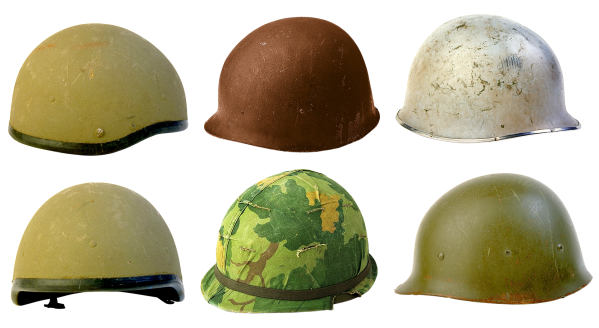
Imagine if all you had to do was carry around a penny to know if something has negatively affected your brain.  The Office of Naval Research (ONR) is sponsoring the development of such a product, called BLAST (Blast Load Assessment Sense and Test).  Specifically, the ONR, in association with NASA, the University of North Carolina, and Applied Research Associates Inc., a New Mexico-based research firm, is in development of a coin-sized device that would be no burden to the soldier and can be worn on the helmet or body armor, and can identify brain injury, letting the soldier know if they should get immediate medical help.  As Dr. Timothy Bentley of the ONR says, “A system like BLAST is vitally important because it can help recognize the signs of TBI early and tell warfighters they might need medical attention.”

While it may take 5 years to be fully developed and tested, the prospect of such a product has great possibilities, both in and outside of the armed forces.  For example, brain injury in American football has been big news in the past several years, and a coin-sized brain injury “detector” attached to players’ helmets could aid in the quick diagnosis and treatment of such an injury in football and other sports where helmets are worn, such as hockey.  Beyond that, the possibilities are endless.

For more information:

Navy BLAST Sensor Development Looking to Improve Data on TBIs, Military.com

BLAST: Greater Speed, Accuracy in Recognizing Brain Injury, AMERICA’s NAVY

Naval Research seeks to tackle traumatic brain injury, MilitaryTimes