University Pays Millions for Treatment Positioning Outcome

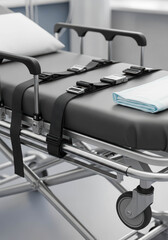
The Iowa State Appeal Board approved a $4.16 million settlement on December 2, 2025, following Conrad Colombo’s catastrophic brain injury during prone (lying flat on stomach) restraint at a University of Iowa Hospital.

Colombo, 38, sought emergency psychiatric help in April 2022 after days without sleep or medication for bipolar and schizoaffective disorder. After striking a security officer during a psychotic episode, 16 University of Iowa Health Care employees restrained him face-down while administering the sedatives droperidol and midazolam. During this time, hospital staff failed to consistently monitor his breathing. When he was finally rolled over, his lips were blue and he had no pulse. Resuscitation took eight minutes and left permanent brain damage.

Such tragedies aren’t isolated. A patient died in Virginia in 2023 during prone restraint at a psychiatric hospital, resulting in an $8.5 million settlement. In Toronto General Hospital, a patient suffered fatal brain injury from restraint asphyxia in 2020.

Instead of prone restraint, experts recommend supine (lying flat on back) positioning, verbal de-escalation, and trauma-informed systems, which can reduce the use of restraints by up to 99%. In 2024, Colorado passed HB 24-1372, which restricts prone restraint.

From Execution Chamber to Fraternity Basement

When you think of fraternity hazing, the first example that likely will come to mind is excess alcohol consumption or perhaps streaking through campus. Some fraternities, though, may take hazing to an extreme.  On October 15, 2025, a fraternity at New Jersey’s state university Rutgers did just so: a 19-year-old student was electrocuted during fraternity hazing activities involving water, suffering serious electrical burns and lost consciousness. A second student was shocked while attempting to rescue him. (This fraternity has now been closed at the school.)

In 2019, at the University of New Hampshire, 46 students were arrested in 2019 for a “talent show” involving stun guns. Washington and Lee University suspended Phi Kappa Psi for three years in March 2015 after a member used a Taser on a pledge during initiation. Washington and Lee University President Kenneth Ruscio called it “clear physical abuse, harmful enough as it was, but under the circumstances potentially even more dangerous.”

While electrocution consequences may be first thought to be physical, the cognitive impairments from electrical injury can be more disabling.

According to the NCBI, this process disrupts the semi permeability essential to neuronal function, causing ATP depletion, mitochondrial damage, and loss of electrical charge. As with many traumatic brain injury cases, survivors experience impaired episodic memory, struggling to form new memories or recall recent events. Research into 26 electrical injury survivors found 62% showed processing speed deficits—the most common impairment. Another 62% demonstrated auditory memory and working memory dysfunction. Verbal learning suffered in 54%, while 46% had concentration and attention problems, and 35% showed visual memory deficits.

Brain injury occurs even when current doesn’t directly traverse the skull, transmitted via spinal cord myelinated axons and systemic hormonal stress responses. However, with comprehensive neuropsychological testing, psychiatric support, and occupational rehabilitation, the NIH acknowledges that functional improvement remains possible.

HISTORY & LEGISLATION:

As to how electrocution became a known means of torture, it may be good to look though America’s past: electrocution emerged as a death penalty method in 1888, when New York adopted the electric chair as supposedly more humane than hanging. Currently authorized in nine U.S. states including Alabama, Florida, and South Carolina, it has been used in approximately 4,251 executions since 1890. North Carolina Governor Josh Stein called execution by electrocution “barbaric” in October 2025, while Representative Pricey Harrison described it as “gruesome” in September 2025, noting victims are “literally cooked to death.”

Historic Federal Shutdown Resolved as Disability Services Faced Collapse

“The House of Representatives passed the ‘Continuing Appropriations, Agriculture, Legislative Branch, Military Construction and Veterans Affairs, abd Extensions Act, 2026’, with a vote of 222 to 209… after a damaging and unnecessary shutdown that lasted 43 days,” states a press release on the Committee on Appropriations section of the House of Representatives site.

The longest congressional government shutdown in U.S. history ended November 12, 2025, after 43 days, and 15 votes, that threatened the funding of critical services for people with brain injuries and disabilities. The House passed the Senate Appropriations Committee’s spending bill H.R.5371 with a vote of 222-209. President Trump signed the bill into law at 10:25 PM EST.

As was widely reported, the shutdown disrupted Supplemental Nutrition Assistance Program November benefits for 42 million Americans. Nearly 14 million people with disabilities rely on SNAP benefits.  Senator John Fetterman, who suffered a stroke in 2022, was among eight Democrats who voted with Republicans to end the shutdown. He stated: “I refuse to gamble with the food insecurity of 42 million Americans”.

Many financial assistance government programs that benefit the brain injured population are state-based: Supplemental Security Income, employment services, support for independent living healthcare, such as Medicaid and state-specific programs. As such, Social Security Disability Insurance (SSDI) payments thankfully continued without interruption, though other crucial services suffered.

However, many disability advocacy organizations operated “on fumes,” with some stopping new cases entirely. Maria Town, President of the Washington D.C. located nonprofit American Association of People with Disabilities, warned: “Given how many people with disabilities rely on benefits from government programs, this shutdown is especially harmful for the disability community”. The Tennessee Rehabilitation Center in Smyrna closed completely due to lack of federal funding, while Arkansas suspended rehabilitation services starting November 1.

Interestingly, the government shutdown, officially termed a “lapse in appropriations”, was not introduced to the Country as a negotiating “tool” until 1980, during the presidency of Jimmy Carter.  Since that time, most Presidents have weathered these shutdowns. Only two, Ronald Reagan and Donald J. Trump, weathered 3 shutdowns while in office. If history is to be the guide, this government inaction will soon be forgotten, which is both a positive and great negative for America’s well-being.

Hard Hats & Neural Nets: Scaffolding’s Life-or-Death Role

During severe weather at Utah’s RedWest music festival in October 2025, a 2’x12’ scaffolding board broke loose from a nearby construction site and struck 23-year-old Ava Ahlander, killing her instantly. This tragedy underscores construction scaffolding’s critical vulnerability—despite providing essential support for workers, these temporary structures can traumatically injure or turn deadly when they fail.

The stakes are staggering. “In 2023, 5,283 workers lost their lives. That means a worker dies every 99 minutes,” stated Assistant Secretary of Labor for Occupational Safety and Health Doug Parker in December 2024. While that death rate is a conglomeration of all construction deaths, in 2022 alone, falls from elevation claimed 365 construction workers’ lives – additionally, it does not note the rate of disability.

Yet inside our skulls exists another type of scaffolding—neural networks that support brain function. Unlike construction platforms that can be dismantled and rebuilt, brain scaffolding faces unique repair challenges. Traumatic brain injury severely limits the brain’s natural regeneration capacity.

Now researchers are developing biodegradable polymer scaffolds seeded with neural progenitor cells to bridge the gap. These biological structures can reduce lesion volume, promote neurite outgrowth, and significantly improve motor function after brain injury. As noted in a June 2025 NIH-published study How neural stem cell therapy promotes brain repair after stroke, understanding how these stem cell grafts promote neural repair “remains incompletely understood.”

While construction scaffolding must be secured to prevent tragedy, our own scaffolding benefits from neuroplasticity—the remarkable ability to reorganize and heal.

The Spaceman Falls to Earth

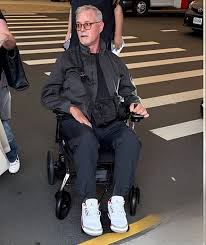
Ace Frehley, KISS’s founding guitarist known as “The Spaceman,” died October 16, 2025, at the Morristown Medical Center (NJ), from a fatal brain bleed. After past years of excess, including drugs and alcohol use, and numerous car crashes, it was two falls within a span of two weeks that led to the 74-year-old rock icon’s demise. Frehley first fell in his home studio in late September. What was first described as a “minor fall”, resulted in a brain bleed. Then, in early October, he catastrophically fell down a flight of stairs.

Brain bleeds occur in approximately 25% of head injury cases, with falls accounting for 85% of traumatic brain injuries in elderly patients. At Frehley’s age, mortality rates for acute subdural hematomas are 65-88%. Specifically, the bleeding prevents oxygen from reaching brain tissue, irreversibly causing damage within minutes. For those who do survive, they often face permanent paralysis, memory loss, and personality changes. Frehley, however, never experienced these consequences, as he remained unconscious after his second fall, until his family removed life support.

In 2020, the guitarist, who leaves behind a complicated legacy, famously declared “Trump is the strongest leader that we’ve got”. President Trump, announcing Kennedy Center Honors in August, called Frehley and KISS “legendary”. Famed guitarist John 5, his friend, stated, “What he told me is he was so excited that the president said his name… At this point of his life, he was over the moon.” Frehley will still receive this honor, now posthumously.

Actor’s Head Injury Highlights Complex Link Between ALS & Brain Trauma

Grey’s Anatomy star Eric Dane was set to present an award at the Emmy Awards on September 14, 2025.  Instead, the actor missed this year’s awards entirely. After a fall in his kitchen caused a head injury that required stitches, he spent a much less glamorous evening in the hospital.

Earlier this year, Dane revealed that he suffered from amyotrophic lateral sclerosis. Reports say that Dane has largely lost control over the right side of his body due to the progressive neurodegenerative disease, illustrating how ALS-related motor control loss can lead to falls and subsequent head trauma.

The National Institute of Neurological Disorders and Stroke acknowledges head injury as a potential risk factor ALS, though researchers emphasize more investigation is needed to understand the intricate connection. An October 2025 study report found on the NIH database, and initially published on JAMA Network, states, “TBI might represent an early complication of… preclinical ALS at risk of falls or other events culminating in TBI.”

Various studies have shown that there is a complex relationship between the two conditions. Data from the National ALS Registry, published by the NIH in January 2025, found that over half of ALS patients had experienced head injuries, with multiple injuries and those occurring before age 30 showing stronger associations. The aforementioned JAMA Network study, examining the connection between TBI and ALS in over 342,000 adults, found that individuals with a history of traumatic brain injury had more than double the risk of developing ALS. (The elevated risk, though, was confined to the two years immediately following brain injury, with researchers suggesting this may indicate reverse causality—that the head injury could again be an early consequence of subclinical [undiagnosed] ALS rather than its cause.)

Holly’s Trauma May Prevent Others from Neurological Harm

Holly, a single mother of three, was brutally beaten unconscious while trying to intervene in a downtown Cincinnati street fight on July 26 at around 3 a.m. Violently slammed to the ground by the attackers, she was left with severe injuries including neurological damage, specifically a concussion and vision problems.

In subsequent media appearances, Holly described the assault as “attempted murder” rather than just an incident, criticizing police for their inadequate response. She also expressed frustration that despite suffering life-threatening injuries, as of the date of her viral response, she had not been contacted by Cincinnati officials, apologizing for the attack.

Six individuals have been arrested in connection with the brutal beating that was witnessed by approximately 100 bystanders, though only one person called 911 for help.

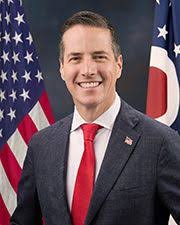
In response, on Wednesday, August 6, 2025, Ohio Senator Bernie Moreno introduced “Holly’s Act” – proposed legislation aimed at ending what he calls the justice system’s “revolving door” for repeat offenders. The act would raise minimum sentences and bail requirements for violent criminals, ensuring those with extensive criminal records cannot easily return to the streets.  Additionally, “[He] will convene the federal agencies that provide money to Cincinnati and ask them to suspend federal funding until [the city council and the mayor have] a plan in place.”

Cincinnati Mayor Aftab Pureval called Ohio Senator Bernie Moreno’s response “extremely disappointing,” stating that threats to suspend federal funding constitute “political theater” designed to harm residents. The mayor defended the city’s existing public safety initiatives, including drone programs and walking patrols, while acknowledging more work needed to be done downtown.

Holly supports the legislation, hoping her traumatic experience will be a catalyst to prevent similar attacks and improve police staffing statewide.

Manhattan Mass Shooting Linked to the Brain

On Monday evening, those is the NYC Tristate area were aghast at the report of a Midtown Manhattan mass shooting that left 5 people dead, including the shooter.  In a 3-page note found at the scene, the 27-year-old male shooter claims to have suffered from chronic traumatic encephalopathy, writing, “Study my brain please… I’m sorry.”  While CTE does not lessen the horror of the shooter’s actions, it could explain why these actions were taken by a man described by a former coach as, “a quiet kid, well-mannered, very coachable.” 

Government-funded studies have shown that high school football can cause neurological trauma.  NYC Mayor Adams confirmed, “We’re looking at his note that talked about CTE… but it is far from conclusive.”  CTE does affect impulse control.  The shooter, though, had the foresight to book and take a trip from Las Vegas to NYC, NFL headquarters, and to purchase a high-powered rifle.  Additionally, his letter reveals that his sense of right and wrong was intact.

NOTE: I choose not to post any statements related to said incident from any of the current candidates for NYC Mayor.  Eric Adams’ statement was specifically related to his mayoral duties.

(The accompanying link is still relevant to the current NYC occurrence.  Of course, new research has been done, and new conclusions have been reached, since it was first posted in 2018.)

Great Advocate Passes Away: Rosalynn Carter

Less than a week ago, America lost not only its oldest former First Lady, but also a prominent advocate for the mentally ill.  Rosalynn Carter was 96 when she passed at her and her husband’s home in Georgia.  From the time of President Jimmy Carter’s first run for Governor of Georgia until her death, a timespan of over 50 years, she worked to better the treatment of and end the stigma against mental illness. 

Although the definition goes beyond this, the National Institute of Health, in 2022, stated, “Traumatic brain injury (TBI) is associated with a host of psychiatric and neurobehavioral problems.”  While, traditionally, a traumatic brain injury is considered to be a separate entity from mental illness, the possible symptoms are similar, if not identical.  Ms. Carter likely considered it so, as speaking about her advocacy, she has mentioned visiting facilities/institutions that housed troops who suffered from PTSD and TBI.  In a discussion at the JFK Library, she noted a Columbia University study that stated that 85% of Americans consider mental illness to be a neurological illness.  If nothing else, traumatic brain injury is a neurological illness.

As President, Jimmy Carter enacted the greatest overhaul of the mental health system in America to date.  The next major expansion of the system was enacted in 2002, by President George W. Bush.  Ms. Carter has only positive statements about this action, as she put cause above party.  In 1987, Ms. Carter founded the Rosalynn Carter Institute for Caregivers, saying, “Those giving care often do so at a great personal sacrifice of time, energy, and income… So many people giving care to their loved ones feel isolated, inadequate, despairing.  At a time when more and more Americans are called to give care, it is critically important that we do all we can to support caregivers.” Recently, in May 2023, it was revealed that Ms. Carter was suffering from dementia.

The private funeral for Ms. Carter will be held on Monday, November 27th in Plains, Georgia.  Her husband of more than 77 years, who is receiving home hospice care, will be in attendance, as will her children, grandchildren and great-grandchildren.  Americans should remember Rosalynn Carter, not only for her time as First Lady, but for her advocacy for mental illness, including traumatic brain injury, and their caregivers.  (“In lieu of flowers, the Carter family is requesting that those interested consider contributing to the Carter Center’s Mental Health Program or the Rosalynn Carter Institute for Caregivers.”) 

Israel-Hamas Attacks Conflict Minds, Damage Brains

The United States of America is full of many calling for a ceasefire for the Israeli-Hamas war (the war is against Hamas, not Palestine, meaning not against the whole population).  But, unless a rainbow appears in the Middle East accompanied by a sky full of butterflies, I believe that we must deal with the reality.  A war was started by Hamas with the horrific attack of October 7th that killed about 1,400 Israelis, including U.S. citizens.  Based on that, for those that vocally express their hope for a ceasefire and want no involvement by the United States, they should remember that Hamas has already embroiled us in the conflict.  (As it relates to this blog, there is no confirmed number of how many people in the initial, or follow-up, attacks suffered brain injuries, or any other sort of injury.)    

The Times of Israel headlines Something changes in our brain as we react to the traumas on and since Oct. 7.  In that article, neuroscientists discuss how an act can have both emotional affects and how it can lead to personally detrimental behavior.  (Of course, those who live in Hamas-lead territory also are afflicted, but for the purpose of this post, the focus is America’s Middle East ally, Israel.)  Stateside, Hamas propaganda has seeped into the mainstream.  Many continue to believe that Israel attacked a Palestinian hospital.  Reports by CNN, though, highlight, “U.S., Experts Say Evidence Suggests Palestinian Militants’ Rocket Hit Gaza Hospital”.  Unfortunately, the pro-Hamas stories preceding this report that place the blame solely on Israel still circulate online and are believed, by some.

As is evidenced by the many protests you see on college campuses and other locations, Americans have joined the war, at least in mind. Pro-Palestinian and pro-Israeli protests are frequent and often result in violence from those with opposing views. Most, if not all, of the reports I have seen discuss violence against Jewish-Americans. Antisemitism, which I thought and prayed had been eradicated from America many years ago, seems to be alive. One of the best, or rather, the worst example of the effects of this mindset occurred this past weekend. NBC news, and others, reported, “A 69-year-old Jewish man died after suffering a head injury Sunday following an ‘interaction’ with a pro-Palestinian demonstrator during dueling rallies in Southern California.” The police are currently investigating this as a “hate crime”, which is very appropriate.