Investigators Question America’s Football Crisis

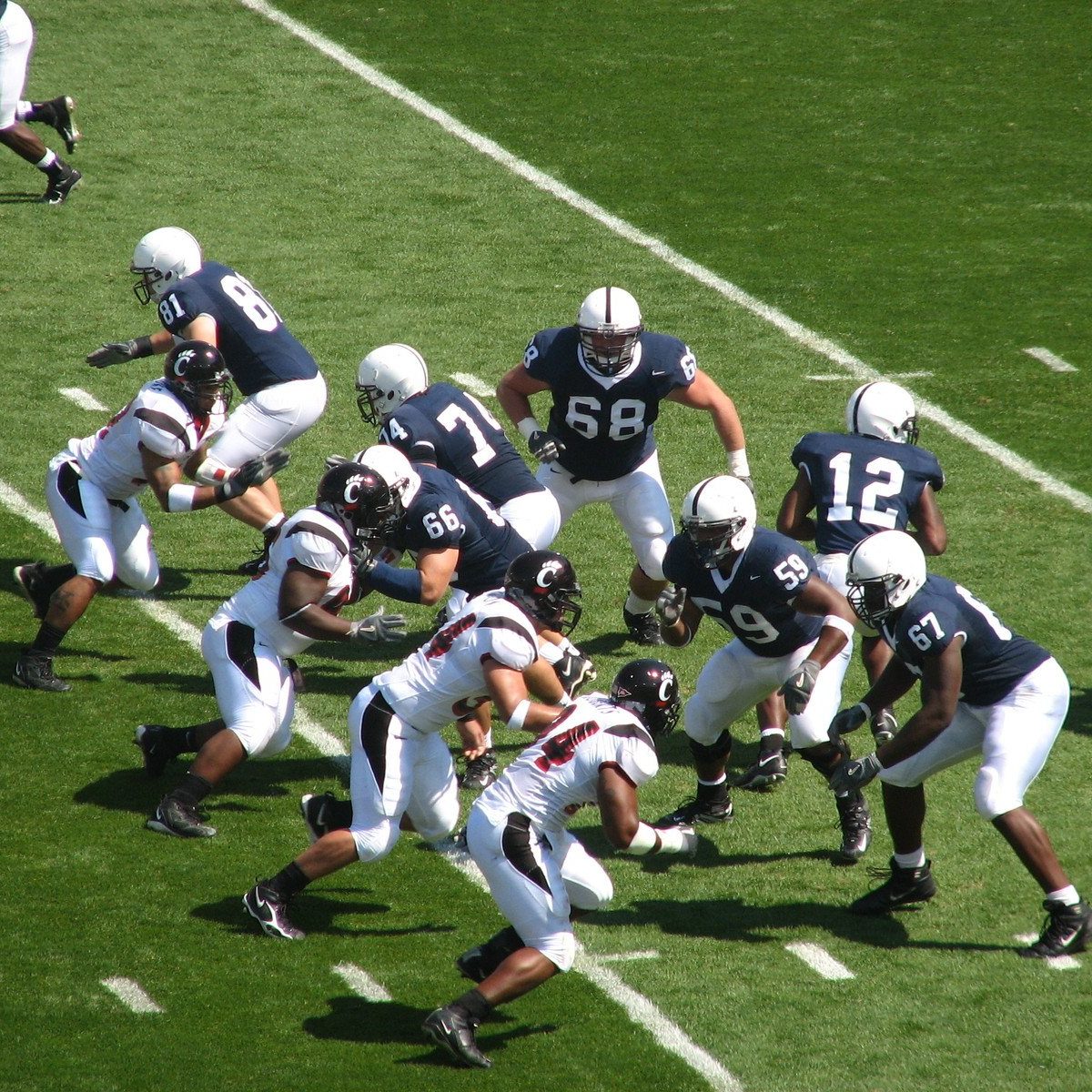
People now see football and brain injury as a definite cause-and-effect.  Parents are much more hesitant to allow their school-aged children join the school football team.  In January, for example, laws related to youth football were proposed in Illinois and New York, both named after former NFL players who suffered the effects of CTE (chronic traumatic encephalopathy).  In Illinois, HB4341 was named after Dave Duerson, a former Chicago Bears player who committed suicide in 2011 and whose autopsy showed that he had a brain injury.  Officially known as the CTE Prevention Act (HB4341), the last action on the Duerson Act was on April 27, 2018 when it was referred the Rules Committee.  In New York, A1269A is named after former Baltimore Colts tight-end John Mackey, who showed signs of brain injury prior to his death at age 69.  The John MacKey Youth Football Protection Act is also still in Committee in the State Assembly.  (Notably, the MacKey Act only prevents children 11 years and younger from playing tackle football, not 12 or 13 years as other proposed laws restrict.)

In Maryland, a bill was introduced by Delegate Terri Hill, and failed, that would have changed the rules for youth soccer, lacrosse, hockey and [tackle] football.  (“I really did not expect it to pass, but I think it’s a conversation we have to have and I don’t think the conversation is over,” Hill said.)  In New Jersey, A3760 was introduced by Assemblywoman Valerie Huttle on April 5, 2018 to prohibit children under the age of 12 from participating in tackle football.  After its introduction, it was referred to the Assembly Women and Children Committee, where it sits now.  Last week, AB-2108 failed in the California Assembly, “but before the outrage and the mudslinging and the ‘Save Youth Football’ rallies, [the] resolution pass[ed] unanimously, with 69 co-authors.”

Many proponents of safer/more restrictive youth football cite a recent Boston University study that showed that hits to the head, not concussions, cause CTE.  Hits to the head are thought to be simply a means of defense in football, not just the residual effect of defense, like a concussion.  Therefore, it’s harder to eliminate them while keeping the competitive edge of the sport.  (Getting rid of the tackle part of professional football would be more difficult, but it is still difficult in youth football, without allowing it to become touch football.)

What the safety rules of youth football should be is a good discussion to have, especially now that a Court-appointed Special Investigator has shown that some NFL players who have claimed brain injury did not, if fact, have such neurological problems.  The Investigator found, for example, that a law firm shared by dozens of NFL players purportedly coached the players on how to fail a neurological test.  A review of the post-NFL lives of some players who claimed themselves to be too cognitively impaired to work did, in fact, work – as motivational speakers, coaches, bankers, etc.

However, no one is fully certain about the effects of football on the brain. In April 2018, former 19-year NFL player Brett Favre spoke of whether his forgetfulness was because of he is aging, as he is 48, or, “do I have [the] early stages of CTE?  I don’t know.”  Research and news have made brain injury and football seem to always coincide, so Favre’s personal questioning is understandable.  Just as was noted in this website’s article related to Shaken Baby Syndrome though, the horrific easy answer isn’t always correct.  Whether or not the news about the CTE-football connection affects a state’s or a school district’s decision on whether to continue to offer football, whether schools stricken their football rules, and whether a parent chooses to allow their child to play the sport rests solely on them.

AVs: Salvation or Hazard

Getting an extra 30 minutes of sleep while you’re on the road… finishing yesterday’s homework while you’re on your way to your senior year of high school… caring for your baby while you’re breezing through the highway.  All of these scenarios seemed too good to be true a few years ago, but now America is on the cusp of the age of autonomous vehicles (AVs).  As it is, in 2016, 87.5 percent of people ages 16+ had their driver’s license and spent, on average, a total of 17,600 minutes on the road a year.  The idea of a car that could do the tedious and time-consuming duties of driving is a dream that is quickly becoming a reality.

For the disabled, the benefits of autonomous cars are even greater – if nothing else, it allows for increased independence.  It means the legally blind, for example, will finally be able to safely operate a car by themselves.  A 2012 video of a legally blind man stopping at the Taco Bell drive-thru prompted much positive excitement.  The means with which to allow the blind to safely drive is still in actuality in development, but spokesmen do say, “At Waymo, Google’s self-driving car company that was launched nearly a decade ago, officials say visually impaired employees contribute to design and research. While no specific system for blind riders has been completed, the company says it’s developing a mobile app, Braille labels and audio cues.”  As Americans gets older, a self-driving car could help those who have a, “loss [of] flexibility, vision and hearing,” and delayed reaction time.  Of course, these are some of the same impairments suffered by those with brain injuries.

However, this may seem too good to be true because it is just that.  Car fatalities have been on an almost steady decline, from a high of more than 50,000 in the 1970s to the low to medium 30,000s this decade.  (“An additional 2.35 million are injured or disabled.”)  Though this is still an extremely high number, how will fully autonomous or semi-autonomous cars affect this?  Beyond testing, no one knows if or by how much this will decrease with the use of self-driving cars.

Cars don’t have the same “sense” that people do.  Only a month ago, on March 20, 2018, in Arizona, a homeless woman became the first pedestrian fatality to be attributed to this new technology. “If there is any real-world scenario where it would be seemingly safe to operate in an automated mode, this should have been it. Something went seriously wrong,” said an urban planning professor after the incident.  (The car that caused the fatality was a self-driving Uber.  Uber has since suspended it’s self-driving car tests.)  In Mountain View, CA, headquarters to self-driving car company Waymo, Walter Huang was killed after the sun glare got into his eyes when his Tesla noted that it needed him to take the wheel, resulting in his vehicle driving straight into a highway median.  Two years ago, in Florida, a man was killed when he failed to take the wheel after numerous notifications from a self-driving car.  (The National Transportation Safety Board released a report of findings about the incident.)

In a horrifying test, reported by Psychology Today this month, “some recent demonstrations have shown that a few black stickers on a stop sign can fool the algorithm into thinking that the stop sign is a 60 mph sign.”  As far as accidents go, in Pittsburgh, PA in late February, a “Woman claim[ed a] self-driving Uber struck her car, left the scene.”  Did that driver choose not to stop or did the car leave on its own?

The above are just a few examples of accidents or possible accidents resulting from problems with autonomous cars.  (I am not sure how many more examples there are, if any.)  Tesla said in 2016, “Autopilot is by far the most advanced such system on the road, but it does not… allow the driver to abdicate responsibility.”  Presumably the technology has gotten much safer in the past 2 years because California just legalized testing of fully-autonomous vehicles on public roads.  Nationally, H.R. 3388 passed the House unanimously.  The bill’s subtext says that its intent is, “to provide for information on highly automated driving systems to be made available to prospective buyers.”  Further reading though, one finds that the goal of the bill is, “encouraging the testing and deployment of such vehicles.”  (Read also: California proposes new rules for self-driving cars to pick up passengers.)

Self-driving cars have already been tested in multiple states with positive results.  For example, in California, the state with the most drivers in America and the state that is testing AVs the most, Waymo just applied to the state to do what the above law indicates: test self-driving cars without a back-up driver on public roads.  (Besides California, many other states already have laws or proposed laws on the legality of self-driving cars.) Six months ago, GM announced its plan to start testing its Chevy Bolt EV in Manhattan later in 2018.  In Connecticut, Governor Daniel P. Malloy created a pilot program, which will soon launch, to test fully-automated cars.  And this month, the Pentagon announced that it intends to become the next big AV developer, as it soon plans to use self-driving vehicles in combat.  As Michael Griffin, the undersecretary of defense for research and engineering, states, “52 percent of casualties in combat zones can been attributed to military personnel delivering food, fuel and other logistics.”  Removing humans from this equation will save many lives.

Since there has been no final determination of the safety or legality of self-driving cars for the general population or for the disabled, no conclusion can be made on this post.  Some car manufacturers are addressing the public’s worries about fully autonomous cars by making them just not really that.  For example, one company, Phantom Auto, has developed a remote control car system, in which the car is “driven” remotely by an employee miles away.

But perhaps the worry about autonomous cars is similar to that which arose when America changed from horse-and-buggy to modern cars?  The concern and the extreme testing are understandable, but some states realize that the testing must stop at some point.  Is that time now?  In addition, should we allow those who are currently hindered from driving by their age or disability to get a key?

* Another issue that some have with self-driving cars is that, “AVs will record everything that happens in and around them. When a crime is committed, the police will ask nearby cars if they saw anything.”  For car accidents and other such physical and/or vehicular traumas this is a plus.  However, while a person or their family may want to know what vehicle caused their child’s car accident, do they want to give the government the ability to know exactly when they left for work, went to Walmart, refilled their gas tank, etc.?  Will self-driving cars be the means for social control?

Sit Down and Breathe

The easiest way to heal from a brain injury is simply to replace the injured parts of the brain.  Though this thought may seem both impossible and simply weird, scientists are now learning how to replace, or rather regrow, the brain in the healing of traumatic brain injury.

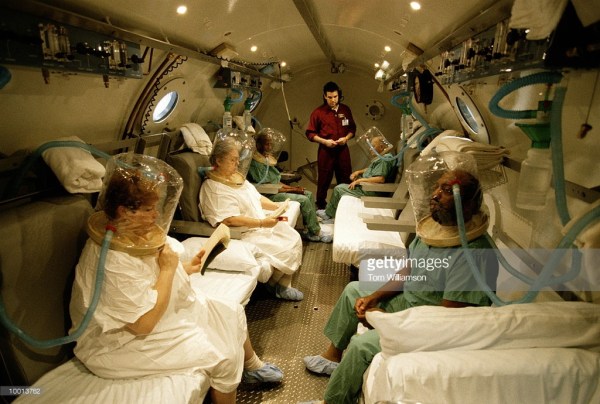
Specifically, it is well-known that human life depends of the inhalation of oxygen.  Oxygen also helps the body heal, as it is transported through the body in red blood cells.  Leveraging this healing process, hyperbaric oxygen therapy (HBOT) has been developed as a medical treatment in which one is encapsulated in a room or chamber filled with 100% oxygen.  (The air humans typically inhale is only about 20% oxygen.)  Additionally, HBOT has three times more air pressure than is typically experienced.  Increased inhalation of oxygen means that it is not only transported through red blood cells, but also, “into all of the body’s fluids, the plasma, the central nervous system fluids, the lymph, and the bone.”  More oxygen means more opportunities to aid healing, even while appropriate oxygen is still provided to the lungs.

Based on this evidence, it seems that HBOT would be a logical choice for professionals to treat those with certain injuries.  For example, Lake Regional Wound Healing Center in Missouri has been named a Center of Distinction, largely for its work with HBOT.. In New Mexico, a pickleball benefit  was recently held both to honor deceased veterans and to raise funds for Mission 22, an organization that offers HBOT to those with TBI.

More so, the federal government discovered these benefits a few years ago.  In June 2014, for example, the NIH published a study titled Red blood cell transfusion in patients with traumatic brain injury: a systematic review protocol.  In 2016, they published the results of a study titled Hyperbaric oxygen therapy for traumatic brain injury: bench-to-bedside, during which they concluded that, “HBOT has been demonstrated to have neuroprotective effects without increased oxygen toxicity in experimental TBI models when administered at pressures less than 3 ATA [atmospheric pressure].”

In recent days, a law to provide HBOT to veterans suffering from injury, including TBI and PTSD, was presented to the Arizona legislature.  Specifically, Hyperbaric Oxygenation Treatment for Veterans with Traumatic Brain Injury was sponsored by Mark Finchem and passed the State House and Senate unanimously.  On Thursday, March 29, HB 2513 was signed into law by Arizona Governor Doug Ducey.  Reading about Arizona’s action reminds one that many other states have also passed such legislation: Oklahoma, Texas, Indiana and Kentucky.

* Two relevant questions regarding HBOT, with helpful answers:

“How does hyperbaric oxygen help brain injury or stroke? When cells in the brain die, either from trauma or lack of oxygen, blood plasma leaks out into surrounding brain tissue causing swelling and reducing blood flow. These otherwise normal cells go dormant because they can’t function without the appropriate amount of oxygen. HBOT dramatically increases the oxygen carried in the blood plasma, making oxygen available to heal damaged capillary walls, preventing plasma leakage and reducing swelling. As the swelling decreases, blood flow can be restored to the dormant tissue (neovascularization) and these cells then have the potential to function again.”

“How does hyperbaric oxygen help a child with cerebral palsy (CP) or traumatic brain injury (TBI)? In CP and TBI patients, some of the injured brain tissues may be “dormant” and non-functioning. HBOT can stimulate these “dormant” tissues and return them to more normal function. In young children, cognitive function and spasticity can be improved.”

Brain Injury Awareness Month Across the Country: State Recognition

Brain injury has been an ongoing issue in America since its founding.  Though federally honored, BIAM is still finding legislative recognition on the state level.  For example, House Resolution 741 (HR 741), introduced by Pennsylvania’s Tina Pickett, was only introduced earlier this month and adopted (188-0) on March 14.  A similar bill will soon be voted on in the PA Senate.  (Though this marks the official recognition of the Month, the State has honored and provided education on brain injury at least since 2011.)  In 2013, New Jersey officially recognized it as a month-long state observance, whereas legislators in Alaska were relatively early adopters, passing a law to recognize the Month back in the 2007 – 2008 Congressional year.  (Some states still do not officially note Brain Injury Awareness Month.  However, groups in these states, such as the BIAA, do provide events specifically designed for the Month.)

As for events, New York State, in Tonawanda, located near Niagara Falls, lights the City Hall blue for the entire month to show solidarity and the need for public education on brain injury.  (Blue is the official color of Brain Injury Awareness Month, as designated by the Brain Injury Association of America.) On Brian Injury Advocacy Day, March 20, survivors/advocates met with members of the New York State Legislature to thank legislators for what they have done thus far and to teach them about the impact of brain injury, including how they can further help prevent it, as well as support those with brain injury.  While some legislators may have been tempted by the promise of pie, Kansas legislators and lawmakers met at the Topeka State House on March 21 to learn more about brain injury.  The Nebraska Brain Injury Advisory Council, which is sponsored by the Nebraska Department of Education, launched a mobile-responsive website that, “presents resources and reference information for anyone affected to assist in navigating for the best possible outcome.”

The above is just a short representation of activities throughout the country related to Brain Injury Awareness Month.  Please search online to find more past and upcoming local events.

Caring for Man’s Best Friend

The benefits of dog ownership are well-known.  “Owning a dog can lift your mood or help you feel less stressed.”  For veterans and others with disabilities, the benefits of have a dog, specifically service dogs, go beyond this: dogs can serve by helping or even doing certain tasks that the handlers cannot do themselves.

However, what happens when the dog is the one with a brain injury?  Yes, dog’s skulls are harder than those of humans and surrounded by protective fluid, both of which make brain injuries less common in them.  (This is fortunate for animals who play/fight for fun, may bump into coffee tables as they chase after toys, etc.)  Canines though, can get brain injuries in the same ways that humans can: a car accident, a fall, etc.  The possible symptoms are also similar to those of humans:  bleeding from the nose or ears, coma, confusion, death, disorientation, facial weakness, lethargy, loss of consciousness, paralysis, pupil dilation, seizures, and stumbling.

Once these symptoms begin to occur what do you do?  For these members of the family, seeking medical help should be the next step.  Going to the local veterinarian is definitely the appropriate action, but there are also neuro-veterinarian specialists.  While this is a very limited profession, it’s not impossible to find.  It is fortuitous to an injured canine if their owner lives in Arizona, as they have access to this professional expertise.  (For example, Lucky, a dog found shot in the Arizona desert by border control officers earlier this year, was relatively fortunate that such help was available to him.)

One thing not to do is to abandon the dog.  This is what happened earlier this month to one dog in Sacramento, CA .  A woman, assuredly not the owner, found an injured dog on the streets and brought him to the Sacramento County Bradshaw Animal Shelter.  The dog, now named Thomas, has gone through multiple tests, yet the doctors still do not know what happened to him, just that it resulted in a severe brain injury.  “He is such a fighter… Baby Thomas wants everyone to know he is determined to heal, grow up and live a long, mischievous life!”  This and so many other examples show the need for Sacramento Counties non-profit T.E.A.M. – Teaching Everyone Animals Matter.  (As of March 16, the owner of Thomas has still not been found.  T.E.A.M. is now offering a $1,000 reward for information that leads to an arrest.)

(Most states have laws prohibiting animal cruelty.  For example, 3 weeks ago, a 27-year-old man was sentenced to 12 years in prison in Texas for abusing his boxer puppy.  Most of these states also have a law prohibiting animal abandonment.)

2018 Brain Injury Awareness Month

This month, March 2018, Americans recognize Brain Injury Awareness Month.  The theme for this year, through 2020, is Change Your Mind.  The significance of this theme is to show the ongoing public awareness campaign to provide, “a platform for educating the general public about the incidence of brain injury and the needs of people with brain injuries and their families.”  Many posters and webpages note the statistics, commonality and horror of brain injury in the United States.  Yes, as the Brain Injury Association of America notes, “Brain injury changes the way you think, act, move and feel.”  However, in some ways, for the better.  In this sense, part of what the BIAA is seeking to do is de-stigmatization.  (The theme for 2015 to 2017, #NotAlone, is still very apropos.) Search on Twitter or use the hangtags #ChangeYourMind, #BrainInjuryAwarenessMonth or simply #braininjury.

Note: From what I can find, Brain Injury Awareness Month is not a federally designated month.  However, “the Department of Defense (DoD) and the Brain Injury Association of America recognize March as Brain Injury Awareness month to increase awareness of Traumatic Brain Injury (TBI).”  Additionally, the month has been legally designated by many states.  New Jersey, for example, signed into law Section 36:2-87, to mark March as Brain Injury Awareness Month, in 2013.

Youth Football “Suits” Up


The Super Bowl may not be until next year, but the drama of football is already surfacing in California, as a “Judge OKs trial for brain-injury suit against Pop Warner.”  Specifically, the mothers claim their sons, who were 22 and 25 years old on their deaths, died as a result of the brain damage caused to them from participation in the Pop Warner Little Scholars, Inc. {PWLS) football league.  (They say that Pop Warner misrepresents its concern for safety when it says, “Pop Warner is the ONLY youth football program (local, regional and national) that sets and enforces a strict AGE & WEIGHT MATRIX that reduces the risk and reality of injuries.”)

In the past few years, the relationship between sports and brain injury has been extensively studied, primarily on the professional level.  However, studies have also been done on youth football players with results that are equally, if not more, troubling considering their still-developing brains.  “In the past 3 years, 47 children have died playing football in the United States.  Others found [that]… 21 out of 66 brains with clear evidence of CTE in males who played contact football when young.”

As terrible as the news about the relationship between youth sports and TBI may be, the solution is not clear.  A Google search shows that many schools are cancelling their football season, both for safety reasons and for fear of lawsuits.  However, a recent article reported parents’ dilemma:  “[We} talked about all of the risks involved with playing football, most notably the risk of concussions and head injuries that carry long-term health concerns. But we also talked about the risks of not letting our son play football. Not only did I not want to be a “dream killer” (no parent does), but I was also hesitant to waiver from a personal parenting philosophy to enthusiastically encourage controlled risk-taking.”

“Inclusion Drives Innovation” Throughout America

In addition to the President, “26 governors have joined together to show their support [for employment of disabled workers] through public proclamations, executive orders and press statements.”  Brain injury is a non-partisan issue that affects individuals from all states.  Gov. Asa Hutchinson (R-AR) noted the importance of informing the public of the skills of the disabled population this month because, “people with disabilities offer a wide range of expertise and play an integral role in our efforts to build an inclusive community and strong economy.” (Read to view Arkansas’ NDEAM events.)  Gov. John Bel Edwards (D-LA) released a video to explain to his constituents the importance of the month, saying that, “our businesses and communities can greatly benefit from the integrated, competitive employment of persons with disabilities.”

Even in states that do not officially recognize NDEAM with government-sanctioned events, they still inform their citizens of brain injury and celebrate the contributions of brain injury survivors.  The Kessler Foundation in East Hanover, NJ, for example, awarded a $265,743 Grant to the University of New Hampshire on October 10, 2017, to conduct, “the first national survey to look at the effectiveness of the practices that employers use to recruit, hire, train, and retain people with disabilities in their organizations, from the unique perspective of supervisors of employees with and without disabilities.”  The article 26 Governors Celebrate Employment Opportunities for People with Disabilities, from which the opening quote in this article is taken, may not have it listed as a state that is honoring NDEAM, but the California Department of Rehabilitation had an open house on October 18, 2017 to inform employers on, “the various ways to create a diverse workforce that includes persons with disabilities.”

In America, Helmets ‘R Us

“Make sure you wear your helmet!”  Many remember their mother reciting this rule before a bicycle ride during their childhood.  In 1987, California became the first state to require children to wear helmets, though at the time it was only required for children under the age of 5.  In the past 30 years, many states and counties have taken California’s cue.  “At present, 21 states, and the District of Columbia, have state-wide laws, and more than 201 localities have local ordinances [requiring helmet use].”

While Ohio does not have a state law mandating helmet use, 24 Ohio cities have passed bicycle helmet laws.  At a meeting 7:00pm meeting tonight, Grandview Heights City Council’s safety committee is discussing whether the city should become the 25th city.  Specifically, Council members will be discussing legislation introduced by Council President Greta Kearns on June 5.  The proposed law states that, “children and teens caught riding without a helmet would be warned [on their first offense], but only if their parents can show proof of helmet ownership.”  Further offenses would include fines and charges.

In the United States each year, 218,000 children are treated in the Emergency Room for bicycle-related injuries.  In Ohio alone, that number is 6,200 children, while 1 in 6 of those children are treated for a traumatic brain injury.  The thought of this law and bicycle laws in general, is that, in time, helmets will become a childhood norm.  If so, doctors say it can reduce the risk of a traumatic brain injury by as much as 88 percent.

Legislature Acts to Put Paddling Out to Sea

“The use of any form of corporal punishment is prohibited in any public or secondary school.”  While this statement should be true everywhere, in 18 states the barbaric act of harsh corporal punishment (HCP) is still legal.  However, this exact quote comes from a bill that was presented for vote last month to the Louisiana State Legislature.  Sponsored by Barbara Norton (D-Shreveport), Louisiana House Bill 497 passed the Louisiana House Education Committee on April 26 with a vote of 6 – 5.  (Two Republicans and fours Democrats voted for it.)

Besides Louisiana, state law still permits harsh corporal punishment in Alabama, Arizona, Arkansas, Colorado, Florida, Georgia, Idaho, Indiana, Kansas, Kentucky, Mississippi, Missouri, North Carolina, Oklahoma, South Carolina, Tennessee, Texas and Wyoming.  (It is prohibited in many school districts, though, largely because of fear of costly lawsuits.)  Specifically, the legality of HCP in some states comes under the protection of states’ rights and under the protection of particular school districts.  Some parents, some states and some school districts believe HCP to be an effective method of controlling a classroom.  The continued use of paddling can be evidenced by the fact that you can buy a paddle online.  (Some of the posted comments on the purchase page of this item are evidence that it is marketed for use on a child.)

The continued acceptance of corporal punishment in some schools is related to another horrifying statistic: “research shows that up to 90% of parents spank their children at least occasionally.”  The LA Times article, from which this statistic is taken, then showcases both the so-called PROs and CONs of mild HCP, spanking, with the divided points of view presented by different doctors.  The pro-spanking doctor states, “In reviewing all the literature, there’s one that leads to better outcomes, reduced defiance, reduced aggression in children, and that’s what I call backup spanking.”  On the other side, the doctor says that, “studies have shown that the more kids get spanked, the higher the child’s score on a post-traumatic stress test.”  More so, statistics demonstrate that spanking simply doesn’t work.  This article demonstrates that just as states and school districts have divided points of view regarding the use of corporal punishment, so do doctors, even with medical evidence at hand.

In addition to HB 497, this year, Louisiana Governor John Edwards declared, “Corporal punishment of children with disabilities should no longer be acceptable in Louisiana.”  In the 2015 – 2016 school year, for example, it is reported that 16% of students who were paddled had a disability.  (Unlike students without disabilities many disabled students are not in full mental control of their actions, particularly in their early years, such as preschool and kindergarten.)   The statement from the Governor specifically refers to HB 79, sponsored by Rep. Franklin Foil (R-Baton Rouge), which was also presented to the House this year at the same time as HB 497.  HB 79, which addresses students with disabilities including autism, intellectual disabilities, traumatic brain injury and others, passed the Committee unanimously.

The irony, for lack of a better word, is that though paddling and other forms of HCP may worsen the symptoms of an existing brain injury, it causes damage to the brain in those who are previously without such injury.  The title of a study conducted by the National Institute of Health provides evidence of this: “Reduced Prefrontal Cortical Grey Matter* Volume in Young Adults Exposed to Harsh Corporal Punishment.”  Specifically, beyond emotional and physical trauma, “HCP may be an aversive and stressful event for human beings that potentially alters the development trajectory of some brain regions in which abnormalities have been associated with major forms of psychopathology.”

* Grey matter in the brain is essentially necessary for everything.  “The grey matter includes regions of the brain involved in muscle control, and sensory perception such as seeing and hearing, memory, emotions, speech, decision making, and self-control.”  There is also grey matter in the spinal cord and, though it is not specifically mentioned, I’ve got to think that it is also compromised by HCP.