
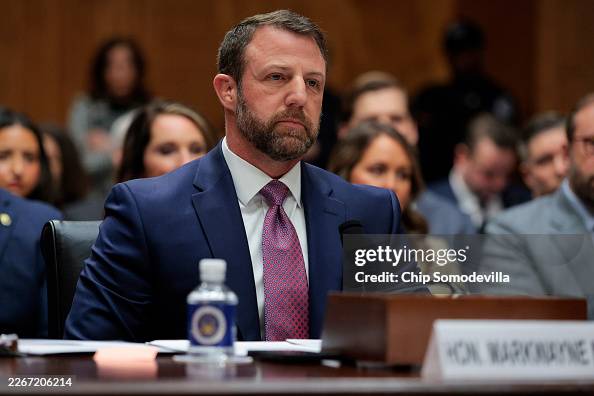
As President Trump’s nominee to lead the Department of Homeland Security, Senator Markwayne Mullin (OK) has been subject to an extremely contentious confirmation. However, previously, Mullin has worked with both Republicans and Democrats. Specific to this site, he has worked across party lines to pass bills that are very important and extremely dear to him, related to traumatic brain injury. Therefore, as a TBI survivor myself, I find it important to look back at his record, related to the topic:
In January 2020, Sen. Markwayne Mullin’s 15-year-old son was subject to a severe traumatic brain injury during a wrestling match. (Apparently, during his son’s most trying time, President Trump called almost daily and offered his personal plane. The President also later visited his son at the rehab center.) Rehabilitation, which professionals estimated would take years, was completed within 9 months and Mullin’s son is now in college.
Since the unfortunate incident, Senator Mullin has channeled his anguish and frustration into finding answers. His legislations related to TBI tend to focus on research funding and diagnostic standardization for brain injury. Only six months ago, the Senator earnestly reaffirmed his devotion to the issue when he stated, “That is why we must continue to bring awareness to this critical injury. I am honored to join my colleagues on this resolution to recognize Friday, September 19th, as National Concussion Awareness Day.”
Concrete examples of his bipartisan push forward for the brain injured community include S. 4755, Traumatic Brain Injury Program Reauthorization Act of 2024, co-led with Senator Bob Casey (D). When that bill expired, Mullin reintroduced it as the TBI Program Reauthorization Act of 2025, S. 2898, on September 23, 2025, with co-sponsors Senators Andy Kim (D), John Cornyn (R), Alex Padilla (D), and Catherine Cortez Masto (D). (The 2025 version expanded coverage to include all acquired brain injuries.)
(Devotion to issues that relate to brain injury do not represent the entirety of legislation introduced by Senator Mullin while he has been in the Senate. Additionally, this article is not a comment on Senator Mullin’s nomination to head the DHS.)

 TBI on the Hill