
Imagine a garden hose with a weak, ballooning spot. In the brain, this spot is terms a “cerebral aneurysm… a weak spot on a blood vessel in the brain that fills with blood and bulges out, pressing on the brain and nerves,” according to the National Institute of Neurological Disorders and Stroke. When a hose erupts, water may burst out. When the balloon-like object in your head bursts, it is called a subarachnoid hemorrhage, a type of stroke that can cause bleeding in or around the brain and brain damage.
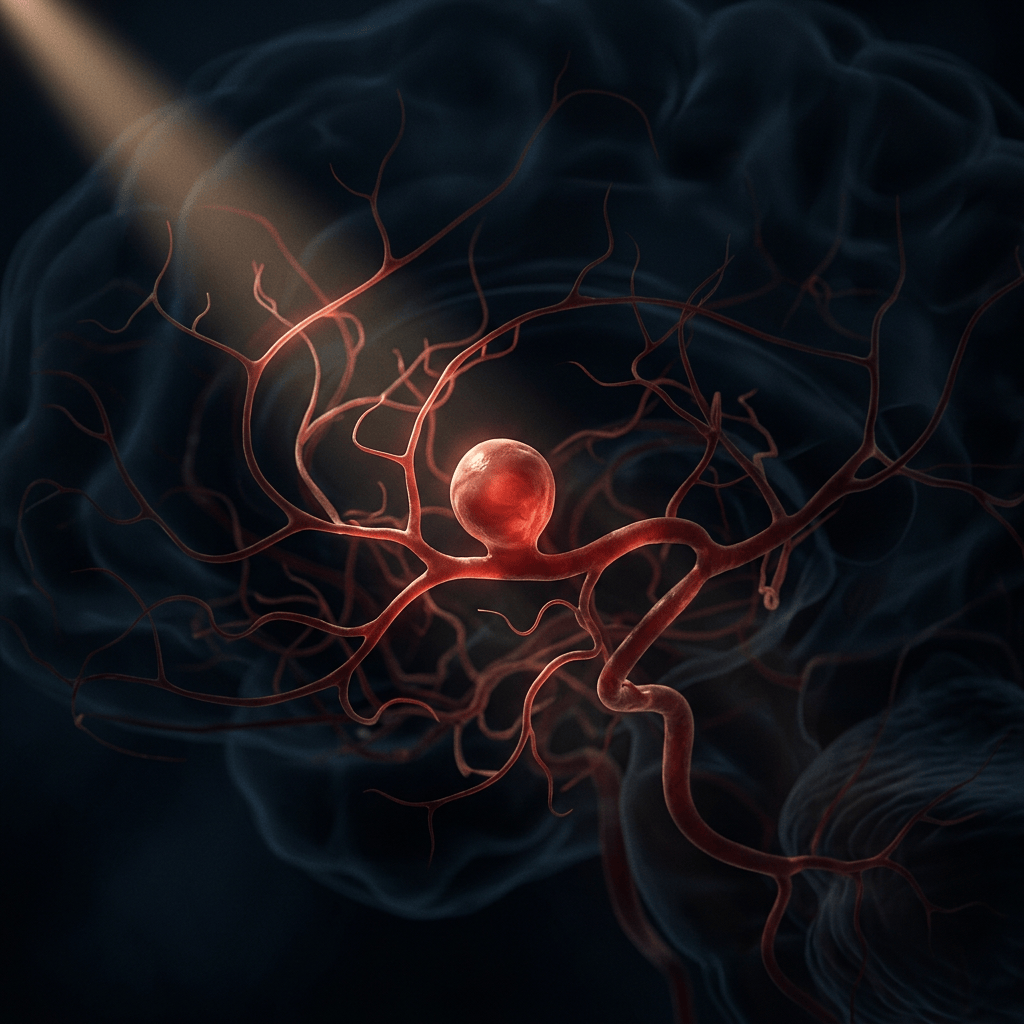
A cerebral aneurysm, or brain aneurysm, is much more common that many would surmise: a 2026 review estimates that about 1 in 15 healthy adults has one. Fortunately, most never burst. Doctors often estimate rupture risk with a score called PHASES – population, hypertension, age, size, earlier subarachnoid hemorrhage, site.
A Polish study published on October 9, 2026, and that can be found in the NLM database, examined 243 patients whose aneurysms had ruptured, found that 51 percent would have been rated under 1 percent risk over five years, and 60 percent of the burst aneurysms measured 7 millimeters or less, or roughly a pencil’s width. However, the study only examined ruptured aneurysms. A smaller study in Turkey, published October 30, also available on the NLM database, found blood inflammation markers roughly doubled in the month before rupture.
The NLM-published conclusion? A sudden, explosive “worst headache of my life” may mean that one should call emergency services immediately.

