A brain injury is undeniably a significant event in one’s life, but whether it permanently changes a person’s political views and/or affiliation seems an individual matter. Those across the pond, though, have found that the level to which one holds these ideologies may be altered by this traumatic event, specifically heightened.
Found on the NIH website, an Oxford University study published this spring determined, “political involvement was more intense after lesions connected to the left dorsolateral prefrontal cortex and posterior precuneus… in conservative-leaning participants. Political involvement was less intense after lesions connected to the amygdala and anterior temporal lobe… in liberal-leaning participants.”
NOTE: The UK traditionally leans more socially liberal than America. Would the results of this study have the same conclusion if analyzed with United States participants?
The Advanced Research Projects Agency for Health (ARPA-H) has unveiled its transformative Functional Repair of Neocortical Tissue (FRONT) program, a bold five-year initiative aimed at developing curative therapies for millions of Americans suffering from chronic brain damage. This groundbreaking program positions the United States as the global leader in brain repair technology.
Under the current leadership in Washington, FRONT addresses one of America’s most pressing health challenges. HHS Deputy Secretary Jim O’Neill emphasized the program’s potential to “deploy regenerative medicine to transform the treatment of neurological diseases and relieve the suffering” of millions affected by strokes and traumatic brain injuries.
The program targets the neocortex, the brain’s largest region responsible for sensory perception, motor control, and higher cognitive functions. Currently, damage from stroke, trauma, or neurodegeneration leaves patients dependent on costly, limited therapies. FRONT aims to revolutionize treatment by using cutting-edge stem cell technology to regenerate brain tissue and restore lost functions.
“This will enable millions of individuals with what is currently considered permanent brain damage to regain lost functions, such as motor control, vision, and speech,” said FRONT Program Manager Jean Hebert, Ph.D.
The economic impact is remarkable. Brain damage costs the U.S. healthcare system over a trillion dollars annually, while FRONT is projected to save approximately $800 billion annually and recover lost taxable income from affected individuals.
The program prioritizes veteran support, targeting traumatic brain injuries—a leading cause of military disability. FRONT will use exclusively adult-derived dedifferentiated stem cells, ensuring ethical development while maintaining scientific rigor.
ARPA-H is soliciting proposals through September 25, 2025, focusing on graft tissue generation and engraftment procedures. With strict performance metrics designed to prepare for human clinical trials, FRONT offers unprecedented hope to over 20 million Americans with chronic neocortical brain damage and their families.
Missouri has demonstrated remarkable commitment to our veterans with the ratification of SB 664 on July 14, 2025. The “Veterans Traumatic Brain Injury Treatment and Recovery Act,” was passed with overwhelming support of 33-0 in the Senate and 156-1 in the House. Governor Mike Kehoe signed this groundbreaking legislation on Monday, establishing a fund to reimburse Hyperbaric Oxygen Therapy (HBOT) facilities treating veterans with TBI or PTSD, recognizing the treatment’s potential to combat veteran suicide and opioid addiction. The initiative represents a projected investment exceeding $5 million annually, underscoring the state’s confidence in this therapeutic approach.
HBOT works by delivering 100% oxygen in pressurized chambers at 1.4-3 times normal atmospheric pressure, dramatically increasing oxygen delivery to damaged brain tissues. Advocates report that this treatment “stimulates brain wound healing and can reverse soft tissue and neurocognitive damage” without requiring invasive surgery or pharmaceutical interventions. Patients can “experience recovery of cognitive and neurological functioning” through this non-invasive approach.
Clinical research has yielded encouraging results across multiple studies. For moderate-to-severe TBI cases, several high-quality studies demonstrated statistically significant improvements in consciousness recovery compared to standard care alone. Research has consistently shown better Glasgow Outcome Scale scores and reduced mortality rates in HBOT treatment groups. A comprehensive 2016 review highlighted that “most successes occurred within hours after TBI,” emphasizing the importance of early intervention. Particularly compelling evidence comes from pediatric research, where a study of 56 children with severe TBI found that HBOT “significantly improved quality of life and reduced complications” compared to control groups. Additional research involving 56 patients showed “significant improvement in symptoms and increased brain activity” measurable through SPECT (Single Photon Emission Computed Tomography) brain imaging.
The treatment maintains a generally acceptable safety profile, with most side effects being minor and temporary, including ear discomfort, headaches, and fatigue. Serious adverse events remain rare when HBOT is properly administered. This positive safety record, combined with growing clinical evidence and strong legislative support, has led some VA facilities to begin offering HBOT treatment to veterans, representing an important step toward broader acceptance of this promising therapeutic intervention.
About seven months ago, the U.S. government declared the COVID pandemic “over”. As part of going forward, on May 9th, 2023, President Biden signed an Executive Order titled, “Moving Beyond COVID-19 Vaccination Requirements for Federal Workers.” Federal workers previously were required to get the COVID vaccine. Currently, the vast majority of Americans walk in public without masks or fear. However, the repercussions of government policies, actions and opinions about COVID-19 linger for some Americans.
Millions of people, in America and beyond, were initially eager to receive the vaccine shot, after their lives had been essentially halted for months due to the unforeseen COVID virus. Before taking the jab, neither American citizens nor the government had information regarding its long-term effects. Soon after, though, we all became better educated on the topic. “It was like playing Russian roulette,” said a father about the COVID-19 vaccine. His previously healthy son died after receiving a dose of the Pfizer vaccine in April 2021. In Louisiana, another such calamity occurred, this time with the Johnson & Johnson COVID vaccine. The healthy 16-year-old woman who received the vaccine shot in April 2021 was left with a brain injury. “Now, after three brain surgeries and thousands of hours of physical therapy, she struggles to walk, write, and care for herself,” says the lawsuit, filed in Louisiana, about the vaccine’s lifelong consequences for this woman.
Last year, the federal government even acknowledged the connection between COVID vaccines and brain damage, noting that, “There is a greater than expected occurrence of severe neurological adverse events…following different kinds of COVID-19 vaccinations,” in the aptly titled 2022 report, Neurological Complications Following COVID-19 Vaccination. Johnson & Johnson, Pfizer and others considered to be Big Pharma cannot, under law, be sued for these outcomes and, ultimately, Big Pharma did not mandate the vaccine – that was the purview of the federal and state governments, as well as various individual organizations. While negative outcomes from the COVID vaccine were rare, they occurred and someone should be held accountable.
NOTE: Though I penned this article months ago, I never posted it on my site. If more up-to-date information is available, related specifically to this topic, please comment below.
Researching for TBI-related news today brought me to an article that was just released hours ago and focused on a topic I previously posted about in 2017: “The DoD has granted $11.3 million to Abbott Laboratories for the development of a mobile device that allows one to determine if they have a traumatic brain injury, anytime and anyplace.” The portable blood test, which should be administered within 12 hours of potential brain injury, detects certain biomarkers in the blood that indicate a brain injury. In March 2023, the U.S. Food & Drug Administration finally approved the Abbott’s Alinity i-Stat laboratory device for commercial use. Soon, it appears, this blood test will be available to athletes, soldiers, and others at medical centers throughout the country.
“What kind of damage is that doing to soldiers in training and on the battlefields?” Over five years ago, I reported this statement, pronounced by a member of the Congressional Brain Injury Task Force regarding the heavy weapon Carl-Gustaf rifle. Before 2017, the federal government knew the risks of the weapon. The Department of Defense even launched a five-year study to evaluate this risk. I personally thought, based on later articles, that currently, there were laws preventing troops from using the Carl-Gustaf system. However, “U.S. Troops Still Train on Weapons with Known Risk of Brain Injury,” headlined an article in the New York Times yesterday, November 26, 2023. The article is a good reminder of the peril our troops face in war, not just from opponents, but in training and defending our country and allies across the world.
Less than a week ago, America lost not only its oldest former First Lady, but also a prominent advocate for the mentally ill. Rosalynn Carter was 96 when she passed at her and her husband’s home in Georgia. From the time of President Jimmy Carter’s first run for Governor of Georgia until her death, a timespan of over 50 years, she worked to better the treatment of and end the stigma against mental illness.
Although the definition goes beyond this, the National Institute of Health, in 2022, stated, “Traumatic brain injury (TBI) is associated with a host of psychiatric and neurobehavioral problems.” While, traditionally, a traumatic brain injury is considered to be a separate entity from mental illness, the possible symptoms are similar, if not identical. Ms. Carter likely considered it so, as speaking about her advocacy, she has mentioned visiting facilities/institutions that housed troops who suffered from PTSD and TBI. In a discussion at the JFK Library, she noted a Columbia University study that stated that 85% of Americans consider mental illness to be a neurological illness. If nothing else, traumatic brain injury is a neurological illness.
As President, Jimmy Carter enacted the greatest overhaul of the mental health system in America to date. The next major expansion of the system was enacted in 2002, by President George W. Bush. Ms. Carter has only positive statements about this action, as she put cause above party. In 1987, Ms. Carter founded the Rosalynn Carter Institute for Caregivers, saying, “Those giving care often do so at a great personal sacrifice of time, energy, and income… So many people giving care to their loved ones feel isolated, inadequate, despairing. At a time when more and more Americans are called to give care, it is critically important that we do all we can to support caregivers.” Recently, in May 2023, it was revealed that Ms. Carter was suffering from dementia.
The private funeral for Ms. Carter will be held on Monday, November 27th in Plains, Georgia. Her husband of more than 77 years, who is receiving home hospice care, will be in attendance, as will her children, grandchildren and great-grandchildren. Americans should remember Rosalynn Carter, not only for her time as First Lady, but for her advocacy for mental illness, including traumatic brain injury, and their caregivers. (“In lieu of flowers, the Carter family is requesting that those interested consider contributing to the Carter Center’s Mental Health Program or the Rosalynn Carter Institute for Caregivers.”)
If a family member told you that they may be late for your wedding because they suffer from time blindness, I believe that many people would scoff. If you were chronically late for work for the same reason, you would likely be fired. If you were consistently tardy for school, you would definitely get detention. It seems like time blindness may be an easy excuse for a failure to wake when an alarm clock goes off, but people on TikTok and other social media sites are taking it seriously. This tendency to over or underestimate the time needed for a particular activity has even been studied by the government, well before these posts. But how legitimate is the condition and, though it is often seen as a symptom of ADHD, does it also affect those with a brain injury?
Time blindness, medically termed chronotaraxis, is associated with the brain functions controlled by the thalamus, which is located near the center of the brain. The thalamus plays a key role in many human functions, including memory, emotions, the sleep-wake cycle, executive functions, mediating general cortical alerting responses, processing of sensory information, including taste, somatosensory, visual, and auditory, and relaying it to the cortex, and sensorimotor control. While thalamic strokes, a brain injury, are not rare, chronotaraxis following such a stroke is uncommon – affecting only 5 of 120 subjects, or 4%, according to a study. (While this NIH study was published over 15 years ago, in 2007, the results coincide with more recent results.)
In 2013, the National Institute of Health reported on another study that studied stroke and other types of brain injury and found that this time issue goes beyond the effect of a stroke and is related to the consequences of traumatic and other brain injuries. “We concluded that while timing variability in TBI patients is not consequent to dysfunctions at the clock stage, but rather related to attentional, working memory and executive functions disorders, medial temporal lobe damage affects the memory component, and possibly the downstream decision-making stage, of the temporal information processing model.” Unfortunately, issues with mental executive functions are hugely affected by both acquired and traumatic brain injuries.
More recently, just this summer, USA Today reported on time blindless, focusing on its effect on those who also suffer from ADHD. They highlight other personal issues that can have this effect, specifying noted that time management is controlled by the frontal lobe of the brain, an area that is often affected when one has a brain injury. (This, of course, seems to go against the above-mentioned study that points to the medial temporal lobe of the brain as the source of time blindness, as well as a 2020 report that refers to it as an underestimated right hemisphere syndrome.)
Personally, I can relate to the symptoms of time blindness. Well before my brain injury, I tended to underestimate time requirements for various activities, from homework to travel. Both before and after my brain injury, would I, and others with brain injuries, be helped by a system that considered/recognized “time blindness” as an impairment, or would it just delay the start/end of whatever task caused the tardiness? I’m somewhat skeptical, though the results cannot be denied. Perhaps more academic research must be done to understand the possible difference between poor time management skills and a medical deficit, related to time. Or, maybe rehabilitation programs and those with brain injuries need to spend more time on strategies to overcome any time deficits that result from damage to the brain.
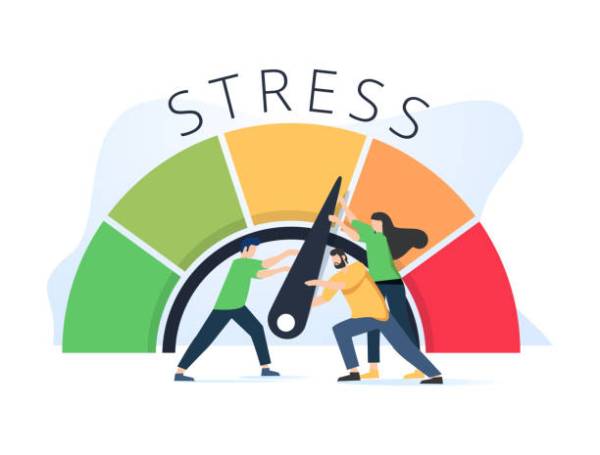
“Early-life stress* changes more genes in brain than a head injury,” posted The Ohio State University just this past weekend. This headline captured my interest and required me to research more. Ultimately, I found the claim to be both true and in need of clarification. Below I discuss research that further explains the findings:
The Ohio State University conducted an animal study with young rats, separating them into four different categories: stress alone, head injury alone, stress combined with head injury and neither stress nor head injury. Without getting into the intricacies of the study, the key seems to relate to errant signaling of oxytocin. (According to the National Institute of Health, oxytocin is a hormone that is related to maternal behavior and social bonding.) Stress and stress combined with head injury resulted in maladaptivity, but head injury alone did not have this effect. The result of this maladaptive signaling resulted in young rats being less risk avert, specifically because they voyaged out without companion rats, which they consider a negative. Depending on the level of risk, I see this as a positive, as humans, particularly younger people, are told to “face their fears.”
In 2022, the NIH submitted a report that stated the obvious: “Taken together it is apparent that stress appraisal and physiology both prior to and after traumatic brain injuries are key predictors of short- and long-term outcomes.” In another 2022 NIH study, it was found that, “stress often aggravates oxidative stress, reduces brain antioxidant** capacity… thus, antioxidant drugs can significantly reduce oxidative stress caused by stress and significantly improve brain injuries and diseases.” A Department of Health & Human Survives webpage, though, references the findings of other government studies that seem to contradict this. They acknowledge that, “not all stress is bad.” All studies consider long-term stress to be negative and the page is not specifically related to stress AND brain injury, but the results seem to be relevant to all people.
The similarities, and differences, of brain injury and stress are interesting findings, as I believe the link is already perceived by those affected. One thing that I don’t think the researchers have specifically addressed in their animal studies is that in humans, it’s almost impossible to have a life without any stress, with or without a head injury.
*Early-life stress (ELS) includes: loss of caregiver attachment: divorce/separation, foster care, parental incarceration, lack of attention, racism, separation from parents, exposure to violence: physical, mental and sexual abuse, substance abuse, being over-scheduled, feeling pressured to perform or behave beyond their ability, neglect: emotional and physical neglect, meeting new people, starting a new school, death of a loved one, illness: mental and physical, difficulty with school work, increased pressure/responsibility at home, being bullied (Wikipedia)
The Excellence in Prehospital Injury Care (EPIC) project has led to University of Arizona (UArizona) and various affiliates across the State to research new and varying aspects of brain injury. Looking at the EPIC website, I could find no study report after 2019, and before 2019, there also was a 6-year gap in studies. However, regardless of the operation of the EPIC Project, it is a well-regarded research university. To that end, the Department of Defense recently announced that it has provided millions of dollars in grants to UArizona for new research that will increase knowledge and, hopefully, provide better solutions to identify and treat brain injury.
The most intriguing study, at least for a layman like me, is that of a portable video game to detect brain injury for which the DoD provided $1.5 million in funding. The project, Model Development and Translation of a Virtual Reality Military Operational Neuropsychological Assessment, or VRMONA, involves immersing oneself in a combat-related activity with the use of a VR headset and a hand sensor system. While one plays the immersive game, data is collected about the player’s accuracy, response time, motor coordination and inhibition. The goal is to ready its use for the military, though those connected to the study hope that it can be used in civilian life too, such as in sports, in the future.
Additionally, new treatments for brain injury are always sought after by the government. The University of Arizona Health Sciences was awarded $3 million to study if peptide hormones are an effective treatment for brain injury. In the four-year study, they will be investigating the efficacy of one specific peptide hormone, angiotensin 1-7, in the treatment of brain injury. (The NIH has found that, “Peptide hormones play a prominent role in controlling energy homeostasis and metabolism.”)




 TBI on the Hill