SBS: The Horrific Easy Answer

Shaken baby syndrome (SBS) is a form of abusive head trauma inflicted on infants.  At least 1.400 babies die of SBS a year, studies show.  That exceedingly high number doesn’t even account for all the babies that are not killed but will live with the lifelong consequences of their parents’ bad actions.  Nor does it factor in all the babies that are shaken “in secret”, without a subsequent hospital visit, call to the police, etc.  According to the CDC, “Nearly all victims of AHT [Abusive Head Trauma} suffer serious, long-term health consequences such as vision problems, developmental delays, physical disabilities, and hearing loss.”

Just this month, March 2018, at least 3 people have been sentenced to jail for SBS:

  • On March 1, Montana resident Austin Blair Johnson, 27, received a 15-year sentence for shaking his 5-year-old son.  Presumably, Johnson received only 15 years, not the 20-year sentence called for by the prosecutors, because he plead guilty.  Johnson sobbed during the sentencing. However, remorse, for his actions or for the result, doesn’t change that 15 years seems like nothing for someone who gave his son a life sentence.
  • This past week, 30-year-old Delavon Domique Johnson was sent to jail for 30 years for inflicting such severe brain injury in his 3-month-old daughter that it caused intracranial hemorrhaging.
  • In Oregon, January Neatherlin was sentenced on March 9 to over 20 years for child abuse.  Though this abuse mostly involved drugging the children and abandoning her daycare facility while children were present, which is in no way better than physical abuse, “One family said their daughter suffered a brain injury, consistent with shaken baby syndrome, while in Neatherlin’s care.”

In 2001, the US government issued a statement, co-signed by Canada, on Shaken Baby Syndrome.  Nearly 20 years later, the statement’s recommendations are just as relevant and important: data collection and surveillance, further research (general knowledge, psychosocial and long-term), prevention, care and treatment, further education (primarily for child protection personnel, police, medical examiners and coroners, prosecutors, lawyers and judges), community response (including services and support) and professional training.  The CDC also notes the need for prevention, providing PDFs on prevention.

In 2014, however, the Washington Post cited a study that questions these almost universal beliefs: “most humans aren’t capable of shaking an infant hard enough to produce the symptoms in SBS.”  (Presumably, this means that SBS must often be accompanied by a secondary injury, such as the head also hitting the floor.)  New scientific research doesn’t prove that SBS is not the cause, just that it may not be in some cases.  Though diagnosing a child’s brain injury as caused by SBS may be a knee-jerk reaction, obvious isn’t always true or correct.  Hopefully, with continued education for both the parents/caregivers and members of the justice system, it will become a less common and a less possible culprit.  More so, hopefully fewer parents will find shaking a legitimate means of punishment.
Investigating the Memory Maze

Merriam-Webster defines dementia as a “condition (such as Alzheimer’s disease) marked by the development of multiple cognitive deficits (such as memory impairment, aphasia, and the inability to plan and initiate complex behavior).”  Though dementia is typically a progressive disease, the effects of it largely mirror those of traumatic brain injury, which can also cause long-term cognitive impairments.  Though many brain injury survivors are fortunate enough to get progressively better, it is not a surprise that scientists have found a link between the two conditions.

The written report of the results of a 2012 NIH-funded study found this link, and specifically notes that, “the recognition that certain members of society… are at particular risk of TBI-related dementia should stimulate research on preventive strategies focused on these individuals.”  It has stimulated research on the topic and presently, “The U.S. Department of Defense has awarded a team of scientists and physicians from leading health care institutions across Phoenix a $1.3 million grant over three years to study traumatic brain injury and its relationship to dementia.”

Led by Dr. Jonathan Lifshitz and Dr. Raymond Migrino, the study is a cooperative effort between the University of Arizona College of Medicine – Phoenix, the Phoenix Veterans Affairs Health Care System, Phoenix Children’s Hospital, Barrow Neurological Institute and Arizona State University.  These institutions will work together to identify the negative effects of the damage to blood vessel function that is caused by traumatic brain injuries, dementia, and, surprisingly, diabetes.  The mission is to discover specifically why those who had a brain injury, particularly during their youth, are at a 4.5 times greater risk of developing dementia.

Rep. Cicilline Donates His Brain

“We need to understand what happens in the brain when it’s hit, and how many hits trigger these neurological effects,” said ranking member of the House Energy and Commerce Committee Frank Pallone (D-NJ) in the opening remarks of the House Democrats meeting about brain injury in football and other contact sports on October 13, 2017.  Held at the Rayburn House Office Building in Washington D.C., the forum focused on CTE and what the government can do to prevent it.  It was a meeting of the Energy and Commerce Committee and the Judiciary Committee and featured 7 panelists – players, widows and researchers.  It was a reaction to the recent release of a study with astonishing results.  (Not only were 110 of 111 deceased NFL players found to have CTE, but so were 48 of 53 deceased college players and 3 deceased high school players.)

Those attending the forum were understandably shocked with these findings.  Many asked what they could do to help.  As Rep. David Cicilline (D-R.I. – 1st District) said, “Just listening to the testimony and listening to what a serious issue this is and what the implications are for players, both young people and players who play in high school.  If we can help in some way… then I am happy to do it.”  True to his word, Cicilline, who played Pop Warner football as a youth, pledged to donate his brain for concussion research upon his death.  (As his personal motto states, Cicilline “never quits“.)

Note: In the Washington Post article about this forum, Former player: Parents should be warned of football’s risks, the newspaper notes, “Republicans had no interest in convening a formal hearing on the subject.”  This forum, however, was designed as a meeting of the House Democrats committee, therefore Republican attendance was not intended or desired.  It is also noteworthy that, although they were invited, the NFL declined to participate.

A New Model Joins the System

Earlier this week, I reported on last week’s designation of an Indiana medical facility as the 15th TBI Model System, by the National Institute on Disability, Independent Living and Rehabilitation Research (NIDILRR) and it’s funding therein.  This week, a facility has been designated the 16th TBI Model System and received research funds, in kind – the Southeastern Michigan Traumatic Brain Injury System (SEMTBIS).  Specifically, the Wayne State University’s Department of Physical Medicine and Rehabilitation (WSU) and the DMC Rehabilitation Institute of Michigan (RIM) were awarded a five-year grant of $2.23 million to fund SEMTBIS.

Unlike some awarded Systems, SEMTBIS does not have a specific research focus.  Instead SEMTBIS is, “a program of research that studies a variety of topics related to traumatic brain injury.”  According to their website, RIM is currently host to a variety of “local and collaborative projects”: The Menopause Transition in Women with Traumatic Brain Injury, Prevention of Long-Term Consequences of Mild Traumatic Brain Injury, Visual Gaze and Validity of Cognitive Evaluations, TBI Care QOL.  There is little more to report on about SEMTBIS at this moment, as their designation is so new that the Center’s webpage is still listed as, “UNDER CONSTRUCTION.”

* A school of about 27,000 students in Michigan, “Wayne State University (WSU) has the longest history of TBI research in the nation and a long history of clinical trials… [Their] interdisciplinary Program for Traumatic Brain Injury Research (PTBIR) is dedicated to campus-wide research, education and treatment of TBI.”

IU Awarded Funding to Decrease the Anger Effect

Last week, Indiana University (IU) School of Medicine, in partnership with the Rehabilitation Hospital of Indiana, was granted $2.1 million from a division of the U.S. Department of Health and Human Services to conduct a five-year study to research a particularly negative, life-long possible effect of a traumatic brain injury: an increase of negative thoughts and generalized anger.  “Our… projects will study emotional self-awareness and the ability to reduce irritability and aggression through treatment,” said Dr. Hammond, who is the Chair of the IU School of Medicine Department of Physical Medicine and Rehabilitation, a Professor of Physical Medicine and Rehabilitation, and also the chief of medical affairs at the Rehabilitation Hospital of Indiana.  Ultimately, the purpose of this study goes beyond the determination of a link.  “We hope to help patients and families better manage the effects of brain injury,” she continued.

With this funding, IU joins 15 other facilities, as part of the National Institute on Disability Independent Living and Rehabilitation Research’s (NIDILRR) Traumatic Brain Injury Model Systems.  Located in every section of the United States, “these centers serve as platforms for collaborative, multi-site research, including research on interventions using randomized controlled approaches.”

Beyond research, though, NIDILRR systems also focus on treatment.  For example, “the objectives of the New York Traumatic Brain Injury Model System focus on improving the quality of life of persons with TBI through: 1] state-of-the-art clinical care, 2] innovative research and 3] multi-platform, extensive dissemination of research results and other information on TBI to consumers and professionals.”  Specifically related to the most recent funding mentioned above, IU’s BRAIN (Brain Research in Aggression and Irritability Network) is, “a comprehensive model service delivery and research system serving individuals with TBI.”

Protecting the Head with Modernized Technology

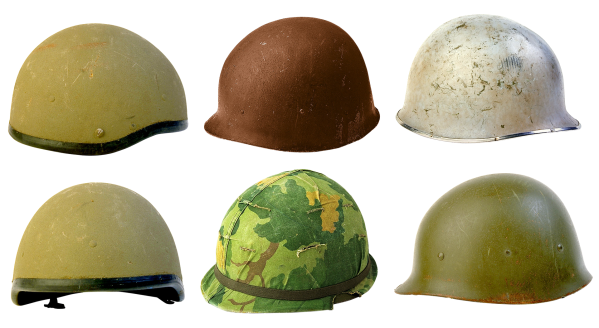
“With a better understanding [of] how traumatic brain injuries occur, a Brown-led research team hopes to develop new standards for head protection and next-generation helmets,” reads a news story from Brown University.  In July, the Office of Naval Research granted the university $4.75 million to study brain injury, specifically as it relates to helmet use in the military and in athletics.

Currently, helmets must essentially follow standards that were set in the late 1970’s (there have been changes in sizing since that time), with the technology that was available 40 years ago when computers were still an anomaly.  “[Brown University associate professor Christian Frank’s lab] has developed a novel technique for measuring for effects of traumatic forces on individual neurons…  a custom-built device that can apply compressive forces to neurons inside three-dimensional cell cultures [not a 2D petri dish, as is presently used].”  With these updated and more stringent standards, Brown University and their associates hope to first develop a helmet that can gather all the data about the brain during the action that resulted in its injury.  Ultimately, because they are now learning about the effects of injury on a cellular level, researchers hope to develop a helmet prototype to completely prevent such injuries.

Linking Li to the Brain

In 2014, the National Institute of Health deemed lithium (Li) to be of medical assistance in the treatment of traumatic brain injury.  However, the NIH determination came only from the promising results of a preclinical study.  Now, Rutgers University has released the findings of a three year study, funded by the New Jersey Commission of Brain Injury Research, that corroborates the NIH’s findings.

Commonly used to treat bipolar disorder, “Rutgers researchers discovered that lithium, as well as rapamycin (an immunosuppressant used to treat cancer), protects healthy brain cells from a toxic buildup of a chemical.”  Specifically, this study identified the massive buildup of glutamate.  Glutamate is a chemical in the body that, in healthy doses, promotes learning and memory.  However, in the high doses that can result from the body’s innate response to brain injury, it can be toxic to the cells.

The current results apply to recovery only from concussion.  However, given the positive results thus far, further studies are likely to be in the works.

Camps for a Cure

Located in San Diego, CA, Camp Pendleton proclaims to be, “The West Coast’s Premier Expeditionary [Marines] Training Base.”  Last Tuesday, May 9, they broke ground on a $12 million, 25,000 square foot facility that aims to make the Camp a premier brain injury research and treatment center, too.  The funding needed to build the facility was raised through private donations and the funding of Arnold Fisher, a New York-based real estate tycoon.   Fisher says that he sees helping the troops as his duty as an American.

Part of the Department of Defense organization National Intrepid Center of Excellence (NICoE), which is headquartered in Maryland, the Camp Pendleton facility will be the seventh of nine planned NICoE facilities focused on brain injury and the first on the West Coast.  Presently, NICoE has erected facilities in Fort Belvoir, Virginia, Camp Lejeune, North Carolina, Fort Campbell, Kentucky, Fort Hood, Texas, and Fort Bragg, North Carolina.  A center at Joint Base Lewis-McChord, Washington, is still under construction and facilities are still to be built in Fort Carson, Colorado and Fort Blass, Texas.

Beyond Marine training, the Camp defines part of its vision to be, “providing superior service and support.”  Therefore, they also deal with the injuries that may come as a result of a brain injury or come in conjunction with it – specifically, physical and behavioral problems.  In fact, Camp Pendleton has been training and supporting the troops for 75 years.

So far, NICoE facilities have about a 90% rate for patients to return to duty.  Still, as Capt. Lisa Mulligan, commanding officer at the Camp Pendleton hospital, says, “Science as a whole remains in the infancy of its understanding of the potential for recovery after head injury.  This center will combine the resources of clinical, research and educational specialists to broaden our horizons.”

Have a TBI?  Find out anytime, anyplace.

Neurological injury is a significant health concern for military service members,.  Last year, for example, 17,672 service members were diagnosed with a brain injury.  While the military may not be able to eliminate neurological injuries entirely, the DoD has granted $11.3 million to Abbott Laboratories for the development of a mobile device that allows one to determine if they have a traumatic brain injury, anytime and anyplace.  Interestingly, this product only relies on such things as the proteins in the blood to find brain injuries.  It will be developed in Princeton, New Jersey, with the assistance of the U.S. Army Medical Research Acquisition Activity in Frederick, Maryland, and has an estimated completion date of October 23, 2019.  (In 2014, the DoD awarded Abbott $19.5 million to develop a portable blood test to determine brain injury.  However, even then, Abbott said that the product being developed was, “the first phase of what… would be a multi-phased contract.”)

Update: Drones Promise Quick, Not Safe Delivery

Flying delivery drone over residential neighborhoodDrones are on their way to becoming the preferred method of retail delivery and much more.  Currently, however, the air technology can only be used in a few limited locations.  Before they become ubiquitous, though, the Federal Aviation Administration (FAA) must assure that this way of delivery, that may weigh 50+ pounds, is safe for humans.  (Not just for airplane safety, the FAA is responsible for the safety of U.S. airspace from the ground up.)  Given their weight and their height of flight, head safety related to drones is of particular concern.

This has already been an issue this year.  On February 24, 2017, for example, a Seattle man was sentenced to a $500 fine and 30-days in jail because his drone hit a woman, causing her to lose consciousness.  However, current news also shows that drones can prove a benefit to those with a head injury.  In St. Louis, Minnesota the sheriff’s office is testing drones so, ultimately, they, “can look for missing persons, or a child, or maybe someone [who] was injured in an accident and sustained a head injury and wandered off.”

Federal-sponsored drone tests are also revealing.  At a government-approved test center at Virginia Tech, a drone is being tested again a crash-test dummy.  In testing, “the 21-pound drone tilted forward, accelerated sharply and slammed into [the drone’s] head, smacking the crash-test dummy’s neck backward and embedding shards of shattered propeller in his plastic face.”  Mark Black, director of the Virginia Tech drone test, asks, “When does the [head injury] threshold cross an unacceptable level?”

Although it is horrible to think of a head injury threshold, the Federal Aviation Administration knows that it can never make drones perfectly safe, just as airplanes will never be one hundred percent safe.  However, does the proposed FAA rule saying that, “Drones would have to fly 20 feet above people’s heads, and have a 10-foot buffer space on all sides,” satisfy the safety rules enough?

Update: Yesterday, an article appeared on the Fortune website regarding the safety of drones.  Specifically, it references and links to a research study conducted by the FAA that was released on Friday, April 28.  Generally, the research shows that, “both steel debris and the wood block caused significantly more damage to the dummy than the