Update: Have a TBI?  Find out anytime, anyplace.

I am pleased to report that i-STAT, the Abbott Laboratories’ portable brain injury detector that I first posted about in 2017 as in development, and again cited in 2023, has received the attention it deserves from a major publication.

On October 9. 2025, Time acknowledged i-STAT as one of the best new inventions:

“During head traumas like concussions, the brain’s cells release two proteins, GFAP and UCH-L1. Abbott’s i-STAT Traumatic Brain Injury (TBI) test only takes about 15 minutes to look for signs of brain injury by checking for these biomarkers, offering a much quicker alternative to CT scans—the go-to diagnostic since the 1970s. The medical community long thought a TBI blood test was impossible, largely because of the blood-brain barrier. “It was a tall order, and there was no road map,” Dr. Beth McQuiston, Abbott’s medical director of diagnostics, says. The test was FDA cleared in 2024, and MotoAmerica has already deployed Abbott’s test during motorcycle races.”

See article: https://time.com/collections/best-inventions-2025/7318430/abbott-i-stat-tbi/

Eating Disorders & Brain Injury Feed Each Other

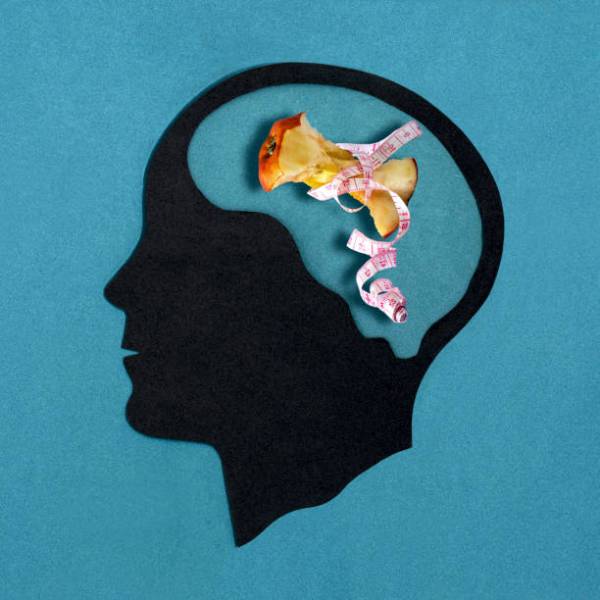
The relationship between brain injury and eating disorders works like a dangerous spiral that spins both ways. Medical professionals have been aware of this connection for quite some time, even before the NIH report of a 2017 study determined, “Eating disorders have been reported after TBI…. underscor[ing the] major role of frontal-subcortical circuits in regulation of eating habits.” Traumatic brain injury to the frontal lobe disrupts decision-making and impulse control, which can potentially lead to anorexia or body dysmorphic disorder.

More extensively studied is the converse effect: when someone develops anorexia nervosa, and starvation actually shrinks the brain. A 2022 study from the University of Southern California analyzed nearly 2,000 brain scans and discovered that brain damage from anorexia causes the brain’s outer layer to thin dramatically. In essence, the study determined that eating disorders result in the brain literally wasting away from lack of nutrition.

A study published in Frontiers in Neurology on September, 5, 2025, and currently found in the NIH database, revealed why brain damage, related to an eating disorder, is particularly insidious. Researchers state that anorexia causes anosognosia—the inability to recognize illness severity—through disrupted brain circuits in the insula, striatum, and prefrontal cortex. These same regions process body signals and update beliefs about oneself, creating a tragic irony: the very brain areas needed to recognize the problem are being damaged by starvation itself.

The promising news from 2024 Mount Sinai research, though, is that when patients regain weight, and the majority of those with eating disorders do regain weight and recover, their brains can recover too.

Actor’s Head Injury Highlights Complex Link Between ALS & Brain Trauma

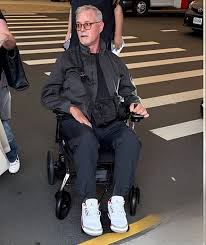
Grey’s Anatomy star Eric Dane was set to present an award at the Emmy Awards on September 14, 2025.  Instead, the actor missed this year’s awards entirely. After a fall in his kitchen caused a head injury that required stitches, he spent a much less glamorous evening in the hospital.

Earlier this year, Dane revealed that he suffered from amyotrophic lateral sclerosis. Reports say that Dane has largely lost control over the right side of his body due to the progressive neurodegenerative disease, illustrating how ALS-related motor control loss can lead to falls and subsequent head trauma.

The National Institute of Neurological Disorders and Stroke acknowledges head injury as a potential risk factor of ALS, though researchers emphasize more investigation is needed to understand the intricate connection. An October 2025 study report found on the NLM database, and initially published on JAMA Network, states, “TBI might represent an early complication of… preclinical ALS at risk of falls or other events culminating in TBI.”

Various studies have shown that there is a complex relationship between the two conditions. Data from the National ALS Registry, published by the NIH in January 2025, found that over half of ALS patients had experienced head injuries, with multiple injuries and those occurring before age 30 showing stronger associations. The aforementioned JAMA Network study, examining the connection between TBI and ALS in over 342,000 adults, found that individuals with a history of traumatic brain injury had more than double the risk of developing ALS. (The elevated risk, though, was confined to the two years immediately following brain injury, with researchers suggesting this may indicate reverse causality—that the head injury could again be an early consequence of subclinical [undiagnosed] ALS rather than its cause.)

UAB Study Finds 30-Year Diagnostic Tool for Brain Injuries Unreliable

A landmark University of Alabama at Birmingham study, published in the American Journal of Roentgenology [radiology] in May 2025, and noted by UAB News on September 17, 2025, shows that “White matter hyperintensities [are] no longer a reliable way to diagnose mild traumatic brain injury”. Challenging a diagnostic method used for over three decades, the study found that white matter hyperintensities (WMH)—bright spots visible on brain MRI scans—appear equally in patients with mild traumatic brain injury and healthy individuals, undermining their diagnostic value.

Since the 1990s, WMH have been used to detect subtle brain damage invisible in standard imaging. The 1993 study A semiquantative rating scale for the assessment of signal hyperintensities on magnetic resonance imaging found on the NIH database, established the credibility of WMH by correlating these MRI findings with actual brain tissue damage, including demyelination and axonal degeneration. This finding has been largely accepted in the medical field, as shown by various studies since, many of which reported by the NIH, and made WMH attractive for diagnosing concussions when conventional scans appear normal.

However, medical professionals increasingly questioned the approach. New clinical reports show that WMH lack specificity—appearing not only from trauma, but also from normal aging, silent strokes, multiple sclerosis, and vascular disease. The UAB study confirmed these concerns: 34% of brain injury patients showed WMH compared to 35% of controls, with no correlation between WMH presence and symptom severity or recovery outcomes. Lead researcher Dr. Manoj Tanwar concludes that WMH alone is not enough for a diagnosis and comprehensive clinical assessment remains essential beyond imaging.

A Broader View of Diet’s Role in TBI Recovery

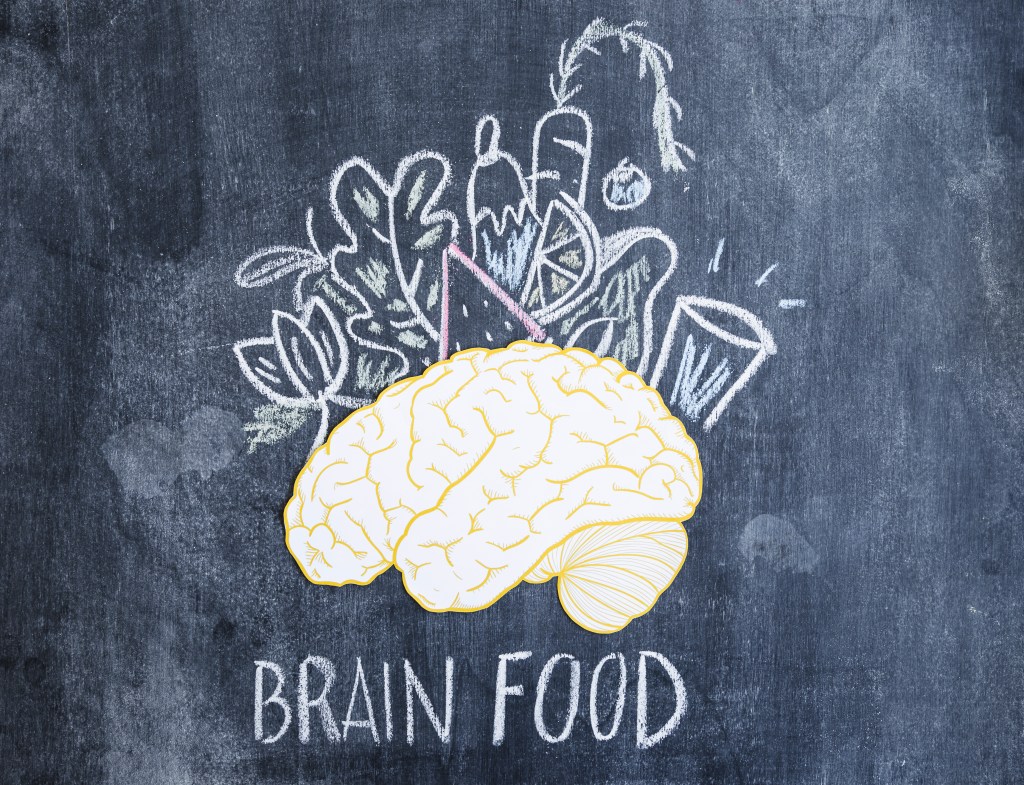
I tend to post about particular foods and diets that aid in brain injury recovery and overall brain health. This week, I take a broader view and examinine the benefits that one’s general choices of sustenance have in recovery and wellbeing:

In a holistic sense, research reveals that what survivors eat may dramatically influence their recovery. A groundbreaking 2023 NIH report published in Current Physical Medicine and Rehabilitation Reports found that specific dietary patterns can significantly improve long-term outcomes for brain injury patients. The study concluded that, “a diet rich in fiber and nutrients, but limited in added sugars, saturated fats, and excess calories would likely have the greatest cardiovascular and related neurologic protection.”

This finding was confirmed last year, with the Department of Defense and Veterans Affairs officially acknowledging in 2024 that, “nutrition may be a modifier of mild traumatic brain injury sequelae.” The research examined Mediterranean, DASH, and MIND diets, all emphasizing fruits, vegetables, healthy fats, and omega-3 fatty acids. These dietary interventions offer hope for reducing cardiovascular complications and improving neurological outcomes without pharmaceutical interventions.

Recently, in July 2025, the Journal of Neurotrauma published the findings of a study conducted by UNC School of Medicine, the Uniformed Services University, and the NIH that singled out a debilitating side effect of brain injury. They confirmed the importance of diet in preventing headaches, as trials demonstrated, “dietary changes significantly reduce persistent post-traumatic headaches…”

As can be seen, a comprehensive diet overhaul, with the possible assistance of a medical professional, can be a great benefit to both brain injury survivors and the general population.

“Celebrating Value & Talent”

October 2025 marks the 80th anniversary of National Disability Employment Awareness Month (NDEAM). This year’s theme “Celebrating Value and Talent” recognizes the contributions of workers with disabilities. Despite progress, significant employment gaps persist. According to the U.S. Bureau of Labor Statistics from February 2025, only 22.7 percent of people with disabilities were employed in 2024, compared to 65.5 percent of those without disabilities.

Secretary of Labor Lori Chavez-DeRemer emphasized the importance of observance this year, stating, “Celebrating America means celebrating the value and talent that all Americans – including people with disabilities – add to our nation’s workplaces and communities.”

As we commemorate this milestone anniversary, all Americans must renew our commitment to creating workplaces that celebrate the value and talent of all workers.

CDC – TBI in the Workplace Facts (8/5/2025)

The Connection Between TBI & Brain Cancer

On September 23, 2025, the University of Missouri School of Medicine reported groundbreaking findings that adults with moderate-to-severe traumatic brain injury face a 50% increased risk of developing brain cancer. The cancer is defined by malignant tumors that grow rapidly and invade surrounding brain tissue. Brain cancer affects approximately 24,820 Americans annually, according to the American Cancer Society, with a 33% five-year survival rate. Importantly, brain cancer itself is classified as an acquired brain injury—a form of non-traumatic brain damage that disrupts brain function.

The relationship between brain injury and brain cancer involves a fascinating interplay. While brain cancer causes acquired brain injury through tumor growth, research now suggests moderate-to-severe traumatic brain injuries may trigger brain cancer development through inflammation synergizing with existing genetic mutations. Not all brain tumors are cancerous, though. Approximately 72% are benign, even if they are still potentially serious depending on location.

Dr. Nimish Mohile of the University of Rochester notes that, “we’re starting to see progress with targeted therapies in the field of neuro-oncology,” offering hope for improved outcomes. Current NIH Director, Dr. Monica Bertagnolli, highlights that, “an AI-based diagnostic system can determine in just 10 seconds if part of a cancerous brain tumor that could be removed still remains,” demonstrating technological advances in treatment.

Prevention strategies include wearing helmets, preventing falls, and maintaining workplace safety—the same measures that protect against head injuries may reduce brain cancer risk. For those diagnosed with brain cancer, treatment often mirrors brain injury rehabilitation, as well—physical therapy, occupational therapy, speech therapy, and cognitive rehabilitation. These comprehensive approaches help patients regain function and improve quality of life, with research showing brain tumor patients recover at rates comparable to stroke and traumatic brain injury patients.

The encouraging news is that while moderate-to-severe TBI increases risk, the absolute probability remains low, and advances in early detection and treatment continue to improve outcomes. Still, patients with TBI history may benefit from monitoring for early tumor detection.

Movie Explores Rare Brain Injury Horror

The 2025 film HIM follows a quarterback’s descent into madness after brain trauma. This current wide-release brings cinematic attention to a real medical nightmare: post-traumatic psychosis. This devastating condition is reported to affect 0.7% of traumatic brain injury patients, typically emerging 4-5 years after the initial trauma.

Among those who develop post-traumatic psychosis, research funded by such institutions as the NIH, reveals 92% of patients develop delusions while 87% experience hallucinations, with brain scans showing frontal and temporal lobe damage. Medical literature documents chilling cases, including a man who developed paranoid delusions and personality changes decades after a gunshot wound to his frontal lobe, and another patient who couldn’t recognize familiar people following severe head trauma.

Dr. David Arciniegas, Director of Education at Marcus Institute for Brain Health at the University of Colorado Anschutz Medical Campus, notes that, “delusions are a core feature of posttraumatic psychosis,” making diagnosis critical. The federal government invests heavily in brain injury research, so hopefully there will soon be more understanding of this condition.

Brain Food in Peak Season

While beetroot peak harvest season is from late summer through October, research demonstrates that its vibrant juice offers remarkable benefits to the brain year round, specifically for brain injury and trauma recovery.

Studies published on the NIH databases and other reputable medical sources, such as that conducted by the University of Exeter and published by Free Radical Biology and Medicine journal in 2025, demonstrate how beetroot juice enhances cerebral blood flow and neuroprotection. “Our findings suggest that adding… beetroot juice – for just ten days can substantially alter the oral microbiome for the better, maintaining healthy brain function and slowing negative vascular changes,” explains Professor Anni Vanhatalo from the University of Exeter.

The scientific benefits of beetroot center on its high nitrate content—up to 11.4 grams per liter—which dramatically improves blood flow to injured brain tissue. Wake Forest University’s 2010 research first proved that beetroot juice increases blood flow to vulnerable brain regions, with researchers documenting enhanced oxygen delivery crucial for neural recovery.

Research at the University at Buffalo from 2023 also showed that beetroot juice can improve cerebrovascular function during stress, noting improved “cerebral autoregulation” mechanisms that protect against brain damage. Stroke recovery research shows 18 stroke survivors experienced increased nitrate levels supporting neural healing after 30 days of supplementation.

Digital Double-Edged Sword for the Brain

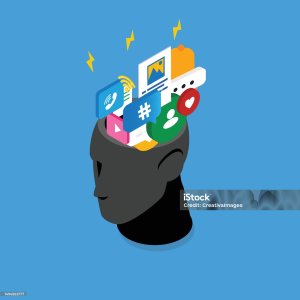
With over 4.9 billion active users globally spending an average of 2.5 hours daily on social media platforms, concerns about users’ neurological impact are mounting.

Parental and professional concern is warranted, it seems.  Social media platforms continue promoting risky challenges that can cause brain injuries. For example, the recent “Run It Straight” challenge on TikTok, YouTube, and Facebook involves participants sprinting toward each other and colliding at full force, creating what experts call “engineered systems for brain injury” with impacts similar to that of unbelted car crashes.

The worry, though, goes beyond risky behavior. The landmark July 8, 2025 NIH study “Modern Day High: The Neurocognitive Impact of Social Media Usage” found that social media use causes marked alterations in brainwave activity, with Beta and Gamma waves heightened during engagement and continuing after use, which potentially interferes with emotional regulation and attention.

Statistically, 74% of people with traumatic brain injury (TBI) use the internet. While this may be a lesser amount, compared to 84% of the general population, social media can be of greater risk for the brain injured population. Specifically, those with brain injuries face unique challenges navigating digital spaces due to cognitive impairments affecting memory, attention, and decision-making.

The growing concern has been felt in the government, too. Former Surgeon General Dr. Vivek Murthy recently warned, “Congress has not stepped up to its responsibility to protect our kids. They need to act now” regarding social media’s impact on developing brains. In the past few years, there has been an increase in funding for research into digital wellness and brain health initiatives targeting vulnerable populations. However, if, and to what level, the government should be involved in an individual’s social media activity is very much up for debate.

Yet social media isn’t entirely harmful. Rehabilitation professionals report that it can reduce social isolation for brain injury patients and support community reintegration. Still, “ongoing robust research is urgently required to give rehabilitation professionals an evidence-based framework” for safe implementation.