Great Advocate Passes Away: Rosalynn Carter

Less than a week ago, America lost not only its oldest former First Lady, but also a prominent advocate for the mentally ill.  Rosalynn Carter was 96 when she passed at her and her husband’s home in Georgia.  From the time of President Jimmy Carter’s first run for Governor of Georgia until her death, a timespan of over 50 years, she worked to better the treatment of and end the stigma against mental illness. 

Although the definition goes beyond this, the National Institute of Health, in 2022, stated, “Traumatic brain injury (TBI) is associated with a host of psychiatric and neurobehavioral problems.”  While, traditionally, a traumatic brain injury is considered to be a separate entity from mental illness, the possible symptoms are similar, if not identical.  Ms. Carter likely considered it so, as speaking about her advocacy, she has mentioned visiting facilities/institutions that housed troops who suffered from PTSD and TBI.  In a discussion at the JFK Library, she noted a Columbia University study that stated that 85% of Americans consider mental illness to be a neurological illness.  If nothing else, traumatic brain injury is a neurological illness.

As President, Jimmy Carter enacted the greatest overhaul of the mental health system in America to date.  The next major expansion of the system was enacted in 2002, by President George W. Bush.  Ms. Carter has only positive statements about this action, as she put cause above party.  In 1987, Ms. Carter founded the Rosalynn Carter Institute for Caregivers, saying, “Those giving care often do so at a great personal sacrifice of time, energy, and income… So many people giving care to their loved ones feel isolated, inadequate, despairing.  At a time when more and more Americans are called to give care, it is critically important that we do all we can to support caregivers.” Recently, in May 2023, it was revealed that Ms. Carter was suffering from dementia.

The private funeral for Ms. Carter will be held on Monday, November 27th in Plains, Georgia.  Her husband of more than 77 years, who is receiving home hospice care, will be in attendance, as will her children, grandchildren and great-grandchildren.  Americans should remember Rosalynn Carter, not only for her time as First Lady, but for her advocacy for mental illness, including traumatic brain injury, and their caregivers.  (“In lieu of flowers, the Carter family is requesting that those interested consider contributing to the Carter Center’s Mental Health Program or the Rosalynn Carter Institute for Caregivers.”) 

Israel-Hamas Attacks Conflict Minds, Damage Brains

The United States of America is full of many calling for a ceasefire for the Israeli-Hamas war (the war is against Hamas, not Palestine, meaning not against the whole population).  But, unless a rainbow appears in the Middle East accompanied by a sky full of butterflies, I believe that we must deal with the reality.  A war was started by Hamas with the horrific attack of October 7th that killed about 1,400 Israelis, including U.S. citizens.  Based on that, for those that vocally express their hope for a ceasefire and want no involvement by the United States, they should remember that Hamas has already embroiled us in the conflict.  (As it relates to this blog, there is no confirmed number of how many people in the initial, or follow-up, attacks suffered brain injuries, or any other sort of injury.)    

The Times of Israel headlines Something changes in our brain as we react to the traumas on and since Oct. 7.  In that article, neuroscientists discuss how an act can have both emotional affects and how it can lead to personally detrimental behavior.  (Of course, those who live in Hamas-lead territory also are afflicted, but for the purpose of this post, the focus is America’s Middle East ally, Israel.)  Stateside, Hamas propaganda has seeped into the mainstream.  Many continue to believe that Israel attacked a Palestinian hospital.  Reports by CNN, though, highlight, “U.S., Experts Say Evidence Suggests Palestinian Militants’ Rocket Hit Gaza Hospital”.  Unfortunately, the pro-Hamas stories preceding this report that place the blame solely on Israel still circulate online and are believed, by some.

As is evidenced by the many protests you see on college campuses and other locations, Americans have joined the war, at least in mind. Pro-Palestinian and pro-Israeli protests are frequent and often result in violence from those with opposing views. Most, if not all, of the reports I have seen discuss violence against Jewish-Americans. Antisemitism, which I thought and prayed had been eradicated from America many years ago, seems to be alive. One of the best, or rather, the worst example of the effects of this mindset occurred this past weekend. NBC news, and others, reported, “A 69-year-old Jewish man died after suffering a head injury Sunday following an ‘interaction’ with a pro-Palestinian demonstrator during dueling rallies in Southern California.” The police are currently investigating this as a “hate crime”, which is very appropriate.

Riots, Reasons & Repercussions: Ongoing Trauma Related to the Floyd Case

You cannot turn on the television now without hearing about the death of George Floyd and the riots and protests that have followed it.  Legally, it seems that it was acceptable for Derek Chauvin, the Minneapolis police officer who was in the process of apprehending Floyd, to use a chokehold.  Ethically, it was not, particularly after Floyd began saying that he could not breathe.  (Lack of oxygen is known as hypoxia and is accompanied with an inability to cough or talk.) Now, it is for a jury to decide if Officer Chauvin acted inappropriately, as he has been charged with second-degree murder.

Whatever comes of this case is irrelevant to this article, as this website focuses on brain injury.  Though a well-known enforcement tactic, the chokehold is not often used in the field and is banned in many cities.  The result of such an police enforcement action is the oxygen in cut off from the body.  A lack of oxygen kills brain cells causing a brain injury.  On Friday, June 5, Minneapolis joined the majority of large cities to put a ban on chokeholds.  (Unfortunately, it cannot be fully known how this ban has affected the crime rate thus far.)

Following the Floyd incident, though, public outrage has resulted in new traumas.  Hatred of the police continues to escalate, resulting in protests, most of which have been peaceful, but also riots, looting and even assaults.  These actions have resulted in exactly what the protesters’ aim to eliminate – violence, as there have been assaults on the protesters, police and even bystanders – and has resulted in terrible injury, to the body and brain.  For example, it was reported on Tuesday, that a member of the NYPD was charged with 3rd-degree assault and other crimes for pushing a protester to the curb.  According to a headline on the WHSV site, “Richmond police won’t say how many officers face discipline for attacking protesters.”

Most of the news appears to be about police officers attacking protesters.  Lest it is thought that it is only civilian protesters who face harm, WMAC in Baltimore reported, “Protesters attack police captain marching with them.”  In Boston, ABC News noted that the FBI field office, “received credible intelligence that rioters are looking for officers’ home addresses.” In Portland, two teen protesters punched a bystander in the head while he was straightening an American flag.

Those are just a few of the attacks that have occurred in the past few weeks.  It the following weeks, it seems that many other anti-police attacks will occur, resulting in harm on all sides.  It just should be remembered by everyone that police hatred does not need to mean harm.

For more information:

https://www.forbes.com/sites/mattperez/2020/06/05/minneapolis-city-council-agrees-to-ban-use-of-chokeholds-by-police/#752d315e37a2

Brain Injury Task Force Loses a Chair

This week, the 116th Congress was sworn in on Capitol Hill.  Unfortunately, that means that the Congressional Brain Injury Task Force lost one of its Chairs, Congressman Thomas Rooney (FL), who did not seek reelection.

Having served in the Army for 4 years in combat and 4 years in the reserve, Rooney accorded special attention to brain injury in the military on the Task Force.  This summer, it was reported, “House Approves Rooney-Requested Funding for Traumatic Brain Injuries.”  (Seen now on the website VoteSmart, this article is a repost first seen on the official Congressional website for Rooney, which is now defunct.)  The requested funding given was $125 million.

As a member of the House Appropriations Committee, Rooney dealt with the financing of government bills and other such actions.  (The House Ways and Means Committee is also focused on financial needs, a Committee that counts co-chair of the Brain Injury Task Force Congressman Pascrell as a member.)  Of this victory, Rooney stated, “The reality is our service members take great risks when they enlist to fight for our country. One of the biggest risks is TBIs, which can lead to severe mental health issues like depression and even suicide. These problems are serious and real and each dollar we spend towards research and treatment puts us one step closer to helping our military.”  (It is important to note that the VA conducts research that benefits all Americans, not simply those in the armed forces.)

Rooney is succeeded in Florida’s 17th District by former State Legislator Greg Steube.  Like his predecessor, Steube is a veteran with 4 years in combat.  Hopefully, Steube will have as much consideration for brain injury as his predecessor, too.


R.I.P. President George H.W. Bush

Today, at 11:00am ET, former Presidents, dignitaries, family members and others pay tribute to the 41st President of the Unites States, George H.W. Bush.  For the purpose of this website, it is a day to remember all that President Bush did for those with brain injuries, and for those with disabilities, at large.

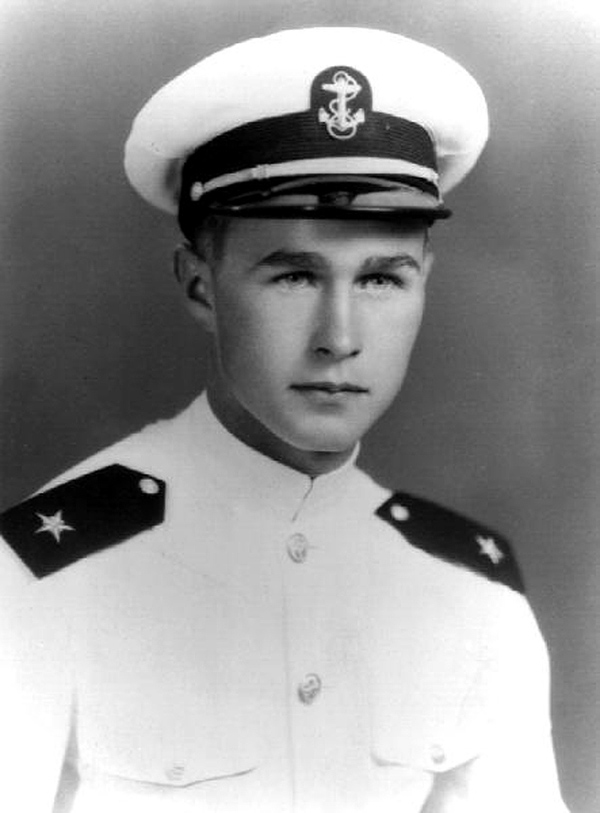
President Bush was America’s last president to serve in the military overseas at war.  (President Clinton, President Obama and President Trump did not serve.  President George W. Bush served stateside as a pilot during the Vietnam War.)  Specifically, as a 20-year-old man, he served as a pilot in the Pacific during World War II.  As detailed in the book Flyboys, on September 2, 1944, while targeting a Japanese radio transmitter on the island of Chichijima, his plane was shot over the Pacific Ocean.  Bush did not abandon his plane, instead continuing to fight until his plane went down.  One source states that his injuries from this combat tragedy, that took the lives of many of his squadron, included “bleeding from a headwound”.

“Why had I been spared and what did God have in store for me?… there’s got to be some kind of destiny and I was being spared for something of Earth,” Bush later said about his trauma in WWII.  For those with disabilities, part of that reason was definitely his signing of the American Disabilities Act on July 26, 1990.  Modeled after the Civil Rights Act of 1964, the ADA aimed for equal opportunity for those with disabilities.  While a list of what impairments constitute a disability is not defined in the Act, a disability is defined as, “a physical or mental impairment that substantially limits one or more major life activities of such individual.”  These limiting impairments include, “functions of the… neurological, brain…”

Following his presidency, President Bush continued to support those with brain injury.  For example, in 1996, President Bush created a PSA for the Pediatric Brain Injury Prevention Campaign.  Prior to the PSA, the Campaign had no association with President Bush.  He agreed to do the PSA simply based on a request submitted through letter.

Recently, President Bush suffered through his own trauma – vascular Parkinsonism.  Thought to be caused by a multitude of mini strokes, vascular Parkinsonism is so named because it shares many of the characteristics of Parkinson’s disease.  (Some dispute this correlation, as Parkinson’s can be helped by medication, but vascular Parkinsonism cannot.)  On Friday, November 30, 2018, President, Vice President, Congressman and CIA Director Bush passed away.  After his funeral, his body will travel to Texas where he will be laid to rest next to his wife of over 70 years, Barbara and his young daughter Robin.  For the disabled, his legacy of the ADA will continue.

First Snowfall Peril on the Roads

Last week, much of the eastern United States (Illinois, Michigan, Indiana, Kentucky, Ohio, West Virginia, Pennsylvania, New Jersey, Maryland, New York, Connecticut, Rhode Island, Massachusetts. Vermont, New Hampshire) experienced its first snowfall of the year.  Given that winter does not officially begin until December 21, this snowfall was much earlier than expected, just as in March there was snow into the spring.  Because of governmental unpreparedness, states’ transportation systems became essentially paralyzed.  In my state of New Jersey, lack of governmental preparation meant that a trip that should have taken me 20 minutes, took 12 hours.  The government seems not to have been much involved at all, as it was fellow citizens who distributed water and snacks to others and offered their cell phones for use to those in need.

Ambulances, though, were present.  Unfortunately, as it was almost impossible to move one’s car, the ability for ambulances to get through traffic was difficult.  For those who sustained an injury during a snowfall-related accident, I can only imagine how horrific that must have been.  For those who live with brain injuries and were driving or were passengers in a car, the concern was great – would lack of medication result in negative outcomes, would fatigue overcome, etc.?

In 2005, the NIH reported, “To date, only 2 previous studies have examined the effects of the first snowfall of the season,” on collisions, injuries and fatalities.  Research shows that since that time, that number does not seem to have greatly increased.  However, all agree that the first snowfall of the year is substantially more dangerous.

Today, Thanksgiving, while snow may not be in the forecast, “The coldest Thanksgiving in over a century for millions plus traffic troubles,” is anticipated.  Typically, studies and articles that focus on driving difficulties during the holidays address the effects of driving under the influence of alcohol.  Add to that the hazardous effects of snowfall and the risk becomes even greater.

Extreme Weather Has Traumatic Results in Carolinas

Though severe weather affects all of America, in the continental United States hurricane season (June – November) comes with specific concern for the coastal states from Virginia to Texas.  During the past few days, the Carolina’s have been dealing with the wind, water, power outages and trauma caused by Hurricane Florence.  Because of the extreme weather, head injuries are more common.  However, because extreme weather limits one’s ability to exit the house and get access to medical facilities, the exact amount of trauma caused by a sudden-onset disaster like a hurricane is not known.  (As the NIH notes, “Injury patterns during storms are not much studied and lack uniformity.”)

Online, brain injury experts have presented lists of what safety precautions should be taken for those who live with a brain injury or who get a brain injury during the storm.  The Center for Disease Control briefed medical experts and hospitals on what injuries they are likely to face because of Florence and how to deal with them.  The Federal Department of Health and Human Services online provides a list of resources specific to Emergency/Crisis and Disaster Settings.  In preparation for Florence, the CDC set up a small temporary medical facility in Atlanta.  They also have a webpage detailing emergency wound care after a natural disaster and a pamphlet online providing tips for safety, though these tips don’t seem to address prevention of head trauma beyond DON’T DRIVE.  The states provide information online regarding what those with disabilities and their caregivers should do in the event of a natural disaster, with 10 states offering brochures, booklets, guides and other material.

No matter how much people and hospitals prepare for the negative effects of natural disasters, or how much natural disasters bring out the more considerate side of people, there will always be injuries and possible deaths.  For Florence, the death toll is now 23.  Often, “outside assistance arrives later, and transportation to functional hospitals is too long to save lives of the most critically injured.”  The public is horrified by the news that a mother and her infant were crushed and killed by a tree on Friday, September 14, the first known fatalities from the storm.

The NIH notes the challenges of diagnosis, treatment and prevention of a brain injury during a sudden-onset disaster: immediate emergency medical response, long-term care, and prevention of post-event increases in pediatric TBIs because of abuse when rapid-onset natural disasters occur.  With such a natural disaster, though, trauma is all too common and hospitals are limited due to weather, which presents an ethical quandary for medical professionals – immediate action is necessary for brain injury, but should a hospital first care for someone who may not survive?  (The development of telemedicine for those who do not need or do not have access to immediate care may help answer this question for doctors.)

A medical professional, however, notes about such emergency circumstances, “this is what we train for.”  For example, a North Carolina deputy got a head injury while responding to calls for service.  A North Carolina teen and his father were transported to the hospital with a fractured skull/bleeding on the brain and an injury that required 12 staples in his head, respectively, after a tree fell on them while they were removing debris from the road.

Today, September 17, the extreme weather has subsided in the Carolinas.  However, according to the National Hurricane Center, the flooding, power outages and road closures continue.  Those that evaluated due to the storm, including those with brain injuries and their caregivers, will soon return.  Some hospitals have reopened in the past few days.  Now, though, the residents of the Carolinas are coping with extreme flooding.  Medical care is not yet easily accessible and it is still difficult to communicate with medical professionals.  Also, “evacuees have [now] been exposed to potentially contaminated flood waters and crowded living conditions and have had many opportunities for traumatic injury.”  Among the mentioned injuries is traumatic brain injury.


U.S. Diplomats Ailments Possibly Explained

Almost a year ago, I reported on the search for the culprit of mysterious ailments on American diplomats in Cuba; this year, I reported that diplomats in China were experiencing the same symptoms and that a cause had not yet been determined.  Last Saturday, September 1, the New York Times published the results of various studies that searched for the cause of brain damage in so many diplomats and their families: Microwave Weapons Are Prime Suspect in Ills of U.S. Embassy Workers.  Of course, microwave weapons do not refer to the most common “microwave”, the microwave oven, but “[any] electromagnetic wave with wavelength between that of  infrared light and radio waves.”  (Microwave weapons are not a new phenomenon.  As these ailments show, other countries use this method of attack and, for over a decade, the American military has been searching for ways to use it in battle.)  However, even after a year of study, as to what caused so many to experience the so-called Frey Effect, nothing is conclusive.

Medical Mystery Appears Again Across the Globe

Last year, America removed its diplomats from Cuba after some reported mysteriously experiencing the symptoms of mild brain injury.  This year, the same symptoms are being experienced by American diplomats and their families in Guangzhou, China:  sleeplessness, headache, nausea, and memory recall issues.  These are the same symptoms one feels, “following [a] concussion or minor traumatic brain injury.”

Secretary of State Mike Pompeo notes that what has now being reported as occurring in China is, “very similar and entirely consistent with the medical indications that have taken place to Americans working in Cuba.”  It both cases, there is no known culprit, though those in the State Department continue to say that it is likely to be caused by sonic attacks.  Toxins and sounds emitted by listening devices, as well as simply mass hysteria, have also been mentioned as possible causes.  (Twenty-five percent of those who reported brain injury in Cuba were found not to have it, based on medical tests following their return to America.)  The U.S. government suspects that either Russia or China may be causing the attacks in China.  The idea that Cubans could be generating the attacks is not thought in this incidence.

Are sound attacks the new means of warfare?  The news examines this question, citing the known effects of infrasonic and ultrasonic sound.  Infrasonic sound causes such effects as nausea and involuntary bowel evacuation.  Ultrasonic sound can heat up the cells of the body and can cause cavitation, “when the pressure difference between a strong push and a strong pull in a very loud sound causes bubbles to form”.  Generally, ultrasound sound is named as the culprit of the sonic attacks, however nausea, an effect of infrasound attacks,  was reported by some.  Another possibility is that ultrasonic attacks are an effect of eavesdropping, not the means of attack, as ultrasound is used is surveillance.

Magic Is An Illusion; Trauma Is Not

For me and many others, David Copperfield is the nation’s foremost illusionist/magician.  He even earned a spot on the Hollywood Walk of Fame in 1995.  From 1974 until last week, his magic has been just that; Copperfield could do what seemed impossible.

In 2013, an audience member was selected to participate in a trick called “Lucky 13”.  The trick required participants to enter a box which is then closed.  Miraculously, the participants would then appear at the back of the theater at the MGM Great Resort and Casino in Las Vegas.  (If you want to understand how the trick was performed, click here.)  The aforementioned audience member, Gavin Cox, had a slip-and-fall during the execution of the illusion and, “was taken to the hospital with a dislocated shoulder. After returning to Britain… he suffered chronic pain [and confusion] and a scan showed a lesion on his brain.”

Most simply described, a brain lesion is an injury or disease affecting the brain.  The cost of the two fusion surgeries, plus a diagnosed traumatic brain injury, has been more than $400,000 for the plaintiff.  (I have found no information regarding the non-surgical treatment Cox received for his tbi.)  Cox filed a multi-million dollar negligence lawsuit in 2014 to cover these medical costs and his pain-and-suffering.  In addition to Copperfield, MGM Grand, show producer Backstage Employment and Referral, and building firm Construction Management were named as defendants in this suit.

Given Copperfield’s popularity, this suit has gained a lot of press.  (I even found an article about it in Golf Digest.)  Two other past participants of the trick have since come forward claiming injury as a result of participating in this trick.    Despite this controversy, though, Copperfield is still performing, albeit without this illusion.