2018 Brain Injury Awareness Month

This month, March 2018, Americans recognize Brain Injury Awareness Month.  The theme for this year, through 2020, is Change Your Mind.  The significance of this theme is to show the ongoing public awareness campaign to provide, “a platform for educating the general public about the incidence of brain injury and the needs of people with brain injuries and their families.”  Many posters and webpages note the statistics, commonality and horror of brain injury in the United States.  Yes, as the Brain Injury Association of America notes, “Brain injury changes the way you think, act, move and feel.”  However, in some ways, for the better.  In this sense, part of what the BIAA is seeking to do is de-stigmatization.  (The theme for 2015 to 2017, #NotAlone, is still very apropos.) Search on Twitter or use the hangtags #ChangeYourMind, #BrainInjuryAwarenessMonth or simply #braininjury.

Note: From what I can find, Brain Injury Awareness Month is not a federally designated month.  However, “the Department of Defense (DoD) and the Brain Injury Association of America recognize March as Brain Injury Awareness month to increase awareness of Traumatic Brain Injury (TBI).”  Additionally, the month has been legally designated by many states.  New Jersey, for example, signed into law Section 36:2-87, to mark March as Brain Injury Awareness Month, in 2013.

#GivingTuesday

What do you do with all the cash you saved on Black Friday and Cyber Monday?  Well, 6 years ago #GivingTuesday was officially introduced.  (The hashtag in the name is a clear indication that the global day of giving was instigated on social media and peoples’ desire to help.)  On the day’s website, one can find most of the charities/non-profits in their area.  Though all the listed charities/non-profits are well-deserving of support, specifically related to brain injury, there are links to the Brain Injury Alliances in various states and other charities, nonprofits and hospitals that help the brain injured.  (One foundation that is not found in the search, but is well-worth donated to, especially for those residing in the North New Jersey area, is the Kessler Foundation.)

“Inclusion Drives Innovation” Throughout America

In addition to the President, “26 governors have joined together to show their support [for employment of disabled workers] through public proclamations, executive orders and press statements.”  Brain injury is a non-partisan issue that affects individuals from all states.  Gov. Asa Hutchinson (R-AR) noted the importance of informing the public of the skills of the disabled population this month because, “people with disabilities offer a wide range of expertise and play an integral role in our efforts to build an inclusive community and strong economy.” (Read to view Arkansas’ NDEAM events.)  Gov. John Bel Edwards (D-LA) released a video to explain to his constituents the importance of the month, saying that, “our businesses and communities can greatly benefit from the integrated, competitive employment of persons with disabilities.”

Even in states that do not officially recognize NDEAM with government-sanctioned events, they still inform their citizens of brain injury and celebrate the contributions of brain injury survivors.  The Kessler Foundation in East Hanover, NJ, for example, awarded a $265,743 Grant to the University of New Hampshire on October 10, 2017, to conduct, “the first national survey to look at the effectiveness of the practices that employers use to recruit, hire, train, and retain people with disabilities in their organizations, from the unique perspective of supervisors of employees with and without disabilities.”  The article 26 Governors Celebrate Employment Opportunities for People with Disabilities, from which the opening quote in this article is taken, may not have it listed as a state that is honoring NDEAM, but the California Department of Rehabilitation had an open house on October 18, 2017 to inform employers on, “the various ways to create a diverse workforce that includes persons with disabilities.”

2017 NDEAM: Inclusion Drives Innovation

This past month has been a time of, “reflecting [on] the important role that different perspectives play in workforce success,” as October is National Disability Employment Awareness Month.  This year, President Trump issued a proclamation to honor NDEAM in which he recognized that, “every American who is willing and able to work should have the opportunity… this includes the 30 million American adults with disabilities.”  Statistically, it is unfortunate to see that NDEAM has not had enough of an effect in its 70+ years of existence.  According the Bureau of Labor Statistics, the employment rate for disabled Americans has risen, from 18.1 percent in September 2016 to 19.6 percent this September.  However, this is still far below the employment rate for non-disabled Americans, which was 65.5 percent in September 2016 and 66 percent this year.

President Trump referred to the above statistic, when he said that, “more employers should recognize the fresh perspectives and skills these men and women can add to an innovation-focused workforce.”  Reflecting this statement, in 2017, the theme of NDEAM has been “Inclusion Drives Innovation“.

June is… National Aphasia Awareness Month

The National Institute of Health defines aphasia as, “a disorder that results from damage to portions of the brain that are responsible for language… The disorder impairs the expression and understanding of language as well as reading and writing. Aphasia may co-occur with speech disorders, such as dysarthria or apraxia of speech, which also result from brain damage.”  Brain damage is, of course, the defining effect of a traumatic brain injury and other neurological disorders.

The United States government has designated June as National Aphasia Awareness Month.  The subtitle of an article from yesterday’s Huffington Post states what I see as the main purpose of the Month: “Just because you have word-finding problems does not mean you have diminished intelligence!”  Educating the public is the key to Aphasia Awareness, so that those who have a neurological disorder and those who know an individual who has a neurological disorder recognize that their innate intelligence is still very much present.

Trump Acknowledges Brain Injury Awareness Day

“The White House expressed support for brain injury advocates attending the Congressional Brain Injury Task Force’s (CBITF) Brain Injury Awareness Day on Capitol Hill on Wednesday, March 22.”  To accompany the day, President Trump penned a letter to everyone who participated in the event.  An overview of the letter shows that it largely is a list of facts about brain injury that is available to the public already.  However, there is no letter from an earlier president to compare it with, as the Congressional Brain Injury Task Force was only created in 2012.  (The only letter from President Obama that I can find is a letter applauding the creation of the Task Force.)

An overview of the letter, though, also shows that it is comprised of a ten-line paragraph focused on those who suffer a brain injury while serving in the military.  While I am definitely not dismissing those who suffer a brain injury while on the call of duty, the following paragraph that focuses on civilians with brain injury is only five sentences.  As for statistics, the Center of Disease Control estimates that 1.7 million Americans sustain a brain injury each year .  The Department of Defense estimates that about 17,500 soldiers suffered a brain injury last year.    Unfortunately, that means that the percentage of soldiers who are afflicted by a brain injury is much higher; however, the number of civilian Americans who suffer from brain injuries is still a higher number and much more present.  The focus on the military makes sense for Trump though, as military is one of the chief priorities of the Trump Presidency.

I am not sure what would have made this acknowledgement letter something that the brain injury community and all concerned Americans satisfied and, in fact, there is no singular answer to that.  Even if you disagree with the exact wording of the letter, the fact that the President is recognizing that brain injury is a very important and serious issue in America is a definite positive.

HEADS UP! March is… Brain Injury Awareness Month

First recognized in 2009, the CDC designates March as Brain Injury Awareness Month in order to “protect kids and teens by raising awareness and informing action to improve prevention, recognition, and response to concussion and other serious brain injuries.”  This year, the awareness month has been titled “HEADS UP!”, as it primarily involves educational activities about concussion diagnosis and treatment.  As information regarding the month’s Awareness activities becomes available, this blog will update this post.  (View this year’s Facebook page about the month.)

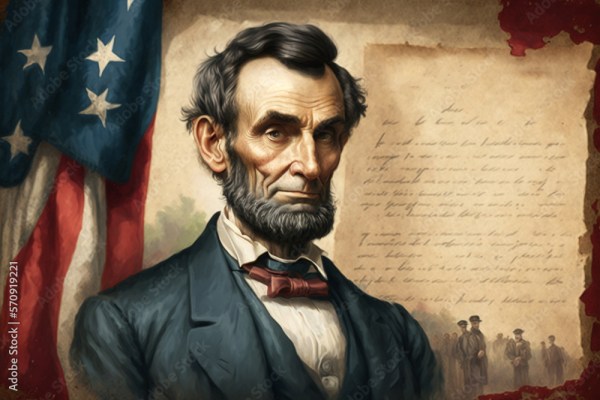
New Perspective: How Lincoln’s Brain Injury Shaped a President

February 20 was President’s Day.  Before the end of the month, it is good to honor one of America’s most lauded presidents and brain injury survivor, Abraham Lincoln:

During his younger years, although he had little formal education, Lincoln was an avid reader.  He would have rather spent a day reading a book than outside riding a horse.  Perhaps because of his comparable inexperience with outdoor activities, Lincoln was thrown off a horse as a child.  Though the specifics of this event are murky (some articles/posts claim he was 9-years-old during the incident, some say 10.  Some say he was hurt by a horse, others say a mule), what is clear is that he remained unconscious for at least the rest of the day.

Later in his life, Lincoln had two bouts of malaria, in 1830 and 1835.  When parasite-filled blood cells block blood vessels, malaria can cause brain damage.  Also in 1835, some claim that Lincoln had the sexually transmitted disease syphilis.  Syphilis can cause neurological problems.

While both contracting malaria and syphilis may have heightened the severity of Lincoln’s brain injury, the most severe occurrence to Lincoln’s brain was, most likely, the aforementioned fall off a horse at a young age.  Given this historical information, it is clear the Lincoln had some sort of brain damage.  His recorded behavior further exhibits this.  Specifically, Lincoln is known to have had a prolonged struggle with severe depression.  Depression is, unfortunately, a common side effect of brain injury.

Whether knowing that Lincoln had some sort of neurological problem affects people’s views of him positively, negatively or not at all, is irrelevant.  People simply need to know that the president who brought our country back together had a brain injury.  Knowing this, the public may question and change their underestimation of and negative behavior towards brain injured classmates, neighbors, fellow employees, etc.

Richmond Rally Reacts to Rehabilitation Cuts

February 1 marked the 14th annual Brain Injury Awareness Day in Virginia.  Hosted by neurologist and State Delegate John O’Bannon, this day allows those affected by and/or advocating for brain injury to discuss their concerns and wants with their state legislators.  This year, the discussion specifically focused on the state government’s cuts (but not elimination) of funding for rehabilitation for brain injured individuals.  Because of this concern, “after meeting with legislators, dozens of survivors, advocates and caretakers of people with brain injuries held a rally Wednesday to call for improvements in services for disabled Virginians.”  What the government may not understand though, is that it takes rehabilitation, sometimes lengthy rehabilitation, to regain functionality following a brain injury, meaning that adequate state funding is necessary.  Increased functionality means increased employment, increased tax collections and less reliance on government-funded support and services.

Personal note:

In the article, Anne McDonnell, executive director of the Brain Injury Association of Virginia, is quoted as saying, “It is a rare privilege to watch a brain come back online.”  This statement implies that brain injury survivors are primarily non-functioning individuals.  This is highly offensive and simply not true.

Additionally, the article quotes a survivor who is involved with the Association, as saying, “Forty-two … I think I’m 42.”  By choosing to publish this quote, the author of this article is making light of a symptom of this survivor’s disability.  Additionally, I believe that this person, as with many brain injury survivors, has a general disbelief of his memory because he had so many memory problems immediately following his injury.  No one remembers everything.

NDEAM: The Beginning

On September 2, 1945, WWII officially ended.  However, for many of the 670,846 wounded in the war, the struggle did not end there.  Discrimination, often unintentional, unknowing discrimination, was rampant against the disabled, meaning that their job prospects were limited.  (Discrimination was much more pervasive than it is now, though that is not to say that current job prospects for the disabled are good.)  Because of this, on September 21, 1945 by Act of Congress and Presidential proclamation, President Truman declared October 7-13, 1945 as National Employ the Physically Handicapped Week.  In Proclamation 2664, the President wrote, “I ask the governors of States, mayors of cities, heads of the various agencies of the Government, and other public officials, as well as leaders in industry, education, religion, and every other aspect of our common life, during the week and at all other suitable times, to exercise every appropriate effort to enlist public support of a sustained program for the employment and development of the abilities and capacities of those who are physically handicapped.”

In response to this, many Senators and Representatives expressed their support.  Given the number of wounded veterans returning home and others with physical disabilities, many of those in Government had a personal interest in aiding those who they knew to be capable individuals.  In particular, Representative Earl C. Michener expressed on the Congressional Record, “Just because one cannot see as others do, or walk as others do, or talk as others do, or hear as others do, is no indication that this person does not have a mission in life and a definite productive place in society and in our economy.  However, it is easy for the American people to forget, and the celebration of this particular week will not only stimulate the memory, but will impress the necessity of remembering that there are in every community some physically handicapped persons.”  When you eliminate the word “physically” from this remark, so that it applies to today’s broader definition of disability, Rep. Michener’s statement is just as relevant now, as it was over 70 years ago.