Clinton Focuses on the “Invisible, Overlooked and Undervalued”

Before the media turned their attention to the presidential debates, Clinton did what fellow presidential nominees have yet to do: namely, on September 21, 2016 in Orlando, FL, Clinton gave a 30 minutes speech that focused on the “invisible, overlooked and undervalued”. Specifically, Clinton spoke about the disabled.

According to the CDC, more than 56 million Americans, or 19% of the population, are living with some form of disability.  “Whether they can participate in our economy and lead rich, full lives that are as healthy and productive as possible is a reflection on us as a country,” Clinton stated.  During her speech in Orlando, Clinton outlined her plan to make an “inclusive economy” for all Americans.  She promised to “focus on improving [disabled Americans] job opportunities.”  (This is an excellent goal, but it does not appear to be enforceable.  I continue to believe that educating the general public, from a young age, is key, thereby providing a better understanding of the capabilities of the disabled.)  She plans to eliminate employers’ ability to pay less than minimum wage to disabled workers and she plans to encourage new partnerships with businesses to improve hiring practices for those who have a disability.

Clinton says she will give the disabled a voice in the White House.   In fact, as Secretary of State, she appointed the first ever Special Advisor for International Disability Rights, Judith E. Heumann.  She has proposed “Autism Works”, a program to increase the job and housing opportunities for adults with autism.   Also, Clinton has released a campaign ad to highlight her commitment to help Americans with disabilities.  This ad, featuring Nyle Dimarco, a 27-year-old model who is deaf, begins, “by explaining that there isn’t any sound and that viewers should feel free to scroll past it because ‘we’re used to being ignored’.

Clinton’s notable speech withstanding, I see the disabled voting bloc as being largely ignored.  Clinton’s speech, for example, was the first speech during her campaign to put disabled Americans at the forefront.  However, Jennifer Mizrahi, the president of RespectAbility, an advocacy organization for people with disabilities, says the election has focused attention on issues affecting disabled voters as never before.

(On his website, Donald Trump makes a point to note that, on September 21, his campaign rally in Toledo, Ohio was attended by more than 2,000, while Clinton’s speech in Orlando, the same day, only had about 300 attendees.  But, in my view, substance is more important than pomp and, ummm, circus.)

Transcription of Hillary’s speech: https://www.hillaryclinton.com/briefing/updates/2016/09/21/in-orlando-clinton-vows-to-protect-the-rights-of-people-with-disabilities/

Not the Easy Answer in Charlotte

The country now knows about the fatal shooting of Keith Lamont Scott by a police officer in Charlotte, NC.  This past Saturday, the police released the video of the shooting to the public, which purports to show the victim holding a gun.  Since Scott was killed, some of the public has decided that the actions of the police were racially motivated, as Scott was African-American.  (Scott was shot by an African-American police officer.)  However, I believe that if the public is to see this as discrimination, it is a case of TBI-related discrimination.

In the cell phone video filmed by Scott’s wife, she pleads with the police, saying that Scott had a traumatic brain injury.  In fact, Scott did fall from a motorcycle in October 2015, which would have more likely given him a brain injury, most likely severe.  Brain damage often interferes with one’s response time, which may explain why Scott was slow to exit the truck.  More so, a brain injury can interfere with cognition and understanding of the long-term consequences of one’s actions.  (This behavior is often intensified by fatigue, which is often the most severe in the late afternoon.  The incident occurred at 4PM.)  Based on those facts, Scott may not have understood the necessity of raising his hands.  Also, if Scott did have a gun, he would be more likely to use it.  (The videos of Scott’s death do not show that Scott had a gun; however, they also do not show that he did not have a gun.)

In Scott’s wife’s cell phone video, one can hear her pleading to the police, telling them that her husband had a TBI and he had just taken his medication.  However, she stops at that statement, not explaining how or when that TBI occurred or the severity of it, so, perhaps, the police did not take notice.   To fully understand the situation, Scott must be considered a man with a brain injury, who had just taken his medication, and who was confronted by an unexpected and stressful situation most likely with the excessive fatigue that occurs at the end of a day.

I am definitely not condoning the police officer’s actions.  However, in a sense, I am not saying that, in their view, it was unprovoked.  More than punishing the officer who shot the gun that killed Scott and more than claiming the shooting was a racial issue, I believe the public and the police force should factor in Scott’s medical history.  The police need specific training on how to handle interactions with those who have brain injuries and the public needs to be educated of the effects of brain injury, so that they do not jump to erroneous conclusions.

Rio Olympics End: A Look Back at (Para)lympians

The 2016 Olympic competitions in Rio ended this weekend.  Specifically, the Paralympics which began on September 7th, concluded on Sunday, September 18th.  Now that the games are over, I believe it is important to acknowledge the individuals who demonstrated their remarkable athletic skills in both the Olympics and the Paralympics.

The first athlete to have the drive, and with particular training, the ability, to compete in the general Olympics, in spite of his disability, was George Eyser in 1904.  Eyser, an American gymnastic who had a wooden leg, finished the games with three gold, two silver, and one bronze medal.  Eyser and other disabled athletes at the time did not compete in the Paralympics, as the Paralympics was not an athletic event until 1948 and took much longer to become the international sporting event it is now.  However, once the Paralympics came to be, according to various sources, at least fifteen athletes have participated in both the Paralympics and the Olympics.  In 2008, two Paraympians participated in the general Olympics, held in Beijing.  One, an amputee following a car accident at the age of 17, South African swimmer Natalie du Tolt, became the first amputee to qualify for the Olympic Games since 1936, while the other, Natalia Partyka, who was born without a right forearm, competed in table tennis.  (Partyka also participates in the 2012 London Olympics and the 2016 Rio Olympics.)

In 2012, South African Oscar Pistorius, a double amputee who had earned multiple gold medals in disability-specific sporting events, qualified and placed 16th in the 400 meter run in Track & Field at the general Olympics, becoming the first double amputee to compete in the Olympics.  (Pistorius and his Olympic accomplishment would be laudable if, in 2014, Pistorius hadn’t been convicted of murdering his girlfriend, South African model Reeya Steenkamp).

The International Paralympics Committee has a list of “qualifying disabilities” for the Paralympics.  Although disabilities that result from a brain injury may be thought more suitable for the Special Olympics, three of these qualifying disabilities specifically apply to brain injury – hypertonia, ataxia, and athetosis.  Hypertonia is the, “abnormal increase in muscle tension and a reduced ability of a muscle to stretch, due to a neurological condition, such as cerebral palsy, brain injury or multiple sclerosis.”  Ataxia is the “lack of co-ordination of muscle movements due to a neurological condition, such as cerebral palsy, brain injury or multiple sclerosis.”  Athetosis is “generally characterized by unbalanced, involuntary movements and a difficulty in maintaining a symmetrical posture, due to a neurological condition, such as cerebral palsy, brain injury or multiple sclerosis.”  Additionally, other paralympians may also have had a brain injury as a result of an injury that affects their neurological functioning, such as a car accident, though it is inappropriate to make this assumption.

It is a positive sign that the International Paralympics Committee recognizes that disabilities, particularly neurological conditions, don’t necessarily break one’s drive for success in whatever their passion may be and prevent them from competing in athletic events.  Still, there is government ignorance that must be dealt with; for example, the Russian Secretary General of the Russian Paralympics Committee, Andrei Strokin, said that an individual competes in the Paraympics, “because often for a disabled person it is the only chance of self-realization and achieving something in life”.  I think that the above list of athletes proves him wrong.

\

Conventions are Staged, Too

Dana White, the president of the Ultimate Fighting Championship, is not an athlete, but he works in athletics.  He is not involved in politics, but yesterday he spoke at the Republican National Convention.  And Dana White doesn’t have a brain injury, but he makes sure other people do… And it’s with the help of Donald Trump that he can do this all.

In a 4 minute speech, White used the knowledge he acquired from acting as a Mixed Martial Arts (MMA) promoter, to promote Trump for President.  He describes Trump as his friend, noting that, “Just for the record [he] has nothing to do with my business.”  (To counter that statement, know that the first 2 UFC fights were fought at the Trump Taj Majal, and Trump continues to host UFC events at his Atlantic City casino.)  He then goes into Trump’s three characteristics that will make him a great President.*

When UFC fighting first came out, in 1993, it was considered a blood-sport.  The description of the sport is not simply rhetoric, as, after time in the ring, fighters drip with blood.  Last year, Wanderlei Silva, a former fighter, claimed that the UFC fixes its games.  (World Wrestling Entertainment, Inc. admits to fixing their games.)  However, if we accept the games as being fixed, that doesn’t make them any safer.  For example, the comparatively tamer World Wrestling Entertainment is being sued by more than 50 former fighters for the brain trauma they suffered in the sport.  Since the sport is essentially “fake”, being scripted and choreographed, the WWE is “directly responsible for wrestlers’ injuries”, according to the lawsuit.

According to a study in the American Journal of Sports Medicine, about one-third of professional MMA matches end in knockout, indicating a higher incidence of brain trauma than boxing or other martial arts.  “The researchers [of this study] at the University of Toronto proposed introducing rules like in boxing where a fighter gets a 10-second count and evaluated after a knockdown. They also proposed more training to help referees to identify fighters who are defenseless or have lost consciousness so they can stop fights more quickly.”  This year, the UFC extended its partnership with the Cleveland Clinic in the “Professional Fighters Brain Health Study”.

Yes, the UFC is trying to better its sport, to prevent head injury thereby allowing athletes to stay in the sport longer.  Technically, Trump is supporting this investigation.  However, do you think that the man who likes to see head collisions in football wants to make the UFC safer?  Will the sport continue to be as popular if its rings are not filled with blood after a fight, thereby decreasing his game sales?  Assuming the UFC is here to stay, Trump needs to think about his point of view.  It’s one thing to except that a sport is going to happen, it’s a whole other thing to give it a place to happen.

(Currently, in combat sports, there is a call from some for fighters to toss away their gloves and fight bare-handed.  That call sounds awful and horribly unsafe, and would increase hand injuries.  For the head, bare-handed fighting is actually safer (safer, not safe).)

*First, White says that Trump has excellent business instincts, presumably talking about his instincts with the UFC – even though, as White said, “[Trump] has nothing to do with it.”  Second, Trump is a hard worker.  Third, Trump is a loyal, supportive friend.  Being a good friend is a great feature, but I’m not sure how it applies to the presidency, though there was talk about Trump buddying up with Putin.

The Deciding Vote?

I have only posted twice in this month for a simple reason – politicians, including political candidates, largely ignore the disabled vote while speaking and/or campaigning.  A blog entry on the Huffington Post site explains it well, and though this article is from last year, the statements stay true and relevant.  The number of disabled Americans is unfortunately large and continues to increase. Clinton’s lead in the polls is small.  True, “[in the 2012 President election}, the voter turnout rate of people with disabilities was 5.7 percentage points lower than that of people without disabilities.”  However, that means that 15.6% of disabled Americans did vote.  This year, the number of disabled voters will likely vastly increase, just as it will for the generally population.  Ultimately, the disabled vote could make the difference in who becomes the next Commander-in-Chief of the United States.

Gun-owning, Disabled Democrat Speaks Out for Clinton

(Note: This article was previously titled, “She Walks, She Talks AND She Has Opinions”.  I now understand that this title could be seen as offensive to disabled people.  However, I did not intend it to be offensive.)

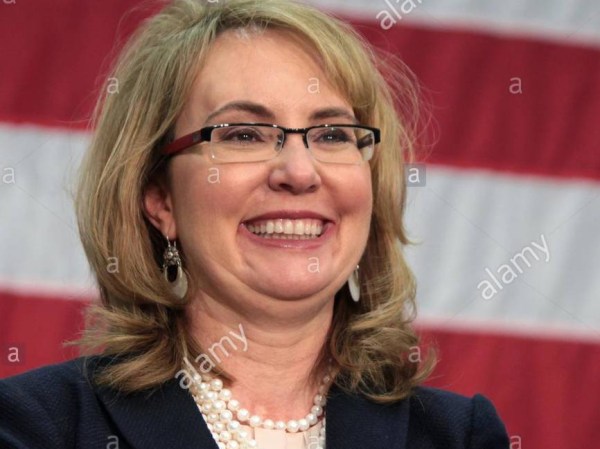
Last week, Americans, including all TBI survivors, saw something remarkable from former Arizona Congresswoman and TBI survivor Gabby Giffords.  Specifically, the women who had to relearn how to walk and talk just a few years ago walked herself to the podium and spoke to the country at the Democratic National Convention in Philadelphia, PA.  During her speech, Giffords spoke of her support for Hillary Clinton and her proposed gun laws.  Beyond her speech though, Giffords said something that I think is an important, but often overlooked positive effect of something as horrific as a brain injury: “I have a passion for helping people [now]”.  (These words demonstrate her choice to favor action versus pity.  Given that, it would be nice if the press focused on her speech and her ideas, not the fact that she walked alone.)

Clinton on Clinton: TBI

Last Wednesday, at the Democratic National Convention, former President Bill Clinton spoke, explaining why he believes his wife, Hillary Clinton, is the best candidate to lead this country for the next 4 years.  He spoke of their courtship, their time as new parents, her time as a Senator, etc.  Bill’s speech was long, many say too long, but interesting.  Of particular interest was Bill’s statement that, “she worked for more extensive care for people with traumatic brain injury.”

Mr. Clinton’s statement came right after he discussed Hillary’s time on the Armed Services Committee.  Because of her time on the Committee, many of the TBI-related pieces of legislation she sponsored were directed to those in Service.  For example, she sponsored the Heroes at Home Act of 2007 (S.1065) which “directs the Secretary of Veterans Affairs to establish a program on training and certification of family caregivers of veterans and member with traumatic brain injury”.   However, the TBI-related legislation that she co-sponsored was not necessarily directed solely towards the troops.  As an example, the Traumatic Brain Injury Act of 2008, which includes 6 Sections, “authorizes the Secretary, acting through the Director of CDC, to conduct a study to (1) determine the incidence of traumatic brain injury and prevalence of traumatic brain injury related disability; (2) report national trends in traumatic brain injury; (3) identify common therapeutic interventions which are used for the rehabilitation of individuals with such injuries; (4) identify interventions and therapies that can prevent or re-mediate the development of secondary neurologic conditions related to traumatic brain injury; and (5) develop practice guidelines for such rehabilitation”.

Given that former President Clinton stated that Clinton worked tirelessly for those suffering from traumatic brain injury, one would think her efforts would be more evident.  However, legislation review seems to show that former President Clinton’s statement is correct.  It is those who suffer from traumatic brain injury and their caregivers to decide if public knowledge of legislation or the legislation itself is of more import.

Tax Returns Could Trump Trump’s Philanthropy Claims

Donald Trump often speaks of all the donations he makes to various charities.  In January, Trump held a fundraiser for at least 40 veterans-focused nonprofits, which raised $4.5, $5.5, $5.6 or $6 million, depended on which member of his staff you ask and when you ask them.  Some of this money was donated by Trump himself, with the majority of the money coming from fundraiser attendees.  The Bob Woodruff Foundation received a check for $75,000, which Woodruff said, “We can put it to very good use to help our vets and their families.” Also, in May, “[Trump] gave $1 million to a nonprofit group helping veterans’ families.”

Recently, The Wall Street Journal looked into the history of donations from the self-proclaimed philanthropist to all charities throughout the years.  The title of the article that followed this investigation is “Trump promised millions to charity.  We found less than $10,000 over 7 years.”  (I think the title of this story explains the findings of the Journal, although it can neither be proven nor repudiated without Trump’s tax returns.)

Money or Safety: Who Wins?


Mixed Martial Arts combines the skills needed in wresting, kickboxing and jiu-jitsu into one violent sport.  In this century, MMA has gained popularity and consequently been legalized in most of America.  This past week, the New York legislature, Governor Cuomo and the State Athletic Commission entered the cage.

While MMA matches have been going on in New York for some years, legalization means that there will be regulations.  Specifically, these regulations include classifying 31 Acts that constitute a foul in the arena and would result in “disqualification from a mixed martial arts contest or exhibition… as determined by the referee.”  Five of these fouls specifically involve violence to the brain: Butting with the head, striking to… the back of the head, kicking the head of a grounded opponent, kneeing the head of a grounded opponent, and spiking an opponent to the floor surface on his head or neck.  Other rules are not specifically directed to the head, but could easily result in head trauma, such as “attacking an opponent on or during a break”.  Additionally, “New York [is] to Require $1 Million Brain-Injury Coverage for Mixed Martial Artist,” to be provided by the promoters.

However, the safety of the athletes was not directly the reason of the legalization… it was the money.  It is estimated that legalizing MMA will bring $140 million to New York in economic growth.

In covering this story, Forbes magazine notes that, “insurance doesn’t provide for fighter safety.  It provides compensation after fighter safety has failed.”  (On the other hand, the NYS Athletic Commission says it, “has taken another step toward ensuring the health, safety and integrity of its athletes and event.”)  Some people still want the sport banned.  Currently, the State is seeking comments from the public on this issue.  The proposed legislation can be found on this link and comments can be submitted for review until August 27, 2016.

PTSD = Police Trauma Stress Disorder?

My thoughts are with the Baton Rouge police today, 3 of whom were shot and killed and 3 others injured. With this, and the events in Dallas last week, I understand that many police officers, especially the survivors of these attacks, may be experiencing some form of Post-traumatic Stress Disorder (PTSD).  As President Obama said today, “Attacks on police are an attack on all of us.”  My best goes out to the families of those who lost their lives protecting this country and to all police officers.  I hope all Americans soon realize the good work that police officers, in general, do and that officers are given the respect that they deserve.