Virginia Battles BI with Targeted Funds

Being home to the Pentagon, headquarters of the Department of Defense, Virginia has been the center of much brain injury research and treatment.  Having a background in pediatric neurology and a past residency at the Brooke Army Medical Center, a military hospital located in Texas, Governor of Virginia Dr. Ralph Northam has seen the short-term and long-term effects of brain injury.  Given this, Gov. Northam authored a proclamation for Brain Injury Awareness Month in March, stating, “WHEREAS, early, equal, and adequate access to care greatly increases the overall quality of life of Virginians with TBI, enabling them to return to home, school, work, and community.”

From 2014 to the present, “Virginia has received $3,573,485 in Federal TBI Planning, Implementation, and Implementation Partnership Grants. The State has provided $1,785,260 in matching support.”  However, this federal grant is set to expire after 2018.  Last week, Northam awarded a three-year $900,000 grant to the Virginia Department for Aging and Rehabilitative Services (DARS), earmarked for Brain Injury Services Coordination (BISC) Unit.  (Notes DARS Commissioner Kathryn A. Hayfield, this new grant is just another example of Virginia’s support for brain injury services, which has been ongoing since the 1980s.)  As it is, the goal of BISCU is to, “enhance the quality of life and vocational goals of persons with… brain injury.”  The goal of this grant is to go further than this, as the agency continues to enhance the “health, wellness and independence of people with TBI,” by enhancing “access to supports and services,” states Dr. Daniel Carey, Secretary of Health and Human Resources.

Full Recovery May Be on the Horizon

By definition, a traumatic brain injury harms the brain and, therefore, the neurons that reside therein.  In recovery, one is taught how to live effectively with these deficits.  However, “the big issue with treatment after TBI is that there are no drugs that work well on patients to restore memory,” says Bonnie Firestein.  Firestein is the senior author of a decade-long study, led by the Department of Cell Biology and Neuroscience at Rutgers University, that may have found the means to full recovery.

Specifically studied was the protein Cytosolic PSD-95 interactor, also known as Cypin, “the primary guanine deaminase in the brain [that] plays key roles in shaping neuronal circuits and regulating neuronal survival.”  (Guanine is, “an important building block for DNA and RNA in cells.”)

To summarize the study’s findings, the abstract on the NIH site states, “Administering either cypin activator directly into the brain one hour after traumatic brain injury significantly reduced fear conditioning deficits 5 days after injury, while delivering the cypin inhibitor did not improve outcome after TBI. Together, these data demonstrate that cypin activation is a novel approach for improving outcome after TBI and may provide a new pathway for reducing the deficits associated with TBI in patients.”  Though this tactic of recovery has only been tested on mice, as of yet, the similar neurological structure of mice to humans makes it possible that this newly found method of treatment would work in humans, as well.

At Home Brain Care

Last week, the University of Arkansas for Medical Sciences received a three-year, $450,000 grant from the U.S. Department of Health and Human Services Administration for Community Living, in addition to the $75,000 annual gift they are receiving from the Arkansas Department of Health.  The federal grant is to be applied to the University’s Traumatic Brain Injury State Partnership Program State Funding Opportunity.  “Among the goals of the program… are incorporating telemedicine and other technologies into TBI services to survivors, raising awareness of clinical and educational services for survivors, caregivers and families…”  Telemedicine increases healthcare access for all, particularly those is rural areas and others that cannot easily visit medical facilities, such as those with tbi who need aid in transportation.

Although it may seem to be a relatively modern invention, forms of telemedicine have been in existence since man could verbally communicate.  The more modern view of telemedicine, involving both verbal and visual communication with the medic, was first seen in 1924 in, “an imaginative cover for the magazine Radio News foreshadowed telemedicine in its depiction of a ‘radio doctor’ linked to a patient not only by sound but also by a live picture.”  Though at the time, the ideas of television and telemedicine were merely fantasies, the first television transmission occurred only 3 years later.  Video communication between doctor and patient, however, is usually first dated to 1959.  1959 is also the year of the first neurologic examination through telemedicine, occurring at the University of Nebraska.  Five years later, means to treat patients with brain injury and neurological disorders were found, as, “they established a telemedicine link… to provide speech therapy, neurological examinations, diagnosis of difficult psychiatric cases, case consultations, research seminars, and education and training.”

The above paragraph primarily comes from information in a 1996 article that can be found on the site of the National Academy of Sciences.  In 1996, the government recognized that there was a vast need for telemedicine, since its envisionment to the present day.  With both new technology and increased forms of communication, telemedicine has gone far above what could have been imagined 22 years ago.  For example, a 71-page report penned by the Undersecretary of Defense to the House Chair of the Committee of Armed Services, states that, “the Department of Defense views telemedicine as an important set of tools to improve access to Psychological Health and TBI care services in both deployed and non-deployed settings.  In June 2018, the FDA approved the distribution of MindMotion GO, a type of mobile therapy that focuses on speech and task therapies.  As far as brain injury diagnosis, while CT scans and other such tests may need to occur at medical facilities, medical professionals are now using communication technology to diagnose another neurological disorder (autism) and to evaluate others (computerized concussion assessment).
 

The Importance of PLAY(S)

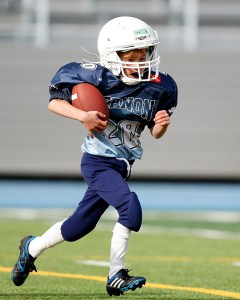
Children generally have more physical energy than their adult counterparts. As a consequence, many participate in youth sports leagues, which not only provide physical activity, but also teach them to work effectively with their peers.  Last year, Senator Capito (WV) proposed Senate Resolution 227 which marked July 16 – 22 as National Youth Sports Week.  According to the bill, the week is, “a celebration of youth sports participation and all of the benefits youth derive from engagement in sports.”

In 2018, “[this] week… thousands of youth sports coaches, athletic directors, recreation directors, association members, sponsors, young athletes, and parents across the country show their support focusing on P.L.A.Y.S. ~ Physical activity, Living healthy, Access, Youth development, Safety.”  While having access to the physical activity and youth development provided by sports, which is a key part of healthy living, is important, the S (safety) should always be included in the celebration.

***The bones of children are still in development and, therefore, weaker.  Additionally, the coating of myelin, neuron fibers, in the brain of youth is still in development.  Because of this, physical injury, including skull injury, is more common and more severe in children, than in adults.  Particularly this can be found in sports, most notably in youth football, youth hockey and youth soccer, but the risk is present in all sports.  (For example, this month, the CDC published an article that identifies brain infection/injury as a rare, but possible result of fresh water swimming.)  Additionally, beyond physical safety, sports may affect the brain psychologically, but this affect can also be positive.  New Jersey, among other states, has a youth sports concussion law, “to help reduce the risk of student-athletes suffering concussion, and its long-term consequences.”  Included as a possible long-tern consequence is a traumatic brain injury.

Alexa and Her Friends Promote Independence

The new technology of smart homes has sparked the interest of all Americans, as they imagine Alexa and other such tools closing the blinds, turning off the stove and other such activities at a specific time.  For those with a brain injury and/or other disabilities, the possibilities are even greater, allowing them to, “independently plan, organize and complete everyday activities.”

Nearly a decade ago, in 2009, the government saw the potential of smart homes for the disabled, when it concluded, “more outcomes-based research and collaboration among stakeholders is essential in order to establish guidance for designing, selecting and implementing individualized smart home solutions for those with neurological disability.”  To identify both the needs of those with brain injuries, as well as their caregivers and their rehabilitation and home healthcare providers in smart homes, the government conducted such studies, as that in 2016.  To condense the findings of this study, it found that “to meet participation needs of people with ABI, the design of smart homes must consider all categories of daily and social activities.”  More so, the VA found that smart homes actually aid in cognitive rehabilitation, as VA smart homes send technological reminders when someone goes “off track”.  The VA has stated smart homes have been described as a ‘cognitive prosthetic‘, telling someone when to take their medication and even such things as notifying someone how long they have been shaving.

Last month, the Gary Sinise Foundation, an organization whose mission is to “serve our nation by honoring our defenders, veterans, first responders, their families, and those in need,” built a smart home in Wildwood, Missouri for a veteran who lost both his legs and suffered a brain injury after stepping on an IED in Afghanistan.  This month, the Gary Sinise Foundation gave a smart home that they built in Richland County, Ohio to a former Army Sergeant who also suffered a traumatic brain injury and leg injuries while serving in Afghanistan.  As smart homes become more available, for both individual residence and community living, further independence can be known to many more with brain injuries.

Revolutionary Treatment in the 18th Century

When one thinks of Revolutionary War combat injuries, one tends to think of physical trauma or even death.  Head injury is generally not considered, even though when one thinks of war injuries, head injuries are known to occur all too often.  Because of this reality, during the War of Independence, American doctors began to study neurosurgery and treat soldiers accordingly.  A manual, titled Plain Concise Practical Remarks on the Treatment of Wounds and Fractures and authored by Dr. John Jones, was published in 1775, “to give the young unexperienced Surgeon, fome general and clear ideas of the nature and treatment of this difficult and dangerous brain of chirurgical difeafes” sic.  Dr. Jones’ experience included founding King’s College Medical School, now known as Columbia College of Physicians and Surgeons.  (Manual chapters include: Of Blows on the Head, Of Injuries Arifing from Concussion or Commotion, Of Injuries Arifing from Fracture of the Skull.)

Medical Mystery Appears Again Across the Globe

Last year, America removed its diplomats from Cuba after some reported mysteriously experiencing the symptoms of mild brain injury.  This year, the same symptoms are being experienced by American diplomats and their families in Guangzhou, China:  sleeplessness, headache, nausea, and memory recall issues.  These are the same symptoms one feels, “following [a] concussion or minor traumatic brain injury.”

Secretary of State Mike Pompeo notes that what has now being reported as occurring in China is, “very similar and entirely consistent with the medical indications that have taken place to Americans working in Cuba.”  It both cases, there is no known culprit, though those in the State Department continue to say that it is likely to be caused by sonic attacks.  Toxins and sounds emitted by listening devices, as well as simply mass hysteria, have also been mentioned as possible causes.  (Twenty-five percent of those who reported brain injury in Cuba were found not to have it, based on medical tests following their return to America.)  The U.S. government suspects that either Russia or China may be causing the attacks in China.  The idea that Cubans could be generating the attacks is not thought in this incidence.

Are sound attacks the new means of warfare?  The news examines this question, citing the known effects of infrasonic and ultrasonic sound.  Infrasonic sound causes such effects as nausea and involuntary bowel evacuation.  Ultrasonic sound can heat up the cells of the body and can cause cavitation, “when the pressure difference between a strong push and a strong pull in a very loud sound causes bubbles to form”.  Generally, ultrasound sound is named as the culprit of the sonic attacks, however nausea, an effect of infrasound attacks,  was reported by some.  Another possibility is that ultrasonic attacks are an effect of eavesdropping, not the means of attack, as ultrasound is used is surveillance.

Hit by Dementia on the Battlefield

Last year, I reported on the correlation between traumatic brain injury and dementia.  Specifically, I linked to a study that found that those with a TBI had a 4.5 percent greater risk of dementia (in some studies, this percentage is a bit lower).  While terrible, that was not a complete surprise, when one is referring to moderate and severe brain injuries.  (The report that found that mild TBI is not so mild for the elderly is upsetting, but not unbelievable.)  However, since that time, government-funded studies, as well as other studies, have broadened that research and discovered that even a mild brain injury without loss of consciousness (loc) can more than double one’s chance of developing dementia, no matter what age that person is when that mTBI occurs.  A study of more than 350,000 veterans found that those who had a mild TBI, a single jolt to the head, without loc had a 2.36 percent greater risk of developing dementia.  For those in the study who had a mild TBI with loc, there was a 2.51 percent higher risk of developing dementia, not that much higher.

“One working theory is that somehow these injuries either cause an overproduction of normal waste proteins, or make it impossible to clear these proteins,” notes the study.  However, this is just a working theory because no one fully understands how the brain works, or rather why and how it stops working.  Responding to the above studies results, the director of the Army’s traumatic brain injury program questioned, “”Is blast exposure hurting service members or soldiers?  And if it is… how can we modify our equipment or the way we operate to prevent injury?”

Beyond the military, why is the risk of dementia higher after a TBI for working age adults, in general?  Additionally, the NCBI sponsored a nationwide study that found that, “the risk of dementia diagnosis decreased over time after TBI… [but] it was still evident >30 years after the trauma.”  Based on this information, how can we modify our diet, our physical activity, etc., during our TBI recovery and after, to prevent this?  As of now, research on cognitive decline, mild cognitive impairment, and dementia prevention has been “encouraging but inconclusive”.  However, the assumed prevention tactics of cognitive training, blood pressure management (for those with hypertension), and increased physical activity are beneficial regardless.

Trump Gives Credit to Caregivers

“Trump donates his presidential paycheck to VA caregivers,” read the headline on The Military Times website yesterday, May 17, 2018.   Specifically, the President’s quarterly paycheck of $100,000 is the first check that the President has donated to the VA (earmarked for the caregivers) and the fifth paycheck that he has donated to various governmental departments.  “President Trump understands the critical role of caregivers,” said Acting VA Secretary Robert Wilkie of this quarter’s donation. Apart from financial support, caregivers support the health and healthcare of dependents and provide much needed social interaction.

Earlier this year, the “Trump tax cut”, H.R. 1, that passed in March, states that, “The [tax] credit [for caregivers]… shall be increased by $500 for each dependent of the taxpayer.”  A dependent is defined as a relative who lives with the caregiver, earns less than $4,050 annually and that the caregiver financially supports.  This is a description that applies to many brain-injured individuals.

Menopause Increases Stroke Risk – Part 2

by Caitlin D.

Whether you consider a cerebrovascular disease, commonly known as a stroke, a traumatic brain injury in and of itself or simply the effect of a tbi (a stroke is an acquired brain injury), the negative effects of it do not lessen.  If one has an ischaemic stroke, as opposed to a haemorrhagic stroke, they then have a 25% – 30% higher chance of either developing vascular cognitive impairment (VCI) or vascular dementia (VaD), collaboratively known as VCID.  Strokes may not always be the cause of VCID, but strokes and VCID do have similar risk factors.  (For this reason, a stroke may co-occur with a VCID, but not be directly caused by it.)  And, just like a stroke, “symptoms of vascular dementia and VCI can begin suddenly…. [but they] worsen or improve over time.”

Vascular dementia is a general term describing problems with reasoning, planning, judgment, memory and other thought processes caused by brain damage from impaired blood flow to your brain.”  Because of their similar effects, vascular dementia is often confused with Alzheimer’s disease.  However, the difference is that vascular dementia is caused by the blockage of blood through the brain, whereas the cause of Alzheimer’s disease is not fully understood.  For this reason, “Currently, no specific biomarkers have been proven to robustly discriminate vulnerable patients (‘at risk brains’) from those with better prognosis or to discriminate Alzheimer’s disease dementia from [vascular dementia].”

A relatively newly named condition, vascular cognitive impairment, “refers to the contribution of vascular pathology to any severity of cognitive impairment, ranging from subjective cognitive decline and mild cognitive impairment to dementia.”  It is not an age-restricted condition, though the vast amount of those who are inflicted are elderly.

Last year, the National Heart, Lung and Blood Institute funded a study that proved that exercise helps prevent against vascular dementia.    However, beyond that, little research has been done on how to prevent or cope with vascular dementia or vascular cognitive impairment.  As the government noted, in 2015, “there are limited treatment options to improve cognition and function in VCI.”  That still seems to be accurate.  Since strokes are often the cause of vascular cognitive impairment and vascular dementia and since vascular dementia seems to mirror the effects of Alzheimer’s disease, research on how to cope with and later deal with strokes and Alzheimer’s would be beneficial.

While it is true that America is aging, as the world’s population is living longer, stroke and dementia should not be as much of a concern for those who live a healthy lifestyle.  Thirty years ago, a person who was injured through a traumatic injury or a person who developed an acquired brain injury had almost no hope of survival.  Now many such people can survive and even thrive.  Hoping for that type of result for dementia in the same timetable seems very realistic.