Rio Olympics End: A Look Back at (Para)lympians

The 2016 Olympic competitions in Rio ended this weekend.  Specifically, the Paralympics which began on September 7th, concluded on Sunday, September 18th.  Now that the games are over, I believe it is important to acknowledge the individuals who demonstrated their remarkable athletic skills in both the Olympics and the Paralympics.

The first athlete to have the drive, and with particular training, the ability, to compete in the general Olympics, in spite of his disability, was George Eyser in 1904.  Eyser, an American gymnastic who had a wooden leg, finished the games with three gold, two silver, and one bronze medal.  Eyser and other disabled athletes at the time did not compete in the Paralympics, as the Paralympics was not an athletic event until 1948 and took much longer to become the international sporting event it is now.  However, once the Paralympics came to be, according to various sources, at least fifteen athletes have participated in both the Paralympics and the Olympics.  In 2008, two Paraympians participated in the general Olympics, held in Beijing.  One, an amputee following a car accident at the age of 17, South African swimmer Natalie du Tolt, became the first amputee to qualify for the Olympic Games since 1936, while the other, Natalia Partyka, who was born without a right forearm, competed in table tennis.  (Partyka also participates in the 2012 London Olympics and the 2016 Rio Olympics.)

In 2012, South African Oscar Pistorius, a double amputee who had earned multiple gold medals in disability-specific sporting events, qualified and placed 16th in the 400 meter run in Track & Field at the general Olympics, becoming the first double amputee to compete in the Olympics.  (Pistorius and his Olympic accomplishment would be laudable if, in 2014, Pistorius hadn’t been convicted of murdering his girlfriend, South African model Reeya Steenkamp).

The International Paralympics Committee has a list of “qualifying disabilities” for the Paralympics.  Although disabilities that result from a brain injury may be thought more suitable for the Special Olympics, three of these qualifying disabilities specifically apply to brain injury – hypertonia, ataxia, and athetosis.  Hypertonia is the, “abnormal increase in muscle tension and a reduced ability of a muscle to stretch, due to a neurological condition, such as cerebral palsy, brain injury or multiple sclerosis.”  Ataxia is the “lack of co-ordination of muscle movements due to a neurological condition, such as cerebral palsy, brain injury or multiple sclerosis.”  Athetosis is “generally characterized by unbalanced, involuntary movements and a difficulty in maintaining a symmetrical posture, due to a neurological condition, such as cerebral palsy, brain injury or multiple sclerosis.”  Additionally, other paralympians may also have had a brain injury as a result of an injury that affects their neurological functioning, such as a car accident, though it is inappropriate to make this assumption.

It is a positive sign that the International Paralympics Committee recognizes that disabilities, particularly neurological conditions, don’t necessarily break one’s drive for success in whatever their passion may be and prevent them from competing in athletic events.  Still, there is government ignorance that must be dealt with; for example, the Russian Secretary General of the Russian Paralympics Committee, Andrei Strokin, said that an individual competes in the Paraympics, “because often for a disabled person it is the only chance of self-realization and achieving something in life”.  I think that the above list of athletes proves him wrong.

\

Conventions are Staged, Too

Dana White, the president of the Ultimate Fighting Championship, is not an athlete, but he works in athletics.  He is not involved in politics, but yesterday he spoke at the Republican National Convention.  And Dana White doesn’t have a brain injury, but he makes sure other people do… And it’s with the help of Donald Trump that he can do this all.

In a 4 minute speech, White used the knowledge he acquired from acting as a Mixed Martial Arts (MMA) promoter, to promote Trump for President.  He describes Trump as his friend, noting that, “Just for the record [he] has nothing to do with my business.”  (To counter that statement, know that the first 2 UFC fights were fought at the Trump Taj Majal, and Trump continues to host UFC events at his Atlantic City casino.)  He then goes into Trump’s three characteristics that will make him a great President.*

When UFC fighting first came out, in 1993, it was considered a blood-sport.  The description of the sport is not simply rhetoric, as, after time in the ring, fighters drip with blood.  Last year, Wanderlei Silva, a former fighter, claimed that the UFC fixes its games.  (World Wrestling Entertainment, Inc. admits to fixing their games.)  However, if we accept the games as being fixed, that doesn’t make them any safer.  For example, the comparatively tamer World Wrestling Entertainment is being sued by more than 50 former fighters for the brain trauma they suffered in the sport.  Since the sport is essentially “fake”, being scripted and choreographed, the WWE is “directly responsible for wrestlers’ injuries”, according to the lawsuit.

According to a study in the American Journal of Sports Medicine, about one-third of professional MMA matches end in knockout, indicating a higher incidence of brain trauma than boxing or other martial arts.  “The researchers [of this study] at the University of Toronto proposed introducing rules like in boxing where a fighter gets a 10-second count and evaluated after a knockdown. They also proposed more training to help referees to identify fighters who are defenseless or have lost consciousness so they can stop fights more quickly.”  This year, the UFC extended its partnership with the Cleveland Clinic in the “Professional Fighters Brain Health Study”.

Yes, the UFC is trying to better its sport, to prevent head injury thereby allowing athletes to stay in the sport longer.  Technically, Trump is supporting this investigation.  However, do you think that the man who likes to see head collisions in football wants to make the UFC safer?  Will the sport continue to be as popular if its rings are not filled with blood after a fight, thereby decreasing his game sales?  Assuming the UFC is here to stay, Trump needs to think about his point of view.  It’s one thing to except that a sport is going to happen, it’s a whole other thing to give it a place to happen.

(Currently, in combat sports, there is a call from some for fighters to toss away their gloves and fight bare-handed.  That call sounds awful and horribly unsafe, and would increase hand injuries.  For the head, bare-handed fighting is actually safer (safer, not safe).)

*First, White says that Trump has excellent business instincts, presumably talking about his instincts with the UFC – even though, as White said, “[Trump] has nothing to do with it.”  Second, Trump is a hard worker.  Third, Trump is a loyal, supportive friend.  Being a good friend is a great feature, but I’m not sure how it applies to the presidency, though there was talk about Trump buddying up with Putin.

The Deciding Vote?

I have only posted twice in this month for a simple reason – politicians, including political candidates, largely ignore the disabled vote while speaking and/or campaigning.  A blog entry on the Huffington Post site explains it well, and though this article is from last year, the statements stay true and relevant.  The number of disabled Americans is unfortunately large and continues to increase. Clinton’s lead in the polls is small.  True, “[in the 2012 President election}, the voter turnout rate of people with disabilities was 5.7 percentage points lower than that of people without disabilities.”  However, that means that 15.6% of disabled Americans did vote.  This year, the number of disabled voters will likely vastly increase, just as it will for the generally population.  Ultimately, the disabled vote could make the difference in who becomes the next Commander-in-Chief of the United States.

Gun-owning, Disabled Democrat Speaks Out for Clinton

(Note: This article was previously titled, “She Walks, She Talks AND She Has Opinions”.  I now understand that this title could be seen as offensive to disabled people.  However, I did not intend it to be offensive.)

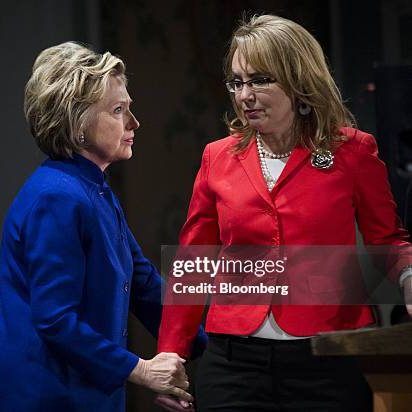
Last week, Americans, including all TBI survivors, saw something remarkable from former Arizona Congresswoman and TBI survivor Gabby Giffords.  Specifically, the women who had to relearn how to walk and talk just a few years ago walked herself to the podium and spoke to the country at the Democratic National Convention in Philadelphia, PA.  During her speech, Giffords spoke of her support for Hillary Clinton and her proposed gun laws.  Beyond her speech though, Giffords said something that I think is an important, but often overlooked positive effect of something as horrific as a brain injury: “I have a passion for helping people [now]”.  (These words demonstrate her choice to favor action versus pity.  Given that, it would be nice if the press focused on her speech and her ideas, not the fact that she walked alone.)

Clinton on Clinton: TBI

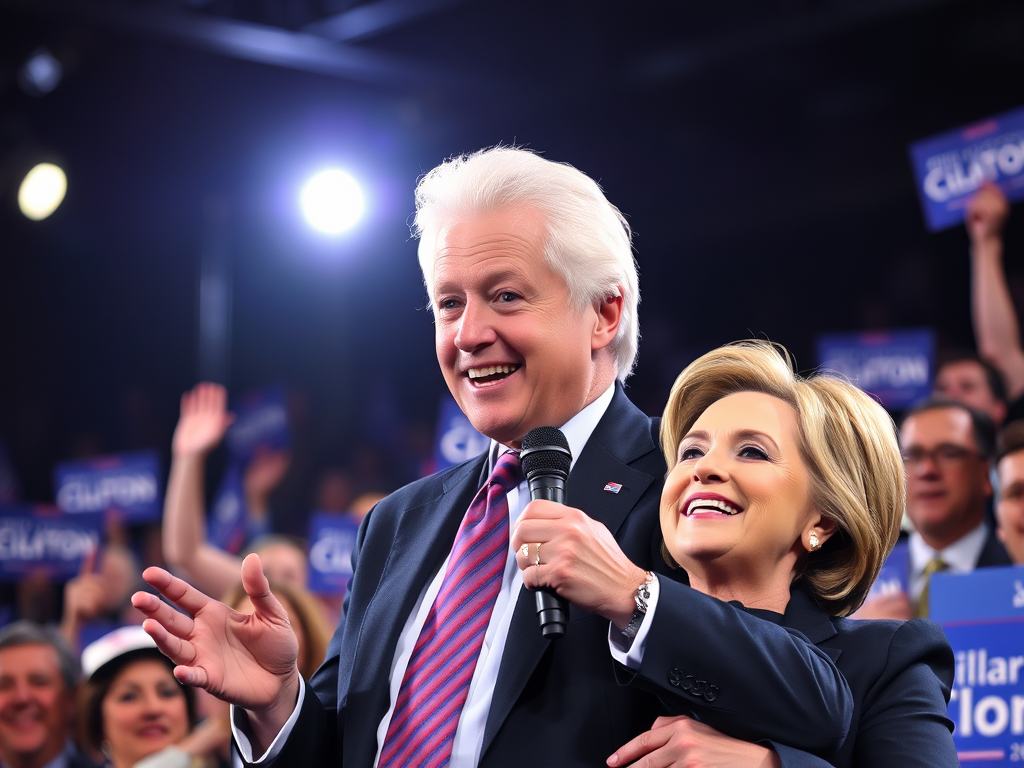
Last Wednesday, at the Democratic National Convention, former President Bill Clinton spoke, explaining why he believes his wife, Hillary Clinton, is the best candidate to lead this country for the next 4 years.  He spoke of their courtship, their time as new parents, her time as a Senator, etc.  Bill’s speech was long, many say too long, but interesting.  Of particular interest was Bill’s statement that, “she worked for more extensive care for people with traumatic brain injury.”

Mr. Clinton’s statement came right after he discussed Hillary’s time on the Armed Services Committee.  Because of her time on the Committee, many of the TBI-related pieces of legislation she sponsored were directed to those in Service.  For example, she sponsored the Heroes at Home Act of 2007 (S.1065) which “directs the Secretary of Veterans Affairs to establish a program on training and certification of family caregivers of veterans and member with traumatic brain injury”.   However, the TBI-related legislation that she co-sponsored was not necessarily directed solely towards the troops.  As an example, the Traumatic Brain Injury Act of 2008, which includes 6 Sections, “authorizes the Secretary, acting through the Director of CDC, to conduct a study to (1) determine the incidence of traumatic brain injury and prevalence of traumatic brain injury related disability; (2) report national trends in traumatic brain injury; (3) identify common therapeutic interventions which are used for the rehabilitation of individuals with such injuries; (4) identify interventions and therapies that can prevent or re-mediate the development of secondary neurologic conditions related to traumatic brain injury; and (5) develop practice guidelines for such rehabilitation”.

Given that former President Clinton stated that Clinton worked tirelessly for those suffering from traumatic brain injury, one would think her efforts would be more evident.  However, legislation review seems to show that former President Clinton’s statement is correct.  It is those who suffer from traumatic brain injury and their caregivers to decide if public knowledge of legislation or the legislation itself is of more import.

Tax Returns Could Trump Trump’s Philanthropy Claims

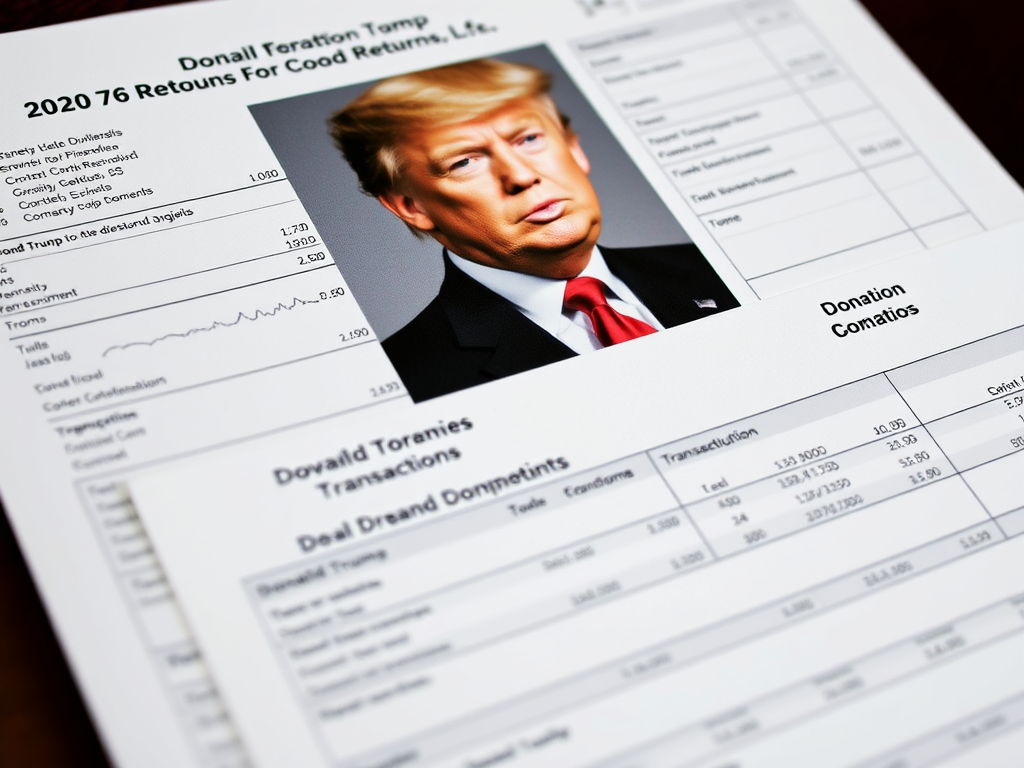
Donald Trump often speaks of all the donations he makes to various charities.  In January, Trump held a fundraiser for at least 40 veterans-focused nonprofits, which raised $4.5, $5.5, $5.6 or $6 million, depended on which member of his staff you ask and when you ask them.  Some of this money was donated by Trump himself, with the majority of the money coming from fundraiser attendees.  The Bob Woodruff Foundation received a check for $75,000, which Woodruff said, “We can put it to very good use to help our vets and their families.” Also, in May, “[Trump] gave $1 million to a nonprofit group helping veterans’ families.”

Recently, The Wall Street Journal looked into the history of donations from the self-proclaimed philanthropist to all charities throughout the years.  The title of the article that followed this investigation is “Trump promised millions to charity.  We found less than $10,000 over 7 years.”  (I think the title of this story explains the findings of the Journal, although it can neither be proven nor repudiated without Trump’s tax returns.)

Money or Safety: Who Wins?


Mixed Martial Arts combines the skills needed in wresting, kickboxing and jiu-jitsu into one violent sport.  In this century, MMA has gained popularity and consequently been legalized in most of America.  This past week, the New York legislature, Governor Cuomo and the State Athletic Commission entered the cage.

While MMA matches have been going on in New York for some years, legalization means that there will be regulations.  Specifically, these regulations include classifying 31 Acts that constitute a foul in the arena and would result in “disqualification from a mixed martial arts contest or exhibition… as determined by the referee.”  Five of these fouls specifically involve violence to the brain: Butting with the head, striking to… the back of the head, kicking the head of a grounded opponent, kneeing the head of a grounded opponent, and spiking an opponent to the floor surface on his head or neck.  Other rules are not specifically directed to the head, but could easily result in head trauma, such as “attacking an opponent on or during a break”.  Additionally, “New York [is] to Require $1 Million Brain-Injury Coverage for Mixed Martial Artist,” to be provided by the promoters.

However, the safety of the athletes was not directly the reason of the legalization… it was the money.  It is estimated that legalizing MMA will bring $140 million to New York in economic growth.

In covering this story, Forbes magazine notes that, “insurance doesn’t provide for fighter safety.  It provides compensation after fighter safety has failed.”  (On the other hand, the NYS Athletic Commission says it, “has taken another step toward ensuring the health, safety and integrity of its athletes and event.”)  Some people still want the sport banned.  Currently, the State is seeking comments from the public on this issue.  The proposed legislation can be found on this link and comments can be submitted for review until August 27, 2016.

PTSD = Police Trauma Stress Disorder?

My thoughts are with the Baton Rouge police today, 3 of whom were shot and killed and 3 others injured. With this, and the events in Dallas last week, I understand that many police officers, especially the survivors of these attacks, may be experiencing some form of Post-traumatic Stress Disorder (PTSD).  As President Obama said today, “Attacks on police are an attack on all of us.”  My best goes out to the families of those who lost their lives protecting this country and to all police officers.  I hope all Americans soon realize the good work that police officers, in general, do and that officers are given the respect that they deserve.

America’s Pastime Hopes to Make Concussions a Problem of the Past

He ran for the ball, knocking head-first into a concrete wall in a game versus the Washington Senators at Washington’s Griffith Stadium.  He then lay on the ground, unconscious, for five minutes.  Eventually, he arose, shook off the trauma and returned to play.

Such a story as the one above seems unfathomable in current athletics.  Now, if a player is hit on the head and falls unconscious, he would never be permitted to return to play immediately and, most likely, would be taken to the hospital for neurological testing.  However, this is what happened to America’s famed baseball player for the New York Yankees, Babe Ruth, in 1924.

Compared to many other sports, baseball does not have a high concussion rate.  Between ten to twenty players are put on the disabled list yearly because of concussions.  However, even one concussion is one too many.  Most prone to concussions are outfielders and catchers.

Recently, this was brought to my attention because of the story, Ex-Met Josh Satin explains why retiring is ‘the right thing’ after suffering head injuries.  Specifically, while playing for the Louisville Bats, the Triple-A affiliate of the Cincinnati Reds, Satin collided with his team’s third baseman, as both were going for a pop fly.  After being unconscious for five long seconds, Satin says he had a “weird feeling” and later was “never the same”.  He further stated that his depth perception, once his best skill, never fully recovered.  “The ball was always in a different spot than I thought.”  (Officially diagnosed with post-traumatic stress disorder (PTSD), Satin sat out most of last season.)

Similarly, in December 2012, Toronto Blue Jays’ utility player Ryan Freel, the first pro-baseball player diagnosed with chronic traumatic encephalopathy (CTE) who had to retire from playing the sport because of his injuries, committed suicide.  In 2013, Freel’s family donated some of his brain tissue to Boston University for study.  Though Freel’s behavior after his accident pointed towards CTE, he was not officially diagnosed until this postmortem study.

Dr. Robert Stern, co-founder of the Center of Traumatic Encephalopathy at Boston University, said, “I cringe [whenever] I see two guys going after the same ball.”  The MLB has said, “[it] will remain proactive on concussion and head injuries.”  Home plate collisions are no longer allowed and, in 2013, the MLB said it was instituting educational programs and rule changes to protect from concussions.  The prior year, the MLB mandated that any player who suffers a concussion must be put on the “disabled list” for at least 7 days.

This year, Major League Baseball established a lobbying office in the District of Columbia.  Lobbying is not new for the MLB, as they have always spent time and money lobbying, most notably in the 1998 – 1999 seasons when they spent $1.6 million on it.  (In comparison, last year the MLB spent about $320,000 lobbying.)  The office is run by Josh Alkin, a lawyer who, before the appointment as Vice President of Government Relations in this office, had been handling issues relating to the MLB for 15 years at the firm BakerHostetler.  In 2013, the MLB also stated that it aims, “to remain proactive on concussions and head injuries.”

I don’t think there is a way to entirely eliminate concussions from baseball but the MLB has instituted mandatory educational programs and certain changes to the rules to minimize these injuries. It is a good sign that the MLB, as of this year, has a lobbying office in the country’s capital to address a wide range of key government-facing issues including player safety.  With these steps, the MLB hopes to eliminate some concussions, but still keep the excitement of watching a game of America’s pastime.

“Hearing” Concussions

Though they are quite different on the surface, soldiers and college athletes both function in roles that can result in physical injury.  Unfortunately, this commonality means that both soldiers and college athletes have a higher likelihood of getting a mild traumatic brain injury (mTBI), also known as a concussion.  Because of this, the U.S. Army Medical Materiel Agency (USAMMA) and the National Collegiate Athletic Association (NCAA) joined forces in a search to find a better way of detecting mTBI, which may not be immediately recognizable.  The project, known as the “Grand Alliance”, is being conducted at the Massachusetts Institute of Technology’s government-funded Lincoln Laboratory (MIT LL), with the goal of creating “a U.S. Food and Drug Administration-cleared, real-time mild TBI screening app and hardware device which can be used throughout the echelons of care from point of injury to rehabilitation,” said Brian Dacanay, USAMMA product manager.  Essentially, they are in the process of creating “a computer algorithm to identify vocal biomarkers” to be used on a portable smartphone-size device that could help identify when someone needs medical help for a concussion.  MIT LL hopes to have the device ready for FDA approval by 2018.