Drones Promise Quick, Not Safe Delivery

Drones are on their way to becoming the preferred method of retail delivery and much more.  Currently, however, the air technology can only be used in a few limited locations.  Before they become ubiquitous, though, the Federal Aviation Administration (FAA) must assure that this way of delivery, that may weigh 50+ pounds, is safe for humans.  (Not just for airplane safety, the FAA is responsible for the safety of U.S. airspace from the ground up.)  Given their weight and their height of flight, head safety related to drones is of particular concern.

This has already been an issue this year.  On February 24, 2017, for example, a Seattle man was sentenced to a $500 fine and 30-days in jail because his drone hit a woman, causing her to lose consciousness.  However, current news also shows that drones can prove a benefit to those with a head injury.  In St. Louis, Minnesota the sheriff’s office is testing drones so, ultimately, they, “can look for missing persons, or a child, or maybe someone [who] was injured in an accident and sustained a head injury and wandered off.”

Federal-sponsored drone tests are also revealing.  At a government-approved test center at Virginia Tech, a drone is being tested again a crash-test dummy.  In testing, “the 21-pound drone tilted forward, accelerated sharply and slammed into [the drone’s] head, smacking the crash-test dummy’s neck backward and embedding shards of shattered propeller in his plastic face.”  Mark Black, director of the Virginia Tech drone test, asks, “When does the [head injury] threshold cross an unacceptable level?”

Although it is horrible to think of a head injury threshold, the Federal Aviation Administration knows that it can never make drones perfectly safe, just as airplanes will never be one hundred percent safe.  However, does the proposed FAA rule saying that, “Drones would have to fly 20 feet above people’s heads, and have a 10-foot buffer space on all sides,” satisfy the safety rules enough?

HEADS UP! March is… Brain Injury Awareness Month

First recognized in 2009, the CDC designates March as Brain Injury Awareness Month in order to “protect kids and teens by raising awareness and informing action to improve prevention, recognition, and response to concussion and other serious brain injuries.”  This year, the awareness month has been titled “HEADS UP!”, as it primarily involves educational activities about concussion diagnosis and treatment.  As information regarding the month’s Awareness activities becomes available, this blog will update this post.  (View this year’s Facebook page about the month.)

Update: Tax Returns Could Trump Trump’s Philanthropy Claims

Donald Trump often speaks of all the donations he makes to various charities.  In January, Trump held a fundraiser for at least 40 veterans-focused nonprofits, which raised $4.5, $5.5, $5.6 or $6 million, depended on which member of his staff you ask and when you ask them.  Some of this money was donated by Trump himself, with the majority of the money coming from fundraiser attendees.  The Bob Woodruff Foundation received a check for $75,000, which Woodruff said, “We can put it to very good use to help our vets and their families.” Also, in May, “[Trump] gave $1 million to a nonprofit group helping veterans’ families.”

Recently, The Wall Street Journal looked into the history of donations from the self-proclaimed philanthropist to all charities throughout the years.  The title of the article that followed this investigation is “Trump promised millions to charity.  We found less than $10,000 over 7 years.”  (I think the title of this story explains the findings of the Journal, although it can neither be proven nor repudiated without Trump’s tax returns.)

Update: In March 2017, head of the Congressional Brain Injury Task Force, Pascrell, 163 Bipartisan Colleagues [Called] on Congress to Request Trump Tax Returns.  In actuality, the call for tax returns was only requested by two Republicans, Mark Sanford (R-SC) and Walter B. Jones (R-NC).  However, the request must be approved by the Senate Finance Committee and the Ways and Mean Committee, who are chaired by Orrin Hatch (R-UT) and Kevin Brady (R-TX), respectively, to submit a formal request to the Secretary of the Treasury.

New Perspective: How Lincoln’s Brain Injury Shaped a President

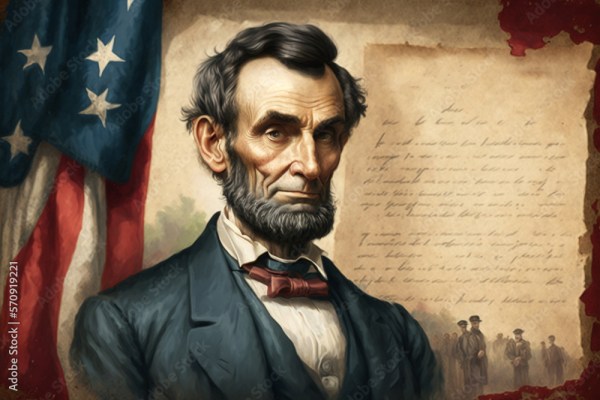
February 20 was President’s Day.  Before the end of the month, it is good to honor one of America’s most lauded presidents and brain injury survivor, Abraham Lincoln:

During his younger years, although he had little formal education, Lincoln was an avid reader.  He would have rather spent a day reading a book than outside riding a horse.  Perhaps because of his comparable inexperience with outdoor activities, Lincoln was thrown off a horse as a child.  Though the specifics of this event are murky (some articles/posts claim he was 9-years-old during the incident, some say 10.  Some say he was hurt by a horse, others say a mule), what is clear is that he remained unconscious for at least the rest of the day.

Later in his life, Lincoln had two bouts of malaria, in 1830 and 1835.  When parasite-filled blood cells block blood vessels, malaria can cause brain damage.  Also in 1835, some claim that Lincoln had the sexually transmitted disease syphilis.  Syphilis can cause neurological problems.

While both contracting malaria and syphilis may have heightened the severity of Lincoln’s brain injury, the most severe occurrence to Lincoln’s brain was, most likely, the aforementioned fall off a horse at a young age.  Given this historical information, it is clear the Lincoln had some sort of brain damage.  His recorded behavior further exhibits this.  Specifically, Lincoln is known to have had a prolonged struggle with severe depression.  Depression is, unfortunately, a common side effect of brain injury.

Whether knowing that Lincoln had some sort of neurological problem affects people’s views of him positively, negatively or not at all, is irrelevant.  People simply need to know that the president who brought our country back together had a brain injury.  Knowing this, the public may question and change their underestimation of and negative behavior towards brain injured classmates, neighbors, fellow employees, etc.

10 Seconds to Safety

Combat sports like boxing, wrestling and mixed martial arts, by definition, have a high potential of harming the head and brain.  Because of this, in 1985, the New Jersey State Athletic Control Board (NJSACB) was created to, “protect the safety and well-being of all participants and promote the public confidence and trust in the regulatory process and conduct of public boxing and other combative sport.”   This month, the New Jersey State government approved the testing of a new technology that hopes to make combat sports, well, less combative.  Specifically, NJSACB , which sets the athletic parameters in a state that is home to such combat sports locations as Atlantic City and the Prudential Center, approved the testing of EyeGuide Focus.

EyeGuide Focus, “uses a camera [attached to a headset] to record the action of the athlete’s eyes as they track a cursor that makes a sideways figure 8 on a computer screen.”   Because it is able to track the eye 60 times a second, according to the manufacturer, EyeGuide can detect concussions in only 10 seconds.

This past Saturday, February 18, the eye technology was tested at the Cage Fury Fighting Championships at The Borgata in Atlantic City.  As of February 23, the results of these tests are not available for public view.  On May 20, EyeGuide will again be tested at the Top Rank WBC/WBO Junior Welterweight Championship in Newark.*

* Even though the publicity of this device focuses on the use of EyeGuide Focus in combat sports, EyeGuide has larger applications.  According to the manufacturer, the EyeGuide Focus is affordable, so that it can be purchased for use in a wide variety of settings, from MMA matches to high school sports games (the EyeGuide website has the product listed for purchase at $9,999).

SC Bill Seeks to Take Commission from Advisory to Action

During her time in office, South Carolina Governor Nikki Haley said, “[South Carolina] ‘absolutely’ has a responsibility to protect vulnerable adults just as much as it does to protect children.”  In accordance to South Carolina law, in this statement Haley is referring to individuals with intellectual disabilities, autism, traumatic brain injury and head and spinal cord injury.  The comparison of intellectually disabled adults to children may be offensive and ignorant, though common, but during her time in office there was a bipartisan attempt to take responsibility.  For example, during the last legislative year, Senator John Scott (D-Richland) filed a bill that, if it had passed, would have put the South Carolina Department of Disabilities and Special Needs (SCDDSN) in the governor’s cabinet.  This year, just before Haley resigned from her governorship to assume the role of United States Ambassador to the United Nations, state legislators continued their push to support vulnerable adults.  With the bipartisan support of such legislators as Republican Senator Harvey Peeler, the chairman of the Senate Medical Affairs Committee, Scott prefiled a bill similar to that of last year.

The mission of SCDDSN is to, “assist people with disabilities and their families through choice in meeting needs, pursuing possibilities and achieving life goals; and minimize the occurrence and reduce the severity of disabilities through prevention.”  Begun in 1996, the SCDDSN is currently led by seven people, one from each of the state’s seven Congressional districts, who are appointed by the Governor.  The Department has no identified head and some have called it, “the worst-run agency in the state.”  Newspapers also note the allegations of abuse and neglect of the exact people it intends to service.

To some, Scott’s bill seems to be the best available option.  As SCDDSN Commissioner Vicki Thompson says, “Right now, the commission acts like more of an advisory board to the agency, and [I don’t] see a willingness to change on the part of agency officials.”  A director, appointed by the governor, on the other hand, would oversee the department, serving as essentially the CEO and controlling the agency staff.  The commission would then officially become an advisory board.  According to SCDDSN Chairman Bill Danielson, “There are benefits to both the cabinet model and the commission model.”  The question is now which model do those in the state legislature and the South Carolina acting governor Henry McMaster see as best, as making the SCDDSN a cabinet position would mean more visibility, but visibly without action isn’t worth that much.

Echoing the Benefits of Exercise after TBI

In 2013, the University of Buffalo found that of the four participants who underwent daily aerobic exercise, all benefited neurologically, particularly in decreasing exhaustion.  In 2015, the National Institute of Health (NIH) conducted a 12-week study with the same results: “individuals with TBI may benefit from participation in vigorous aerobic exercise training with improved cardiorespiratory fitness and diminished fatigue.”  Currently, the University of Kansas is performing a two-year, $500,000 clinical study, sponsored by the Department of Defense, to see if the same applies to wounded warriors.  (The reason why this is even a question is because traditionally, rest is the recommended remedy for a “knock to the head”.)

As opposed to the Buffalo study, the study in Kansas will include more than 100 hundred wounded warriors, stationed in Fort Riley, all of whom were affected by explosive devices.  Also, as the leaders of the study and exercise trainers will agree, all exercise is not the same and does not provide to same benefits.  Therefore, “instead of lifting weights, we want the soldiers running more to improve their aerobic capacity,” says David Johnson, the leader of the study, explaining the aim of the study in a news release.  Beyond fatigue, the study expects to find that aerobic exercise helps the brain heal in other ways, such as in memory and thinking, anxiety and depression.  While this study is focused on the benefits of exercise for those with mild traumatic brain injury, the results may have benefits for other neurological conditions, such as in aiding those with severe TBI, Alzheimer’s, etc.  More so, it could reaffirm the neurological benefits of exercise for all.

Let’s Dance! FDA Approves Medical Testing of MDMA for PTSD

It has been proven that dancing can relieve stress and anxiety.  Late last year, the FDA approved testing of MDMA, the active ingredient in Ecstasy, the drug that makes you want to dance the night away, as a possible cure for PTSD.  Specifically, after promising results in previous studies, this Phase 3 study, slated to begin in June, will include more patients.  If successful, it will allow the medical use of MDMA in the treatment of PTSD, as soon as 2021.  Whatever your personal opinion of this treatment, the current administration will likely make sure that medical MDMA, if approved, is available for use in 2021 or earlier, as President Trump has previously discussed his support for the troops [many of whom have a TBI and/or PTSD] and his desire to deregulate the FDA.

“Because TBI is caused by trauma and there is symptom overlap [with PTSD], it can be hard to tell what the underlying problem is. In addition, many people who get a TBI also develop PTSD.”  Therefore, if approved, MDMA could help those who have had a TBI “regain” themselves, in some sense.  However, government studies have also proven that continued use of MDMA can cause long-term cognitive impairments.  Memory problems are, of course, already a significant side effect of traumatic brain injury.

Ultimately, finding a treatment for PTSD that does not worsen the symptoms of other medical issues for some potential users is a difficult task.

Richmond Rally Reacts to Rehabilitation Cuts

February 1 marked the 14th annual Brain Injury Awareness Day in Virginia.  Hosted by neurologist and State Delegate John O’Bannon, this day allows those affected by and/or advocating for brain injury to discuss their concerns and wants with their state legislators.  This year, the discussion specifically focused on the state government’s cuts (but not elimination) of funding for rehabilitation for brain injured individuals.  Because of this concern, “after meeting with legislators, dozens of survivors, advocates and caretakers of people with brain injuries held a rally Wednesday to call for improvements in services for disabled Virginians.”  What the government may not understand though, is that it takes rehabilitation, sometimes lengthy rehabilitation, to regain functionality following a brain injury, meaning that adequate state funding is necessary.  Increased functionality means increased employment, increased tax collections and less reliance on government-funded support and services.

Personal note:

In the article, Anne McDonnell, executive director of the Brain Injury Association of Virginia, is quoted as saying, “It is a rare privilege to watch a brain come back online.”  This statement implies that brain injury survivors are primarily non-functioning individuals.  This is highly offensive and simply not true.

Additionally, the article quotes a survivor who is involved with the Association, as saying, “Forty-two … I think I’m 42.”  By choosing to publish this quote, the author of this article is making light of a symptom of this survivor’s disability.  Additionally, I believe that this person, as with many brain injury survivors, has a general disbelief of his memory because he had so many memory problems immediately following his injury.  No one remembers everything.

“Play Smart. Play Safe.”


Politics steps aside on Sunday, as Americans celebrate what is essentially a national holiday, of sorts.  At 6:30pm tomorrow, February 5, the New England Patriots will play the Atlanta Falcons in Houston, TX in the 2017 Super Bowl.  Over 110 million viewers  will tune in to watch the game, the halftime show and, of course, the commercials.  (Every year, that number keeps inching closer to the voter turnout.)  However, for Patriots’ fans, there is a looming question: will Nate Ebner, the Special Teams player that suffered a concussion, a head injury, in the AFC championship be on the field?

On January 22, the AFC Championship was held, with the Patriots playing the Pittsburgh Steelers.  It was a victory for the New England Patriots, but not for Ebner, who got a concussion.  Since then, the status of Ebner has been unclear.  Though the Patriots cancelled practice last Wednesday, the roster shows that Ebner would not have been a participant.  On Thursday, January 25, Ebner also sat out.  There are two weeks between the league championships and the Super Bowl, which some see as positive because it gives players an adequate amount of time to “recover” from any injuries.  However, ten days after their win, on February 1, Ebner finally returned to practice, as a limited participant only.

As CBS notes, “Ebner is a fixture on special teams but nothing more.”  Sure, Ebner wants a Super Bowl ring to accompany the Olympic ring he won in rugby six months ago and to accompany the Super Bowl ring he already has, but hopefully he and the team will put that aside.  Ebner and the team need to take the long view.  Maybe he is well enough to play again, but a player’s health and his future ability to help the team is more important than a ring.  As the National Football League’s initiative states, “Play Smart.  Play Safe.”

*** ”With more spotlight on [the] long-term effects [of concussions] to player health, the league instituted protocol to address the diagnosis and management of concussions [in 2009].”  Concussion protocol involves checking for loss of consciousness, slowness in getting up, lack of motor coordination or balance problems, having a blank or vacant look, disorientation and the clutching of one’s head.  Beyond that, there is Return-to-Participation Protocol.

Since instituting these protocols, the rules have been annually updated to add additional protections.  For example, in 2015 rules were instituted, so that there are now medical spotters in the stadium who could, at any time, halt play and remove an injured player.  In 2016, the most important secondary rule was instituted: punishing those who do not follow concussion protocol.  Teams can now be fined $100,000 or more for not following the rule and, “if the commissioner determine(s) a team violated the protocol for a competitive advantage, the team could be required to forfeit a draft pick in addition to fines.”