
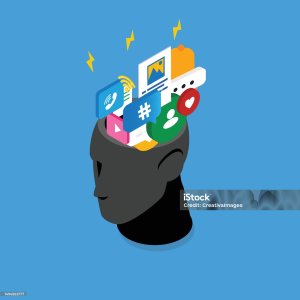
With over 4.9 billion active users globally spending an average of 2.5 hours daily on social media platforms, concerns about users’ neurological impact are mounting.
Parental and professional concern is warranted, it seems. Social media platforms continue promoting risky challenges that can cause brain injuries. For example, the recent “Run It Straight” challenge on TikTok, YouTube, and Facebook involves participants sprinting toward each other and colliding at full force, creating what experts call “engineered systems for brain injury” with impacts similar to that of unbelted car crashes.
The worry, though, goes beyond risky behavior. The landmark July 8, 2025 NIH study “Modern Day High: The Neurocognitive Impact of Social Media Usage” found that social media use causes marked alterations in brainwave activity, with Beta and Gamma waves heightened during engagement and continuing after use, which potentially interferes with emotional regulation and attention.
Statistically, 74% of people with traumatic brain injury (TBI) use the internet. While this may be a lesser amount, compared to 84% of the general population, social media can be of greater risk for the brain injured population. Specifically, those with brain injuries face unique challenges navigating digital spaces due to cognitive impairments affecting memory, attention, and decision-making.
The growing concern has been felt in the government, too. Former Surgeon General Dr. Vivek Murthy recently warned, “Congress has not stepped up to its responsibility to protect our kids. They need to act now” regarding social media’s impact on developing brains. In the past few years, there has been an increase in funding for research into digital wellness and brain health initiatives targeting vulnerable populations. However, if, and to what level, the government should be involved in an individual’s social media activity is very much up for debate.
Yet social media isn’t entirely harmful. Rehabilitation professionals report that it can reduce social isolation for brain injury patients and support community reintegration. Still, “ongoing robust research is urgently required to give rehabilitation professionals an evidence-based framework” for safe implementation.
 TBI on the Hill