
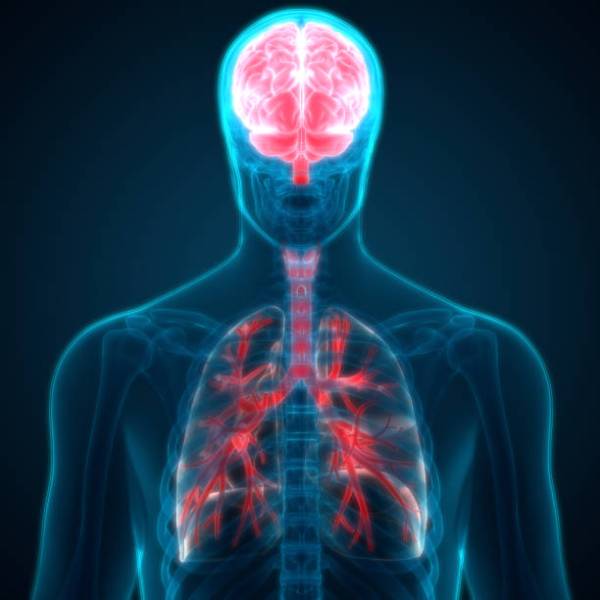
Groundbreaking research published in September 2025 by the University of Miami Miller School of Medicine reveals that brain injuries send deadly molecular messengers throughout the body that directly attack lung tissue. The team discovered the “neural-respiratory inflammasome axis,” where injured brains release tiny particles called extracellular vesicles that travel through blood and trigger lung cell death.
Up to 30% of brain injury patients develop acute lung injury, significantly increasing mortality risk. For decades, doctors assumed this lung damage was just a ventilator side effect, but Miami researchers proved the brain actively sends inflammatory signals that kill lung cells.
The federal government recognizes this critical brain-lung connection. NIH Director Dr. Monica Bertagnolli recently explained to Congress: “We’re finding that this barrier prevents drugs from getting into the brain where they need to work, and we’re finding certain techniques are able to open that barrier,” calling it “an incredible active area of research to bring more effective therapies to those affected by neurologic diseases.”
The research offers unexpected hope. Dr. Kristine O’Phelan, a Miami specialist, discovered that enoxaparin—a blood thinner—provides dual protection. “It is exciting to consider that using enoxaparin for routine prophylaxis of thromboembolic complications may also help our patients by preventing pulmonary complications as well,” she explained.
This discovery demonstrates how research can translate into life-saving applications for brain injury patients.
 TBI on the Hill