
This week, Wired published a story featuring the Lion’s Mane mushroom. The article includes recipes that use this fungi, which has a distinctive seafood-like texture, such as “crab” cakes and mushroom ragu. Such an article begs the question as to why a publication known for its technological news would choose to focus on an ancient food.
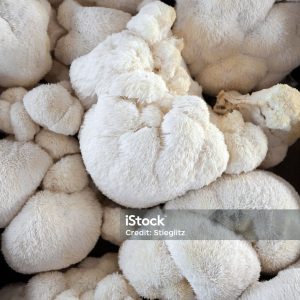
In fact, the Lion’s Mane mushroom has been gaining scientific attention in the past several years for its potential therapeutic benefits, particularly for brain health and traumatic brain injury recovery. Recent research published by the National Institutes of Health has explored this distinctive white, shaggy mushroom’s neuroprotective properties.
This fungi contains unique compounds called hericenones and erinacines that can stimulate nerve growth factor synthesis, which have been shown to aid in cognitive function, memory, and neurological recovery. Studies suggest benefits for conditions ranging from mild cognitive impairment (mTBI) to traumatic brain injury, with additional advantages for immune system support, gut health, and inflammation reduction.
“The mushroom’s capacity to stimulate nerve growth factor (NGF) synthesis has highlighted its potential in preventing and managing neurodegenerative diseases, such as Alzheimer’s and Parkinson’s,” according to a 2025 NIH research review. Earlier NIH research notes that “erinacine C treatment led to significantly reduced brain inflammation and normalization of mTBI-induced deficits through the modulation of the Nrf2 activation pathway.”
Based on this research, it appears consumption of Lion’s Mane mushrooms could prove beneficial to all people, brain damaged or not.
(Experts caution that most studies remain in animal models, human clinical trials are limited. Consultation with healthcare providers is recommended before supplementation.)
 TBI on the Hill